
Wireless Doorbell 1200 Feet Waterproof Doorbells for Home with 36 Melodies 4 Volume Levels, Flash Led Light
4.6Editor score
Large LED visual indicator
1200-foot open-area range
36 melodies and four volumes
Simple plug-in installation
Explore 10 Light Alerts for Deaf, comparing visual, flashing, vibrating, and strobe systems that provide accessible notifications at home, work, or while
Light alerts for deaf and hard-of-hearing users replace or supplement conventional sound-only notifications with flashes, bright strobes, vibration, scrolling text, and other visual cues. The right system can make doorbells, smoke alarms, carbon monoxide warnings, and incoming calls easier to notice while remaining appropriate for the home, office, classroom, or bedroom.
This guide compares ten alert products based on the notification methods, receiver placement options, range, installation requirements, customization, and stated compatibility. Most entries are wireless doorbells, while the list also includes a hardwired LED strobe and a multi-alert home system designed to work with existing smoke and carbon monoxide alarms.
Each review explains who gains the most from the product and where its trade-offs may matter. The shortlist includes practical budget models, multi-receiver systems, portable alerting devices, and a feature-rich premium starter kit. Product availability, configurations, and prices can change, so confirm current listing details before purchasing.
4.6Editor score

4.4Editor score

3.8Editor score
The comparison below shows which products emphasize doorbell alerts, multi-room coverage, visual flashing, vibration, scrolling information, or compatibility with existing safety alarms. Specifications are based on the supplied product information, and each listing should be checked for current package contents and installation requirements.




This wireless doorbell combines one exterior push button with three plug-in receivers, making it a strong option for homes where the person with hearing loss needs alerts in several locations. It holds a 4.3 rating, and its standout feature is the ability to choose ringing-only, flashing-only, or a combined mode. The three receivers can be moved around as household needs change rather than forcing every alert into one fixed room.
We may earn a commission when you buy through this link, at no additional cost to you.
The visual mode is especially useful when a conventional chime would be missed, while the combined mode lets the button provide both audible and visual notification. Each receiver can have a different ringtone and volume setting, allowing a bedroom to remain quieter than a kitchen or work area. The silent option provides a way to preserve visual alerts without adding noise, and the button itself illuminates when activated.
Its stated open-area range reaches up to 1,200 feet, and the waterproof and dustproof button is designed for an exterior entrance. Installation is straightforward: plug in the receivers, remove the button's insulating piece, and mount the button using the included hardware. The main compromise is that three plug-in receivers occupy three outlets, and the maximum range should not be treated as guaranteed performance through every wall, floor, or metal obstruction.
This is a good recommendation for anyone who wants dedicated visual doorbell alerts in several rooms without giving up melodies and volume control. It suits apartments, houses, classrooms, offices, and other spaces where more than one receiver can be placed. Choose it when flexible flashing modes and multi-room coverage matter more than portability or a single compact receiver.
The flashing-only mode turns the receivers into visual notifiers without adding another audible sound. That is useful in shared rooms, during quiet hours, or for anyone who relies on light as the primary alert method.
Placing one receiver in the bedroom, one in the kitchen, and another in a work or common area helps reduce the chance that a visitor is announced only in an unoccupied part of the building.
We may earn a commission when you buy through this link, at no additional cost to you.
This one-button, one-receiver doorbell is a straightforward way to add a visible visitor alert to a home or small workspace. Its 4.6 rating is the highest among the listed products, and the large built-in LED indicator is the defining feature. Rather than depending entirely on a melody, the receiver gives a deaf or hard-of-hearing user another way to notice that the touch button has been activated.
We may earn a commission when you buy through this link, at no additional cost to you.
The receiver includes 36 melodies and four volume levels, including mute, low, middle, and high. This lets the household select a recognizable sound for anyone who can hear it while retaining the flashing LED as a parallel signal. The touch button is described as waterproof and dustproof, with higher sensitivity and lower energy consumption, while the stated operating distance reaches up to 1,200 feet in an open area.
Installation requires plugging the receiver into an outlet and mounting the button after removing its insulating sheet. The listing advises avoiding placement very close to metal, televisions, Wi-Fi equipment, and computers, which may interfere with reception. Its limitations are clear: with only one receiver, the flashing light must be placed where the intended user will regularly notice it, and the product does not add tactile vibration.
This is the best budget-oriented choice in the roundup for one entrance and one important room. It is particularly attractive for renters or first-time buyers who want an uncomplicated visual doorbell without buying multiple receivers. For a home with several occupied areas, a multi-receiver model would be the more practical choice.
The LED indicator adds a visual signal while the selectable melodies and volume levels keep the system useful to other household members. A muted setting can reduce disturbance without eliminating the light cue.
The single-receiver format keeps installation compact. It is well suited to a single-person home, apartment, reception counter, or other location where one clearly visible receiver can serve the user.
We may earn a commission when you buy through this link, at no additional cost to you.
This system supports two transmitters and three receivers, combining audible chimes with seven-color flashing alerts. Its 4.4 rating and broad package configuration make it a practical choice for a home with more than one entrance or several rooms that need visual notification. The color changes create a noticeable cue that can be easier to identify from across a room than a single steady indicator.
We may earn a commission when you buy through this link, at no additional cost to you.
All three receivers flash seven colors and play music when a transmitter is pressed. Four adjustable volume levels allow the household to tune the sound for different preferences, while the description notes coverage for a substantial indoor area. The system uses AA batteries, with three batteries in each receiver and one in each transmitter, and the listed battery life is approximately three to five months.
Installation does not appear to require complex wiring. Users can mount transmitters with double-sided adhesive or screws, which helps avoid damage to the wall. The stated wireless range is up to 600 feet, which is shorter than several competing models, and battery replacement adds a recurring maintenance task. Actual performance will also depend on walls, floors, and other obstructions.
This model fits households that want multiple receivers, two possible call points, and especially conspicuous color changes. It is a strong fit for an occupied home, office, or shared care environment where visitors might arrive at different doors. Choose it when vivid multi-color visibility and two-button support outweigh the benefit of a longer maximum range.
Seven colors create a dynamic light pattern rather than a single weak blink. That makes the alert easier to distinguish in a bright room or from a position where the receiver is not directly in the user's line of sight.
A second transmitter can serve another doorway, side entrance, desk, or caregiving room. This expands the system beyond a basic one-button arrangement without requiring separate, unrelated systems.
We may earn a commission when you buy through this link, at no additional cost to you.
The FUHONGRUI system combines two wireless buttons with three plug-in receivers and a flashing-light function. It carries a 4.3 rating and is aimed at families that need more than one call point while also wanting alerts in several rooms. The receiver configuration and four volume settings provide a useful mix of coverage and household flexibility.
We may earn a commission when you buy through this link, at no additional cost to you.
Users can select from 36 ringtones and four volume levels: mute, low, medium, and high. Mute supports use as a silent or visual alert, while the flashing receivers make the package appropriate for a deaf or hard-of-hearing household member. The stated range reaches up to 1,200 feet in open areas, and the buttons are described as waterproof and dustproof for indoor or outdoor placement.
Setup involves plugging in each receiver, removing the insulating piece from a transmitter, and mounting it with screws or double-sided tape. The trade-offs are the three-outlet requirement and the absence of detailed information about vibration or exact light patterns in the supplied listing. As with other wireless systems, walls, metal doors, and electrical equipment may reduce practical range.
This model is best for a busy household with two doors and a need to distribute visual alerts across multiple rooms. It offers more flexibility than a single-receiver system without moving to a much larger dedicated alerting platform. Buyers who need tactile vibration or scrolling information should look beyond this product.
Different ringtone and volume choices let the household balance the needs of users with different hearing levels. The mute setting also allows the flashing function to work without adding continuous noise.
Three receivers can be positioned around a house, office, or classroom. The 1,200-foot open-area specification gives installers more flexibility when testing a layout before settling on permanent receiver locations.
We may earn a commission when you buy through this link, at no additional cost to you.
The HomeAware II Basic Starter Kit is the most comprehensive alert system in the roundup, using a bright strobe, bed shaker, audio tones, and a scrolling text display. It is intended for deaf and hard-of-hearing users, heavy sleepers, and people who sleep without hearing aids. Its 3.8 rating is lower than those of the leading doorbells, but that difference should be weighed against a substantially broader set of alert functions.
We may earn a commission when you buy through this link, at no additional cost to you.
The kit does not detect smoke or carbon monoxide itself. Instead, it listens for the sound and pattern of existing T3 smoke alarms and T4 carbon monoxide alarms in the same room, then triggers its high-visibility notifications. This design can relay a familiar alarm to a strobe, bed shaker, and readable display, while Bluetooth connectivity can show incoming cellphone calls and texts on the scrolling screen. Landline phones can also be connected for incoming-call notifications.
The critical safety limitation is placement: the unit should be in the same room as the relevant smoke or CO alarm, and users should test the alarms regularly to confirm that HomeAware II responds. Its rechargeable battery backup helps maintain alerts during a power outage, although backup performance should be checked periodically. A more specialized system also requires more thoughtful setup than simply plugging in a doorbell receiver.
This kit is worth considering for users who need one accessible platform for multiple household notifications rather than a doorbell-only product. It may be especially useful for heavy sleepers who benefit from a bed shaker and anyone who wants warnings displayed as text. It does not replace certified smoke or CO detectors, and users should confirm that their existing alarms use compatible T3 or T4 patterns.
Smoke and CO events, incoming phone calls, and other notifications can use visual, tactile, and audible channels through the same unit. This is more versatile than a doorbell system designed only to announce visitors.
A written message can explain what triggered the alert rather than leaving the user to infer meaning from a flash. Call information on the display may also be easier to notice than a ringtone alone.
We may earn a commission when you buy through this link, at no additional cost to you.
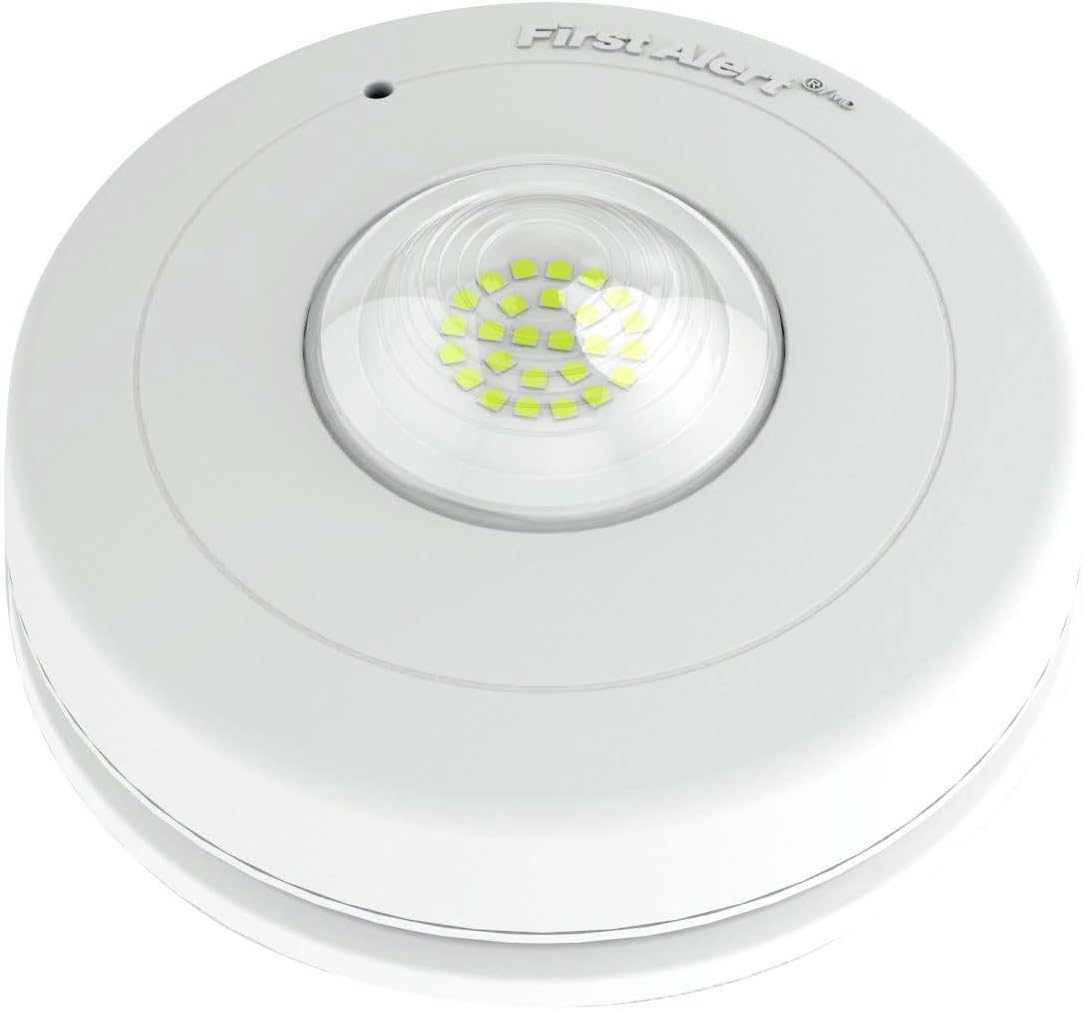
The First Alert SLED177 is a hardwired LED strobe designed specifically to provide visual warnings for hearing-impaired residents. It has a 4.0 rating and a listed light output of 177 candela. Rather than announcing a visitor by itself, it is better suited to integration with a compatible alerting setup or use as a powerful visual warning in a home, workplace, or public environment.
We may earn a commission when you buy through this link, at no additional cost to you.
The slim housing is designed to mount on a ceiling or wall, giving the installer flexibility in placement. Its trouble signal synchronization allows multiple units to flash in unison, which can create a more noticeable alert across several rooms. The product also meets the listed UL standards and requirements of the Americans with Disabilities Act, making it relevant for accessibility-conscious installations.
Unlike the wireless doorbells, this unit requires a 120-volt hardwired connection. Installation may therefore call for an electrician or someone comfortable with household wiring, especially where local electrical codes apply. It also does not provide the melodies, multi-receiver network, or simple plug-in convenience found elsewhere in this roundup.
This strobe is best for a user who prioritizes a powerful, synchronized visual signal and can accommodate hardwired installation. It may suit a purpose-built accessibility project, while most shoppers seeking a ready-to-install visitor alert will find a wireless doorbell more convenient. Its narrow role should guide the decision.
The 177-candela specification provides a strong visual signal intended to cut through the visual clutter of a busy environment. Placement still matters because brightness alone does not guarantee that the user will see the flash.
When several strobes are installed, their coordinated flashing creates a consistent alert across a home or facility. This is useful when one room may be occupied while another is not.
We may earn a commission when you buy through this link, at no additional cost to you.
This white Loud Flash Doorbell uses a single transmitter and receiver to provide a multicolor light pattern and audible chime. It has a 4.2 rating and is positioned for homes, offices, and caregiving situations where a bright visual reminder is important. The receiver flashes through seven colors when the button is pressed, while four volume levels allow the sound to be adjusted to the environment.
We may earn a commission when you buy through this link, at no additional cost to you.
The wireless system has a stated range of up to 600 feet and can produce an audible alert within the described coverage area. It uses four AA batteries in total, with three in the receiver and one in the transmitter. The supplied information estimates three to five months of use and says the system is designed to continue functioning in harsh weather.
Mounting can use the included double-sided adhesive or screws, so it does not require a mains-powered receiver or complex wiring. Its single-receiver format is the main restriction: if the user moves between rooms or spends time in a separate part of the home, the light may be out of view. The 600-foot range also trails the longer-range models in the roundup.
This product is a practical compact choice for one entrance and one receiver location. It is especially useful when a more elaborate multi-room system would be unnecessary, yet the user still wants both strong audio and a conspicuous flashing display. It is less suitable for large homes or anyone who needs tactile alerts.
Seven changing colors produce a more animated visual cue than a steady indicator. The changing pattern can attract attention in rooms where a small, fixed light might otherwise be overlooked.
The receiver does not depend on a wall outlet, giving the user freedom to place it on a counter, shelf, or side table. Battery checks are still important so the alert does not fail unexpectedly.
We may earn a commission when you buy through this link, at no additional cost to you.
The CallToU Wireless Hearing Impaired Doorbell stands out by combining visual, tactile, and audible notification methods in a compact package. It has a 4.4 rating, includes one push button and two portable receivers, and can deliver colorful flashing alerts alongside vibration and sound. That combination makes it one of the most adaptable options for people who may not always perceive light or sound equally well.
We may earn a commission when you buy through this link, at no additional cost to you.
Users can select from 20 ringtones and five volume levels, with the stated maximum reaching 110 decibels. Alert combinations include ringtone plus vibration, ringtone plus flashing light, all three together, or sound only. Mute configurations can also support vibration-only, flash-only, or vibration-plus-flash operation. Each receiver runs on three AAA batteries and includes a rear clip for a belt, pocket, or bag, making it easy to carry between rooms.
The pre-paired system has a stated range of up to 1,000 feet in an open, unobstructed area, though walls, metal doors, and nearby electrical appliances can reduce reception. The outdoor button has an IP65 rating, while the system itself needs no app, hub, Wi-Fi connection, or monthly subscription. The main inconvenience is battery maintenance, although a low-battery alert helps reduce the chance of an unnoticed failure.
This is an excellent recommendation for anyone who wants tactile alerts in addition to flashing, especially a user who moves around the home or wears headphones. It also suits people who prefer carrying a receiver on a belt rather than relying on a wall outlet. For very large homes, additional receivers or a system with longer stated range may be preferable.
The ability to combine sound, light, and vibration means the user does not have to rely on one sensory channel. Silent settings can deliver vibration and flashing while preserving a quiet environment.
A back clip lets a receiver move from a desk to a pocket or bedside table. This is useful for people who divide their time between rooms and do not want to remain near a fixed receiver.
We may earn a commission when you buy through this link, at no additional cost to you.
The black version of the Loud Flash Doorbell provides a bright visual alert, a loud chime, and a stated range of up to 600 feet. It has a 4.2 rating and is designed for the elderly, hearing-impaired, deaf, and mute users, as well as households that need a simple call button. The receiver flashes in seven colors while playing one of multiple ringtones, giving users both a visual and an audible signal.
We may earn a commission when you buy through this link, at no additional cost to you.
Four adjustable volume levels make it possible to balance the chime against different levels of household noise. The listing also notes that the system can be used as a pager and support one-button calling for family members, making it relevant to caregiving setups and homes where a bedroom or another private space needs a call button.
Its compact single-receiver format keeps the system economical and uncomplicated. The trade-off is coverage: one receiver cannot notify the entire home unless the user remains near it, and there is no listed vibration alert for users who cannot reliably perceive the flashing. A 600-foot maximum is also lower than the 1,000- and 1,200-foot options elsewhere in the guide.
This model suits a small home, apartment, office, or caregiving arrangement with one primary monitoring location. It is a sensible choice for users who want a clear flashing display and substantial sound without paying for a multi-receiver network. Consider a portable or multi-receiver model if movement around the property is common.
The one-button call function can be useful beyond a front entrance, including a desk, bedroom, or caregiving space. It provides a simple way for someone to request assistance using the same button-and-receiver setup.
The receiver produces both a colorful flash and a melody when activated. Adjusting the sound level allows the household to preserve the visual alert while keeping the chime appropriate for the setting.
We may earn a commission when you buy through this link, at no additional cost to you.
This configuration includes one transmitter and two receivers, creating a middle ground between a single-receiver doorbell and larger three-receiver kits. It carries a 4.3 rating, flashes through seven colors, and offers four volume levels. The result is a conspicuous visual signal paired with an audible melody at two locations in the home or workplace.
We may earn a commission when you buy through this link, at no additional cost to you.
The receiver can cover an indoor area described as reaching 150 square meters, while the wireless system has a stated maximum of 600 feet. Each receiver uses three AA batteries, and the transmitter uses one, for seven batteries in total. The supplied information estimates three to five months of operation and says the setup is designed to remain functional during rainstorms and typhoons.
Installation can use the included double-sided adhesive or screws. One transmitter means the package is focused on a single call point, and the two receivers must be positioned where the flashing can be seen. Actual wireless range will vary with walls and other obstructions, so testing the intended layout is important. The absence of a stated vibration mode narrows its appeal for users who need tactile alerts.
This is a good choice for an apartment, office, or medium-sized home where two frequently occupied areas need notification. It offers more visual coverage than the single-receiver version without the outlet demands of a three-receiver system. Users needing three call points, a longer stated range, or vibration should choose a more specialized model.
Two receivers provide a practical balance for many homes. One can remain near a work area while the other covers a bedroom or common space, without adding a third unit to the package.
The seven-color pattern produces an active visual signal at both receiver locations. Combined with four sound levels, it allows the same system to serve users with different hearing and attention needs.
We may earn a commission when you buy through this link, at no additional cost to you.
The most useful alert is one that reaches the intended user through a channel they reliably perceive, at the moment the event occurs. Compare alert methods, coverage, power requirements, installation, and the types of events each product supports before choosing a model.
Start by considering how you notice events. A large LED, multicolor flash, dedicated strobe, scrolling display, and bed shaker each communicate differently. A user who can see flashing light but cannot hear may prefer a bright receiver or strobe, while someone who sleeps with hearing aids removed may benefit more from vibration and a bed shaker. Some systems also allow light, sound, and vibration to operate together or independently, which is useful when attention and surroundings change throughout the day.
Prioritize multiple notification channels when one visual cue could be missed, such as a receiver placed around a corner or a flash viewed in a bright room. A color-changing pattern may be more noticeable than a dim steady light, but brightness, viewing angle, and placement still affect real-world visibility.
The number of receivers determines how many areas can announce a visitor. A single receiver is sufficient for a small apartment or one active workstation, while two or three receivers are more useful in a home with multiple occupied rooms. Wireless range is only one part of coverage: walls, floors, metal doors, appliances, and other interference sources can reduce the effective distance. Treat the stated maximum as an open-area figure and test the actual placement before considering the setup complete.
For a large property, prioritize models with multiple receivers and a longer stated range. For a user who moves between rooms, a portable receiver with a clip may be more effective than additional fixed units. The CallToU model, for example, combines two portable receivers with light, sound, and vibration, which can be useful for a person who is rarely in one place.
A doorbell flashing light and a home safety alert system serve different purposes. Most of the products in this guide announce a press at one or more doorbells, while the HomeAware II also listens to compatible existing smoke and carbon monoxide alarms and can display phone information. The First Alert SLED177 is a visual warning strobe rather than a complete doorbell network. Buying based on the word doorbell alone can therefore produce a mismatch.
List the events you need to monitor before choosing: visitors, deliveries, calls, text messages, smoke alarms, carbon monoxide alarms, or calls for assistance from another room. If more than one event type matters, consider a multi-function system. If the requirement is strictly a front-door notification, a dedicated wireless doorbell will usually be simpler and more focused.
Wireless systems in this roundup claim open-area ranges between 600 and 1,200 feet, while the CallToU model is specified at up to 1,000 feet. These numbers describe maximum conditions rather than guaranteed performance in every building. Dense walls, multiple floors, metal doors, televisions, computers, Wi-Fi equipment, and other electrical devices may reduce the signal. Placement and testing are therefore part of the purchasing decision, not merely an installation detail.
A system with more receivers can still perform well at a shorter nominal range if receivers are positioned close to occupied areas. Likewise, a single well-placed receiver may outperform a distant one. Avoid installing transmitters immediately beside large metal objects or high-interference appliances, and test the bell after the building's normal walls, doors, and furniture are in place.
Most wireless doorbells in this guide use plug-in receivers and battery-powered transmitters, which makes installation manageable without running new wiring. Some receivers use AA batteries so they can sit on a counter or shelf, while others plug directly into an electrical outlet. The CallToU system uses portable AAA-powered receivers with clips. A hardwired strobe requires 120-volt power and a connection to an appropriate triggering system, making professional installation more likely.
Check outlet availability before buying a multi-receiver package. Battery-powered products are portable but create a maintenance routine, while plug-in receivers reduce battery concerns but need nearby outlets. Include the time required to check or replace batteries in the overall convenience of the system, especially in a home where the alert is safety-critical.
Customization can make a visual alert easier to identify and less disruptive to others. The featured systems offer between 20 and 36 ringtones, and most include a mute option. Some permit different sounds or volumes at different receivers, while the CallToU model allows combinations of ringtone, vibration, and flash. Seven-color light patterns add another way to distinguish an active alert from other blinking electronics in the room.
Avoid choosing complexity for its own sake. The simplest settings that remain noticeable are often more useful than a large menu of rarely used options. Prioritize a mute or flash-only mode if household noise, sleep, or shared walls are concerns, and confirm that the selected receiver is visible from the places where the user regularly spends time.
The best alert for deaf and hard-of-hearing users depends on the user's specific sensory needs. Some may perceive a bright flash well but have limited hearing; others may retain useful hearing while also benefiting from vibration. Accessibility is not a single feature but a combination of appropriate intensity, understandable signaling, reliable power, and placement in the user's environment. The First Alert model highlights compliance-oriented design, while the HomeAware kit emphasizes clear written information.
Reliability should be verified with real-world tests. Test each doorbell button and every receiver, check different alert combinations, and confirm that the user can perceive the chosen signal from a realistic distance. For systems that work with smoke or CO alarms, follow the placement and testing instructions carefully, and remember that an alert relay does not replace a certified detector.
Begin by mapping where alerts need to be noticed. Identify the entrance, the rooms you regularly use, and the times of day when light, sound, or vibration is easiest to perceive. Mount the button near the intended doorway, place receivers in visible and occupied locations, and connect the system before permanently fixing components. A brief test from every relevant location will reveal whether the arrangement needs adjustment.
Configure the alert after basic installation. Select a sound that other household members can recognize, set the volume to the intended level, and test flash-only, sound-only, vibration, and combined modes if the product supports them. For multi-receiver systems, adjust each receiver for the environment around it. A bedroom may need a lower sound level or silent mode, while a busy kitchen may benefit from the strongest visual setting.
Care for the system according to its power source. Replace batteries on a regular schedule, clean the receivers and button, and keep the exterior button free of obstructions. Test the setup after every battery change, firmware update, or change in alert mode. For the hardwired strobe or a system linked to existing alarms, follow the manufacturer's installation and testing instructions and use qualified electrical help when required.
The best choice depends on the user's environment and ability to perceive different signals. A large, brightly flashing receiver works well for a visible indoor location, while a bed shaker or portable vibrating receiver can help at night or while moving around. A system offering both flashing light and vibration provides more redundancy than a light-only model.
Most of the doorbells listed in this guide operate without Wi-Fi, apps, hubs, or monthly fees. They use a pre-paired or compatible transmitter and receiver combination. The HomeAware II does use Bluetooth for some phone-display features, but its basic safety-alert functions are described as listening to compatible alarms in the same room.
A single receiver may be sufficient for a small apartment or a home where the user stays near one location, but walls and floors can limit the practical signal. For better coverage, choose a model with two or three receivers, or use a portable receiver that can move with the user. Always test the system throughout the building.
A flashing doorbell is a complete visitor-notification system with a button, receiver, sound, and light. A hearing-impaired strobe is primarily a bright visual warning device that may require integration with another system to provide a trigger. The First Alert SLED177 is a hardwired strobe, while most other entries are wireless doorbells with integrated receivers.
No. The HomeAware II specifically does not detect smoke or carbon monoxide directly; it listens to compatible existing T3 or T4 alarms in the same room and relays their signals. It supplements rather than replaces certified smoke and carbon monoxide detectors, and users should test the relationship between the devices regularly.
Vibration adds an independent alert method that can be valuable at night, while wearing headphones, or when the receiver is outside direct view. It is particularly helpful in a bedroom or for a user who carries the receiver. A sound-and-flash model is sufficient when the receiver is always positioned in clear view.
Place the receiver where the intended user regularly spends time and can see the light without obstruction. Test it from a seated and standing position, during both daylight and darkness, and from the room's normal entry points. Avoid hiding it behind furniture or placing it where a decorative light could be mistaken for the alert.
Some can, but reception depends on the building's construction and the system's placement. Multi-receiver models provide a better option because each floor can have its own receiver. A portable receiver with vibration may also be useful on upper floors where a fixed light is less likely to be seen.
The Wireless Doorbell with Touch Button stands out as a economical one-receiver option with a large LED and strong listed rating, while the CallToU system is the most flexible everyday choice because it combines light, sound, and vibration in two portable receivers. The Sonic Alert HomeAware II Basic Starter Kit offers the broadest functionality for users who need smoke, CO, and phone notifications alongside visible and tactile warnings.
Prioritize the alert channel and coverage that match your real routine. A brighter receiver is not enough if it sits in an unused room, and maximum wireless range does not guarantee reception through every wall. Think about where you need to be notified, whether you need vibration, how many receivers are practical, and whether the system must cover more than a visitor at the front door.
Before purchasing, verify the current package contents, compatibility, power requirements, and installation method on the retailer listing. Product configurations and prices can change over time, so current details should be confirmed before checkout. Whichever route you choose, test the alert from realistic positions and on a regular schedule to ensure the chosen notification method remains effective.