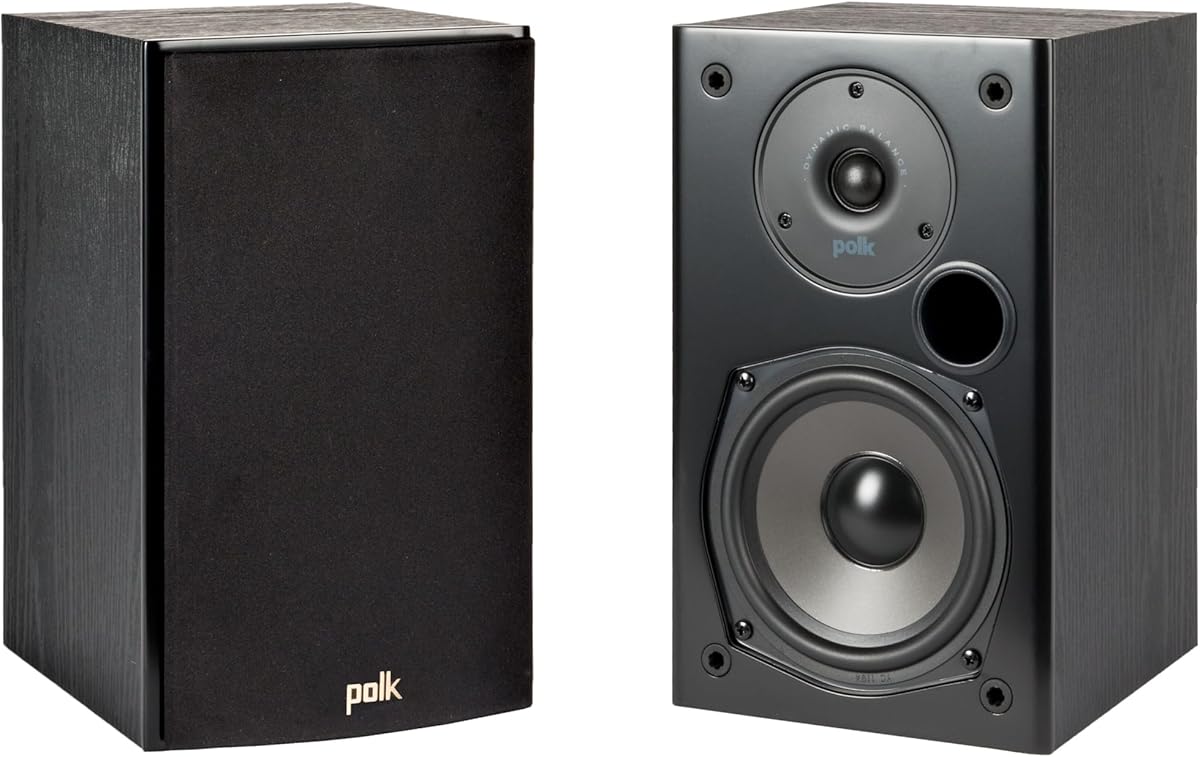
Polk Audio T15
4.7Editor score
5.25-inch Dynamic Balance driver
0.75-inch tweeter
Wall-mountable passive design
This expert guide compares 10 passive speakers for turntable systems, highlighting driver design, connectivity, amplifier needs, placement, and listening
A turntable sounds best when it is connected to a pair of speakers designed to reproduce the nuances of records, from delicate instrumental textures to full-bodied bass. The right passive bookshelf speaker can provide that detail while remaining easy to integrate with an existing amplifier or receiver setup.
This guide compares ten products listed for turntable listening, separating truly passive models from powered alternatives that may suit buyers without an amplifier. We evaluated the published specifications, driver configurations, connectivity, impedance, mounting options, and practical features associated with each model.
Each review explains where the speaker stands out, where compromises may appear, and which listener it is best suited for. Ratings and product details reflect the supplied listings, while availability and commercial terms can change, so readers should confirm current specifications and pricing before buying.
4.7Editor score
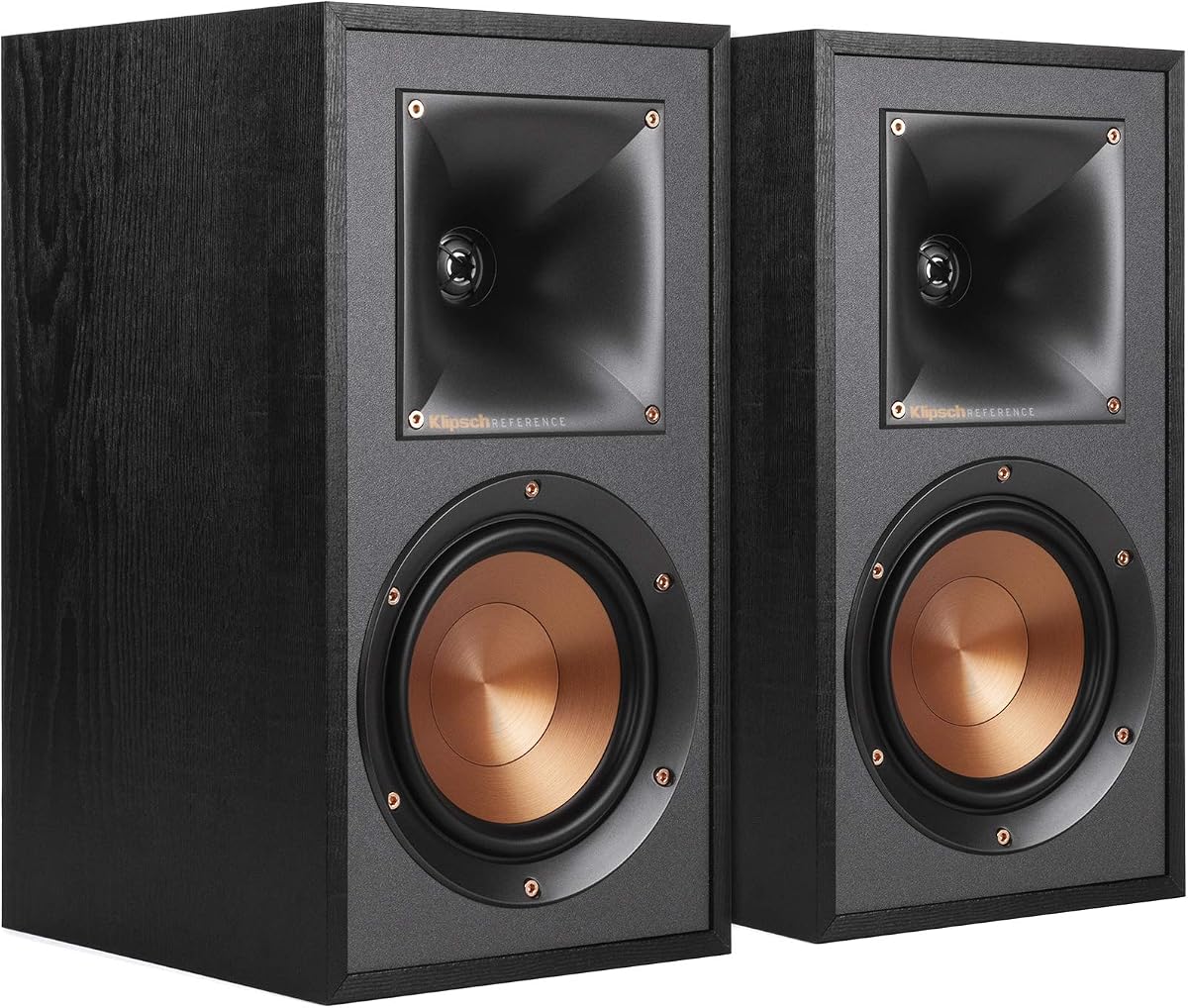
4.8Editor score

4.8Editor score
The table below compares the ten listed speakers by architecture, driver layout, connectivity, and practical installation requirements, making it easy to identify the right model for a turntable system.
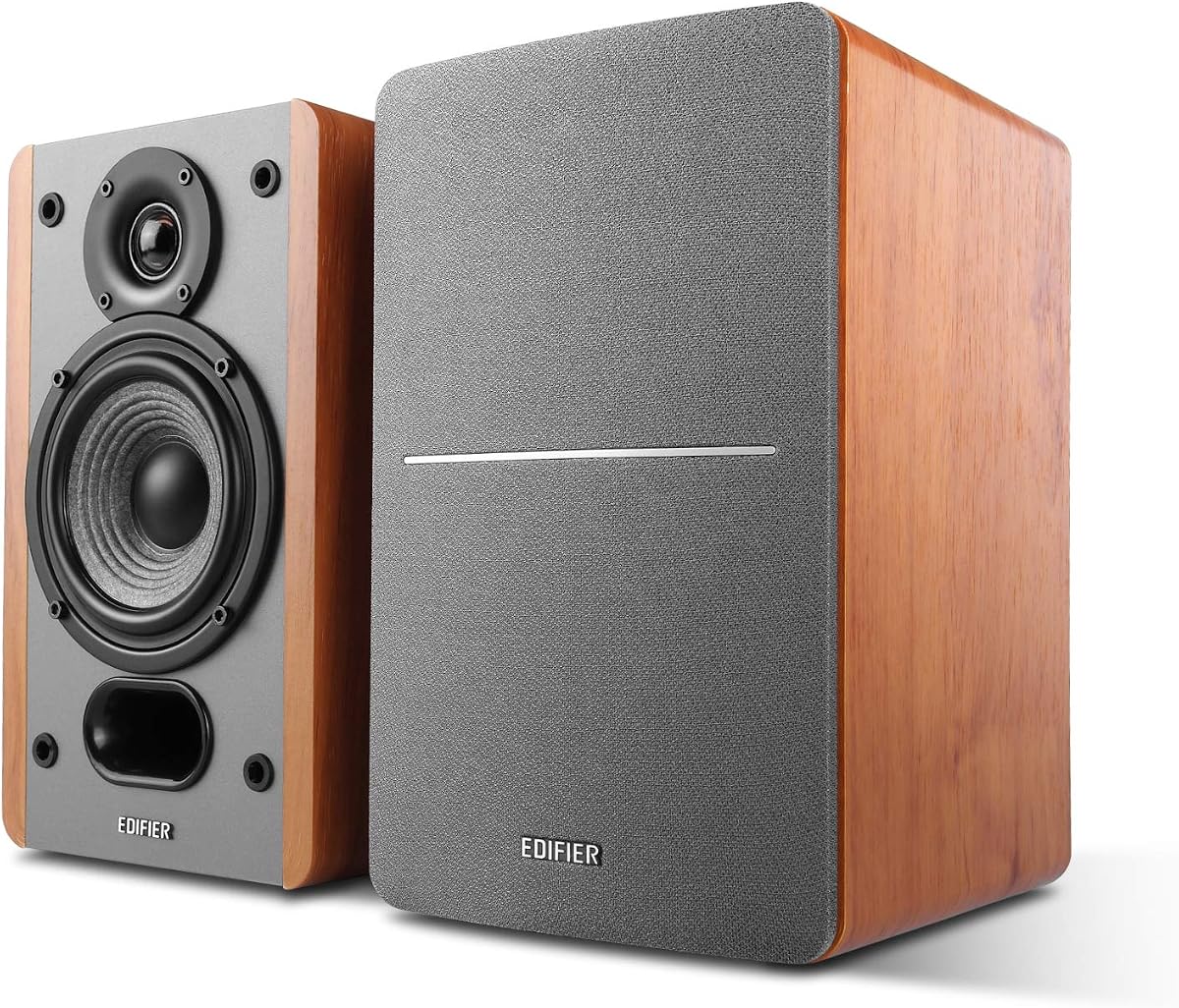



The Edifier P12 is a compact passive bookshelf speaker with a 4.6 rating and a straightforward two-way design. Its 4-inch bass driver, 19mm silk-dome tweeter, and bass-reflex port make it a practical option for smaller rooms or secondary listening positions, particularly when a turntable system already has a suitable amplifier.
We may earn a commission when you buy through this link, at no additional cost to you.
One of its most useful attributes is the built-in wall-mount bracket. That allows the speakers to function as rear surrounds in a home theater system without requiring separate wall hardware, while the supplied speaker wires simplify basic connection to a receiver. The wood-color cabinet also gives the pair a more traditional appearance than many compact powered systems.
The main limitation is the modest scale of the drivers. Compared with the larger 5.25-inch and 6.5-inch models in this guide, the P12 is more likely to need amplifier assistance for convincing low-frequency output. It also cannot be connected directly to a phono-level turntable output without a compatible preamplifier.
This is a sensible pick for listeners who prioritize compact dimensions, simple installation, and flexibility between stereo and home theater use. Choose the P12 when room size, mounting convenience, and an existing amplifier matter more than maximum scale and deep bass.
The compact P12 fits comfortably on smaller shelves while using separate drivers for mids, bass, and treble. Its wall bracket also makes it possible to move the speakers out of valuable shelf space when they are needed as rear surrounds.
Speaker wires are included, and the 6-ohm impedance is a familiar pairing for many stereo amplifiers. A phono-capable amplifier or external preamplifier remains necessary when the turntable offers only a phono output.
We may earn a commission when you buy through this link, at no additional cost to you.
RIOWOIS earns a 4.8 rating with a passive two-way configuration built specifically for use near a record player. Its 4-inch woofer, silk-dome horn tweeter, and rear-mounted bass-reflex port combine a warm tonal direction with a more expansive presentation than the cabinet dimensions alone might suggest.
We may earn a commission when you buy through this link, at no additional cost to you.
The horn-loaded tweeter is intended to improve midrange clarity and extend the perceived soundstage, while the rear port supports stronger low-end efficiency and near-wall placement. Gold-plated terminals accept banana plugs, U-type connectors, or bare wire, making connection options more flexible than a basic spring-clip arrangement.
Its furniture-grade cabinet has rounded, hand-sanded edges, giving the speakers a more refined appearance than many utilitarian bookshelf models. The included wall bracket is padded to reduce impact between the cabinet and wall, an understated detail that can be useful in a compact installation.
The main trade-off is that the system is passive and needs a receiver or amplifier. Its 4-inch woofer also places it below the larger models in potential bass scale. Even so, it is a strong match for warm, detailed playback in a small or medium room and for listeners who appreciate flexible terminal hardware.
The silk-dome tweeter is paired with integrated horn loading to improve clarity through the midrange. This design can help voices and instruments remain intelligible while preserving a smooth high-frequency presentation.
Gold-plated terminals support several connector styles, reducing the need for adapters. The supplied bracket and padded mounting points also help keep the installation orderly without requiring separate wall-mount hardware.
We may earn a commission when you buy through this link, at no additional cost to you.
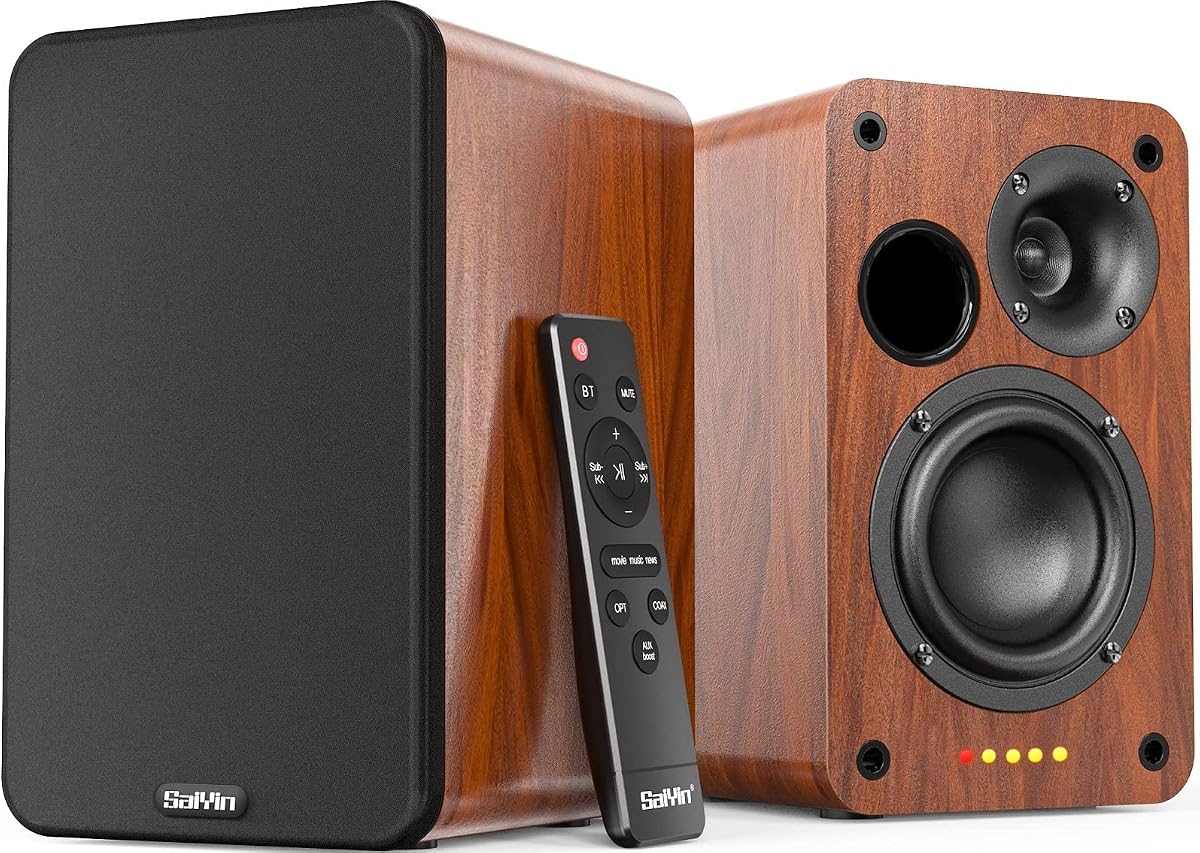
Although included in the broader comparison, the Saiyin Powered Bluetooth Bookshelf Speakers are not passive models. They are a 4.4-rated powered 2.0 system for buyers who want to connect a turntable without adding a separate amplifier, making them an important alternative for simpler installations.
We may earn a commission when you buy through this link, at no additional cost to you.
The active speaker offers 0.5-inch silk-dome tweeters, 4-inch woofers, Bluetooth 5.3, and multiple wired inputs. Optical and coaxial connections support digital audio up to 24-bit/192kHz, while RCA inputs make the system relevant to turntables that provide a line-level output. A subwoofer output is also available for extending the low-frequency range.
Compatibility requires care. A turntable with a phono output needs a preamplifier, whereas a line output can connect more directly. The product also cannot receive audio through a Bluetooth transmitter unless the turntable specifically supports Bluetooth transmission; a Bluetooth receiver built for phone pairing serves a different purpose.
This system makes the most sense for a straightforward turntable and speaker setup in which convenience matters more than the ability to upgrade the amplification chain. Its remote control, selectable inputs, top-panel buttons, and subwoofer output also make it useful for mixed music and television listening.
The active right-hand speaker contains the amplification needed to drive the pair. This removes the requirement for a separate stereo amplifier and can simplify the signal path from a line-level turntable output.
Bluetooth, optical, coaxial, and RCA connections provide more source choices than a basic analog-only setup. The remote can switch inputs, adjust volume, and control mute, while a subwoofer output allows deeper bass to be added.
We may earn a commission when you buy through this link, at no additional cost to you.
The Edifier R1280T is another powered alternative in this list, combining a 4.6 rating with a straightforward 2.0 configuration. It uses a 13mm silk-dome tweeter and a 4-inch full-range unit, with amplification built into one speaker so a turntable can drive the pair directly.
We may earn a commission when you buy through this link, at no additional cost to you.
Dual auxiliary inputs are the most relevant feature for a turntable buyer. The speakers can accept connections from a device with a 3.5mm headphone output or dual RCA output, and two sources can remain connected at the same time. A remote controls the overall volume, while side-panel knobs adjust bass and treble.
The limitations reflect the model’s basic role as a powered desktop or near-field system. It is not a true passive bookshelf pair, and the supplied data emphasizes analog-style connections rather than a dedicated phono stage. The 4-inch full-range unit also prioritizes convenience and compact output over the deeper bass of a larger woofer.
The R1280T works well for straightforward vinyl listening through a line-level or phono-to-line connection, especially when the buyer does not want to assemble a separate amplifier and speaker-wire system. It is less appropriate for listeners seeking a passive design, broad home theater expansion, or a more substantial full-range presentation.
Dual AUX inputs allow a turntable and another analog device to remain connected simultaneously. This is useful when switching between records and another source without repeatedly reaching behind the speakers to change cables.
Separate bass and treble controls on the powered speaker let listeners adjust the balance to suit a room or source. The remote provides convenient volume control from the listening position.
We may earn a commission when you buy through this link, at no additional cost to you.
The Polk Audio T15 is a 4.7-rated passive bookshelf pair and one of the most balanced options in this guide. Its 0.75-inch tweeter and 5.25-inch Dynamic Balance driver offer a useful increase in driver scale over compact 4-inch models without reaching the dimensions of the largest premium speakers.
We may earn a commission when you buy through this link, at no additional cost to you.
The listed specifications emphasize clear, balanced sound and deep bass even at low volumes. That makes the pair suitable for both a dedicated stereo position and home theater duties. The speakers can serve as front left-right units, rear surrounds, or components in a larger system that can later expand with towers, a center channel, and a subwoofer.
Installation is refreshingly direct: connect the speaker wire to an AV receiver or stereo amplifier. Their wall-mountable construction offers another placement option, although stands or shelving may be preferable for a central turntable listening position where accurate left-right alignment is important.
The T15 does not include amplification or a phono stage, so the turntable must be paired with a suitable receiver or preamplifier. Within the passive category, however, it offers an excellent combination of recognizable brand, balanced specifications, manageable size, and system flexibility.
The 5.25-inch Dynamic Balance driver gives the T15 a fuller foundation than smaller bookshelf speakers without becoming difficult to place. Its ability to work as a front, rear, or surround pair makes it a practical foundation for gradual home theater expansion.
A conventional passive connection to a receiver keeps the system easy to understand and service. Matching speaker-wire polarity on both channels is the main setup step, while the lack of internal amplification preserves flexibility over future upgrades.
We may earn a commission when you buy through this link, at no additional cost to you.
The Saiyin 3-Way Passive Bookshelf Speakers stand apart through their three-driver architecture. With a 4.4 rating, they combine a custom 5.25-inch paper-cone woofer, a 1-inch elliptical midrange driver, and a 20mm silk-dome tweeter to divide bass, vocals, and treble into separate channels.
We may earn a commission when you buy through this link, at no additional cost to you.
The dedicated elliptical midrange is intended to keep voices and instruments clearer even when a listener is not positioned directly between the speakers. The woofer extends down to 48Hz, and removable foam plugs allow the user to tune the rear bass-reflex port for either reduced output near a wall or fuller bass in an open space.
Specifications include 4-ohm nominal impedance, a 48Hz-to-20kHz frequency response, 85dB sound pressure level, and a 5-to-50-watt rated power per speaker. The terminals accept banana plugs, U-type connectors, or bare wire, but speaker wires are not included, and the pair requires external amplification.
This is a compelling choice for listeners who believe separate midrange handling improves vocal and instrumental definition. Its detailed specifications make amplifier matching easier, although the larger cabinet and lower impedance require more care with the chosen amplifier and placement than a smaller nominal 4-inch design.
Assigning mids and treble to dedicated drivers can reduce frequency overlap and improve clarity. The oval midrange shape is specifically intended to create a broader horizontal presentation, helping vocals stay intelligible across the listening area.
Removable foam plugs provide practical control over the bass-reflex port. Leaving them out encourages stronger low-frequency extension, while inserting them can tame boominess when the speakers are positioned close to a wall.
We may earn a commission when you buy through this link, at no additional cost to you.
This second Saiyin powered pair offers a different balance from the company's 4-inch model. It carries a 4.4 rating, a 3.75-inch woofer, a 0.5-inch silk-dome horn tweeter, and a compact active-speaker enclosure that can function as a complete stereo system.
We may earn a commission when you buy through this link, at no additional cost to you.
The speaker provides optical, coaxial, 3.5mm, dual-RCA, and Bluetooth connections. A turntable with a line-level output can connect directly, while one with only a phono output requires a preamplifier. As with the other powered model, Bluetooth transmission from the turntable is necessary for wireless playback; a receiver designed to pair with a phone is not interchangeable with a transmitter.
Its remote provides volume, mute, and input selection, while top-panel buttons offer direct control. The system can also be connected to an amplifier or receiver through that unit's line output, although it does not need such equipment to operate.
This model is most practical for a smaller listening area or a mixed entertainment setup. The 3.75-inch woofer is less capable of producing large-scale bass than the larger passive choices, but the extensive connectivity and compactness make it a straightforward option for turntable owners who prioritize convenience.
Optical, coaxial, analog, and wireless inputs allow one speaker system to serve records, television, and phones or computers. The powered design eliminates the separate amplifier normally required by passive bookshelf speakers.
The listed dimensions make the active speaker relatively easy to place on a shelf or cabinet. Its 3.75-inch woofer still requires realistic expectations for bass, particularly in a large room or at higher volume levels.
We may earn a commission when you buy through this link, at no additional cost to you.
The Audio-Technica AT-SP3X is a compact powered bookshelf system with a 4.8 rating. It is designed to deliver full-range audio while supporting both dual-RCA wired connections and Bluetooth, giving turntable owners more than one way to establish a source connection.
We may earn a commission when you buy through this link, at no additional cost to you.
Bluetooth multipoint pairing allows two compatible devices to remain connected at once, which is useful for moving between a turntable-based listening session and a phone or computer without repeatedly pairing. A power button with an LED indicator and a dedicated volume dial simplify everyday operation.
The package includes an AC adapter with three international plug adapters and a 6.6-foot, or two-meter, speaker cable. Those details reduce the need to source basic accessories separately and make the system more approachable for a first-time vinyl setup.
Because the AT-SP3X is powered, it belongs in the alternatives section rather than the strictly passive category. It is best suited to buyers seeking a compact, attractive system with convenient wireless access. Those wanting to upgrade amplification later or use fully passive speakers with a receiver should choose one of the true passive models instead.
Multipoint Bluetooth keeps two devices associated with the speakers at the same time. The feature is convenient for casual listening, although wired turntable playback remains the more direct route for record listening.
Dual RCA jacks support a direct analog connection, and the included cable handles the link between the powered speakers. The supplied AC adapter and international plugs further simplify setup in different locations.
We may earn a commission when you buy through this link, at no additional cost to you.
The Klipsch R-51M is a 4.8-rated passive bookshelf pair distinguished by its horn-loaded high-frequency design and dual 5.25-inch spun-copper IMG woofers. The 1-inch aluminum LTS tweeter sits within a 90-by-90-millimeter square Tractrix horn, a configuration intended to reproduce high frequencies with clarity and controlled dispersion.
We may earn a commission when you buy through this link, at no additional cost to you.
A rear-firing bass-reflex port supports the two main drivers, giving the pair more scale and low-frequency potential than the compact 4-inch options. The supplied dimensions are 13.3 by 7 by 8.5 inches, a practical size for a dedicated stereo shelf but still manageable in most living spaces.
As a passive model, the R-51M requires an amplifier or receiver. Its strong driver scale and distinctive horn presentation may feel energetic compared with the warmer RIOWOIS design or the more neutral approach implied by the Polk models. Room placement, source recordings, and personal tonal preference should guide the final decision.
This is an excellent choice for listeners who value vocal presence, treble detail, and a clearly defined stereo image. It combines a high rating with a proven driver layout and enough scale to make records sound full without taking on the physical footprint of the largest premium bookshelf speakers.
The Tractrix horn is designed to improve high-frequency efficiency and control directivity. This can make cymbals, vocals, and transients more articulate, especially when the speakers are positioned correctly.
Dual 5.25-inch IMG woofers offer more cone area than the compact single-woofer designs in the guide. The rear-firing port adds further low-frequency support, helping the pair deliver a fuller presentation from a bookshelf enclosure.
We may earn a commission when you buy through this link, at no additional cost to you.
The Polk Audio Signature Elite ES20 is the premium passive selection in this guide, combining a 4.8 rating with a large 6.5-inch woofer and 1-inch Terylene tweeter. Its Dynamically Balanced Acoustic Array and precision crossovers are designed to create a clear, lifelike soundstage for music as well as film.
We may earn a commission when you buy through this link, at no additional cost to you.
Polk's patented Power Port technology is intended to deliver bass that is three decibels louder than a conventional ported design while reducing turbulence and distortion. The listing also emphasizes high sensitivity and compatibility with both 4-ohm and 8-ohm amplifiers or AV receivers, which offers useful flexibility during system building.
Placement is versatile. The ES20 can sit on stands sold separately, serve as side, rear, or elevation surrounds, or be wall-mounted using screw inserts and keyhole slots. The contemporary walnut finish also gives it a more refined visual presence than the basic black models in the guide.
The trade-offs are size and the need for external amplification. Its larger enclosure may be less convenient for small shelves, and a turntable with only a phono output still needs a phono-capable amplifier or preamplifier. For listeners seeking maximum scale, refinement, and long-term home theater compatibility, however, the ES20 is the most ambitious choice.
The Power Port uses a specially shaped opening intended to move air with less turbulence than a basic reflex port. Combined with the 6.5-inch woofer, it allows the ES20 to deliver more authoritative low-frequency output without requiring a tower-sized enclosure.
Keyhole slots and screw inserts support wall installation, while optional stands allow more precise stereo positioning. The same pair can also be incorporated into a larger Signature Elite surround system as side or rear speakers.
We may earn a commission when you buy through this link, at no additional cost to you.
Choosing a turntable speaker involves balancing signal compatibility, driver capability, room size, and amplification. The following factors help separate genuinely passive models from powered alternatives and narrow the field to a system that fits the listener's setup.
A passive speaker contains no internal amplifier and must be connected to an external receiver or stereo amplifier through speaker wire. A powered or active bookshelf speaker includes amplification in one enclosure and accepts a line-level signal directly. This distinction is fundamental because a turntable's phono-level output cannot normally drive passive speakers without a phono preamplifier.
Check whether the turntable provides a PHONO output, LINE OUT, RCA outputs, or another connection type. PHONO output is a low-level cartridge signal that needs a phono stage, while LINE OUT is already amplified and more suitable for direct connection to powered speakers. The Saiyin powered models can accept a direct line connection, but their instructions specifically call for a preamplifier when the turntable has only a phono output.
Larger woofers generally have more potential to reproduce low bass with less strain. The Edifier P12 and RIOWOIS use 4-inch drivers, while the Polk T15 and Klipsch R-51M use 5.25-inch drivers. The Saiyin 3-Way model also uses a 5.25-inch woofer, and the premium Polk ES20 steps up to 6.5 inches. Room size and playback level should be considered alongside driver dimensions.
A two-way design assigns low and mid frequencies to a woofer and high frequencies to a tweeter. A three-way design adds a dedicated midrange driver. The Saiyin 3-Way model uses an elliptical midrange intended to improve vocal clarity and horizontal coverage, while horn-loaded tweeters in the Klipsch and RIOWOIS designs focus high-frequency output for efficiency and directivity.
Impedance affects how hard an amplifier must work to drive a speaker. The Edifier P12 is rated at 6 ohms, the Saiyin 3-Way pair at 4 ohms, and the Polk ES20 is described as compatible with both 4- and 8-ohm amplifiers. Most modern stereo amplifiers support these loads, but the amplifier's specification manual should be checked before connecting any passive pair.
Bookshelf speakers need room for airflow around their ports and, ideally, a symmetrical position for stereo listening. Wall mounting can save shelf space, but near-wall placement may alter bass response. The ES20 includes keyhole slots and screw inserts, the Edifier P12 and RIOWOIS feature built-in brackets, and the Polk T15 is also wall-mountable. Stands may provide a better listening height and image.
Bass-reflex ports release air from the enclosure and can extend low-frequency response, but their output changes with placement. The Saiyin 3-Way speakers include removable foam plugs that reduce port output when installed. The Polk ES20 uses its Power Port design to control turbulence, while the Klipsch R-51M has a conventional rear-firing port. Small adjustments to placement or port tuning can have a noticeable effect.
A turntable-focused system usually benefits from a coherent stereo pair placed near ear height. Home theater buyers may also value wall mounting, compact dimensions, and the ability to add towers, a center channel, or a subwoofer later. The Polk T15 and ES20 are explicitly positioned for expansion, while the Edifier P12 and RIOWOIS can also serve as rear surrounds.
Begin by identifying the turntable's output type and the amplifier or preamplifier's available inputs. Connect the turntable to the phono or line input, run speaker wire from the amplifier to the passive speakers, and observe correct polarity by matching positive and negative terminals. Power on the amplifier at a low level before switching on the turntable to avoid unexpected transients.
Place the speakers symmetrically, forming an equilateral triangle with the primary listening position for the clearest stereo image. Begin with the speakers farther from walls, then move them closer if the room requires it. For ported models, use any supplied foam plugs carefully and listen for boominess, while keeping the ports unobstructed. Set the amplifier to a neutral tone position before making tonal adjustments.
Clean the cabinets with a soft, dry cloth and avoid abrasive cleaners or excessive moisture around the drivers and terminals. Keep magnetic items away from the speaker positions, maintain adequate ventilation around powered alternatives, and inspect wiring periodically for loose connections. When moving the speakers, unplug everything first and lift each cabinet rather than pulling it by a cable.
Only when the turntable provides a suitable line-level output or when a phono preamplifier is used. A turntable with only a PHONO output produces a low-level signal that requires a phono stage before it can drive passive speakers through an amplifier. Never connect passive speaker wire directly to a turntable's phono output.
No. The Saiyin powered models, Edifier R1280T, and Audio-Technica AT-SP3X include built-in amplification and are included as practical alternatives. The Edifier P12, RIOWOIS, Polk T15, Saiyin 3-Way, Klipsch R-51M, and Polk ES20 are the truly passive choices that require an external amplifier or receiver.
Choose a passive pair whose nominal impedance is supported by the amplifier. The list includes 4-ohm, 6-ohm, and broadly compatible designs. The amplifier manual is the authoritative guide, and a matching or higher supported load is generally the safest approach when specifications are unclear.
Stands are often helpful because they place the drivers closer to ear level and make left-right positioning more consistent. They also improve airflow around rear ports and reduce dependence on furniture surfaces. Wall mounting can save space, although it may require adjustments to tweeter height, toe-in, and room balance.
Only the powered models offer Bluetooth. The Edifier P12, RIOWOIS, Polk T15, Saiyin 3-Way, Klipsch R-51M, and Polk ES20 are passive and require a wired amplifier connection. A separate Bluetooth receiver can sometimes add wireless playback, but it should connect to the amplifier's line input rather than directly to passive speaker terminals.
A subwoofer is optional, but it can be useful if the selected bookshelf speakers cannot produce enough low-frequency extension for the music and room. Some powered alternatives include a subwoofer output, while passive systems can be paired with a compatible subwoofer through the amplifier. Begin with the full-range speakers alone before deciding whether extra bass is necessary.
There is no universal distance, but the speakers and listening position should form a roughly equilateral triangle for accurate imaging. That often results in a few feet of separation, depending on room size, speaker depth, wall distance, and personal preference. Move the speakers and listener in small increments rather than relying on one fixed measurement.
Start by moving the speakers farther from the wall or corner, since a rear port can reinforce low frequencies in a confined space. If the speakers include removable port plugs, inserting them can reduce port output. Avoid making several tonal changes simultaneously, because speaker placement usually offers the more durable solution.
The Polk Audio T15 is the best overall value in the passive group, combining a 5.25-inch driver, clear specifications, wall-mounting flexibility, and room for future home theater expansion. The Klipsch R-51M is the editor's choice for listeners who want a more assertive, detailed presentation, while the Polk Signature Elite ES20 is the premium option for larger scale and refined construction.
Before buying, confirm that the speaker is genuinely passive, check the turntable's output level, and match the speaker impedance to the amplifier. Driver size matters for bass, three-way and horn designs influence clarity and tonal character, and room placement can change the result as much as the component specifications. The compact Edifier P12 and RIOWOIS are useful when space is the priority.
Finally, verify the current product details, package contents, availability, and commercial terms directly on the linked listing. This guide is intended to simplify the decision, but the compatibility of a turntable, amplifier, speakers, and room remains the foundation of a successful record-playing setup.