
WonVon 5-Inch CarPlay GPS
4.3Editor score
Wireless CarPlay connectivity
Glove-friendly five-inch screen
Motorcycle-specific mounting kit
Small GPS for motorcycle navigation and tracking systems can make unfamiliar roads easier to explore, improve route guidance, and help riders monitor a motorcycle or trip. The best unit depends on whether you prioritize dedicated navigation, phone-based mapping, concealed asset tracking, recording features, or rugged off-road capability.
This guide compares ten compact GPS and navigation products using the supplied specifications, ratings, display sizes, connectivity options, weather-resistance ratings, mounting systems, and tracking functions. The list covers purpose-built motorcycle navigators, CarPlay and Android Auto screens, compact vehicle trackers, and one handheld GPS that may suit riders who divide their time between motorcycles and outdoor activities.
Each review explains the strongest features, practical limitations, and ideal rider profile. The Garmin zūmo XT3 models lead for dedicated adventure navigation, the WonVon system stands out as an affordable connected option, and several smaller trackers focus on locating a parked motorcycle or another asset. Product details and availability can change, so readers should confirm specifications and compatibility before purchasing.
4.3Editor score

4.0Editor score

4.0Editor score
As an Amazon Associate we earn from qualifying purchases.
The comparison below separates dedicated motorcycle navigation, smartphone-connected displays, compact asset trackers, and rugged handheld GPS units by their most important specifications.


The Garmin zūmo XT3 with its 4.7-inch display is the most purpose-built compact navigator in this group, earning a 4.0 rating. It combines a rugged motorcycle-oriented design with detailed street and topographic maps, an ultrabright sunlight-readable screen, and a live lean-angle gauge. Unlike a phone-dependent CarPlay screen, it is designed to serve as the central navigation device on the handlebars.
We may earn a commission when you buy through this link, at no additional cost to you.
Its strongest feature is the breadth of motorcycle-specific information. The visual route planner can be used directly on the device or through the Tread smartphone app, while Adventurous Routing helps locate winding and scenic roads. Popular moto paths, Michelin scenic routes, and the Great Rides database add useful options for discovery. The Tread app can also present ride summaries containing G-force, maximum speed, acceleration, and deceleration data, making this more than a simple turn-by-turn navigator.
Ruggedness is another major advantage. An IP67 rating helps the unit withstand handlebar vibration, dust, harsh weather, and rough road conditions. The 4.7-inch display is smaller than many CarPlay screens but remains large enough to present maps clearly, and its glove-friendly operation is appropriate for real-world riding. Some advanced content, including group location and premium map layers, depends on a paired phone, an active cellular connection, or an active Garmin plan, so buyers should consider ongoing service needs.
This is the strongest recommendation for riders who want navigation built around motorcycles rather than a general-purpose car display. It suits adventure touring, scenic road discovery, and riders who value lean-angle information and performance metrics. Those wanting the smallest possible tracker or a phone-first navigation experience should look at the compact trackers and CarPlay alternatives later in the guide.
Adventurous Routing, popular motorcycle paths, Michelin scenic routes, and the Great Rides database make it easier to plan memorable roads rather than simply reach a destination by the fastest route. Direct device editing and Tread app planning provide flexible options for both planned and spontaneous outings.
The lean-angle gauge is particularly relevant to cornering technique, while the Tread app organizes ride summaries with metrics such as G-force, maximum speed, acceleration, and deceleration. Track-oriented functions add drag race, session, and lap information when paired with an eligible performance plan.
We may earn a commission when you buy through this link, at no additional cost to you.
The WonVon 5-inch system combines Apple CarPlay, Android Auto, Bluetooth, and motorcycle-specific installation hardware in an affordable connected display. Its 4.3 rating is among the strongest in the guide, and the product directly addresses common rider concerns: readable navigation, usable touch controls, stable mounting, weather resistance, and flexible electrical installation.
We may earn a commission when you buy through this link, at no additional cost to you.
The 5-inch IPS screen has an 854-by-480 resolution and an anti-glare treatment designed to remain usable in sunlight. It supports glove-friendly operation and includes a night mode. Wireless CarPlay provides navigation, calls, music, and voice commands, while Android Auto offers similar functions for compatible Android users. Dual Bluetooth also allows connection to a rider's headset or helmet communication system for hands-free calling and audio.
The installation package includes a mounting bracket, wiring harness, BMW-style connector, mounting tools, and instructions. A vibration-resistant body and compact footprint help it integrate with a motorcycle cockpit, while 12–24V input and multi-motorcycle compatibility broaden its potential use. One important limitation appears directly in the product name: TPMS is not included. Additional features also depend on the user's phone, operating system, and app support, so the complete experience is not identical for every rider.
This is a practical recommendation for riders who want familiar smartphone navigation in a motorcycle-specific package without paying for a fully dedicated GPS unit. It is particularly attractive for urban riding, commuting, and touring where CarPlay or Android Auto is already part of the rider's routine. Those seeking precise standalone topographic navigation should examine the Garmin zūmo XT3 or Garmin eTrex 22x instead.
A five-inch display gives CarPlay and Android Auto maps more room than a conventional phone screen. Wireless connectivity reduces cable clutter, while voice commands and Bluetooth headset support help riders keep their hands on the controls and attention on the road.
The vibration-resistant body, quick-lock bracket, wiring harness, and multi-voltage input make the package more motorcycle-focused than a generic portable car display. Confirm handlebar clearance, connector compatibility, and the available power location before installation.
We may earn a commission when you buy through this link, at no additional cost to you.
The Apple Find My tracker is a 1.3-inch magnetic locator designed to help users find vehicles, luggage, pets, and other assets. It has a 3.8 rating and approaches the tracking problem differently from the navigators in this list: it is a compact locator rather than a handlebar map. For motorcycle owners who mainly want to locate a parked bike, it is simple and discreet.
We may earn a commission when you buy through this link, at no additional cost to you.
Once paired with Apple's Find My app, the device uses a crowdsourced network of Apple devices to produce location updates without requiring a SIM card or subscription. That design keeps the tracker tiny and removes a recurring service expense. The upgraded internal magnet provides a secure attachment to metal motorcycle components, and the low weight makes the unit less noticeable than a conventional GPS module.
The key limitation is platform dependence. It requires an iOS device for pairing, so riders with an Android-only ecosystem should look elsewhere. Crowdsourced updates can also vary according to the availability of nearby Apple devices and the local environment. The manufacturer notes that authorized users control access after pairing, while acknowledging that professional detection equipment may still detect the tracker.
Buy this product when your priority is finding a parked motorcycle rather than navigating while moving. It also works for a helmet, luggage set, pet, or other metal asset that benefits from a concealed attachment. Riders seeking turn-by-turn guidance, live route information, or an integrated motorcycle display should choose a navigation system instead.
The magnetic housing allows the tracker to sit under a seat, beside a frame component, or another suitable metal location without adding conspicuous hardware. Its compact proportions preserve the appearance and portability of the motorcycle.
The tracker communicates through the Apple Find My network, which avoids cellular contracts and separate SIM arrangements. That makes it convenient for owners who already use compatible Apple devices and do not want another service to manage.
We may earn a commission when you buy through this link, at no additional cost to you.
The 6-inch Garmin zūmo XT3 is the larger counterpart to the compact 4.7-inch model, and it retains the same 4.0 rating. It is a better fit for riders who want a generous map display, detailed motorcycle-specific tools, and rugged construction than for those searching for the smallest possible tracking device.
We may earn a commission when you buy through this link, at no additional cost to you.
The high-definition 6-inch screen presents street and topographic maps, downloadable satellite imagery, and route guidance with greater visual space. The device includes a live lean-angle gauge, an on-device visual route planner, Adventurous Routing, popular moto paths, and access to the Great Rides database through Tread. Group-ride location, premium map layers, and performance-package features extend its capabilities for connected and track-focused riders.
Its IP67 rating supports use around vibration, difficult weather, and rough roads. The display is sunlight-readable and designed for glove use. As with the smaller XT3, some features require a paired Tread app, cellular connectivity, or an active plan. The larger housing may also be less attractive on a compact motorcycle with limited handlebar space, so physical dimensions should be checked against the cockpit and brake-lever clearance.
Choose this XT3 when map detail and glanceable information matter more than minimalism. It is especially compelling for adventure riders, touring motorcyclists, and anyone who wants standalone mapping plus riding metrics. Riders seeking a smaller dedicated unit should consider the 4.7-inch version, while phone-first riders may prefer a wireless CarPlay system.
The larger display reduces the need to zoom and pan when studying junctions, topographic features, or group-rider positions. It can therefore be easier to consult at low speed or during a brief stop, provided the motorcycle has room for a stable mount.
Scenic-route databases, high-resolution satellite imagery, popular motorcycle paths, and lean-angle information extend the experience beyond basic turn-by-turn guidance. The Tread app provides a convenient bridge between route planning on a phone and navigation on the motorcycle.
We may earn a commission when you buy through this link, at no additional cost to you.
The Dual-Network Vehicle Tracker is the highest-rated product in this comparison, with a 4.7 rating. At 1.14 inches and 0.25 ounces, it is designed for discreet placement on a motorcycle, car, bicycle, luggage item, or other asset. It supports Apple Find My on iPhone and Google Find Hub on Android, giving it broader phone compatibility than trackers tied to one ecosystem.
We may earn a commission when you buy through this link, at no additional cost to you.
Its IP68 waterproof rating provides useful protection in rain, snow, and other outdoor conditions. The replaceable CR2032 battery is advertised to last as long as 12 months, making the unit suitable for long-term parking or asset monitoring without frequent charging. Setup involves pressing the button to pair with the appropriate built-in phone application, after which the magnetic enclosure can be placed in a discreet location.
Despite the GPS terminology in the product category, the tracker is not a road navigation device and has no handlebar map. Its location reporting relies on the available Find My or Find Hub network, so update frequency can depend on nearby compatible devices and the rider's environment. It also cannot provide route guidance, lean data, group positions, or recorded ride video.
This tracker is a compelling choice for owners who need a compact, long-lasting locator across both iPhone and Android ecosystems. It is particularly useful for locating a parked motorcycle, valuable luggage, keys, or another frequently misplaced item. Anyone who needs guidance while riding should pair the tracking concept with a separate navigation system.
Support for both Apple Find My and Google Find Hub removes the need to commit to one platform before purchasing. Riders can pair the tracker with the built-in application already present on their phone rather than creating another dedicated account.
The sealed IP68 housing and replaceable battery are well suited to a motorcycle that may remain parked outdoors. Low weight and strong magnetic placement help the tracker remain inconspicuous during normal use.
We may earn a commission when you buy through this link, at no additional cost to you.
The 8.1-inch 4K CarPlay Screen combines a large smartphone interface with dual-lens dash-camera recording, giving it a 4.1 rating. It is aimed at riders who want familiar wireless CarPlay or Android Auto navigation and also want a front and rear view of each journey. That makes it more specialized than a straightforward GPS or a compact tracker.
We may earn a commission when you buy through this link, at no additional cost to you.
Wireless CarPlay and Android Auto provide maps, calls, messages, music, and voice-assistant functions. The 8.1-inch HD IPS touchscreen offers more space for checking directions and controlling media than most motorcycle displays. Siri and Google Assistant support allows riders to request directions or change a playlist without touching the screen, and Bluetooth can connect a helmet or headset for hands-free calls and audio.
Its recording system is the defining feature. A front 4K camera and rear 1080P camera can record simultaneously, display in split-screen mode, and share footage through Wi-Fi. The display carries an IPX7 waterproof rating for wet-weather use, but cameras, storage, power connections, and mounting all add installation complexity. The large housing may also be difficult to fit on a crowded handlebar or interfere with controls.
This display makes sense for riders who treat recording, awareness, and phone integration as one connected cockpit. It is best for touring or commuting setups with ample handlebar space and a willingness to manage camera storage and wiring. Riders seeking a smaller unit should favor the 5-inch WonVon or 6.1-inch A-ONE Pro systems.
The split-screen format allows navigation information and camera imagery to appear together, reducing the need for separate devices. Recorded journeys can be reviewed or shared through the product's Wi-Fi functionality.
Siri and Google Assistant can handle directions and media requests, while Bluetooth headset connectivity supports hands-free calls. These controls are particularly useful on a large screen that may otherwise encourage excessive interaction while moving.
We may earn a commission when you buy through this link, at no additional cost to you.
The LandAirSea 54 is a live GPS asset tracker with a 4.1 rating. Unlike trackers built on the Find My ecosystem, it uses a dedicated cellular tracking service and web-based software or the SilverCloud app. Its primary appeal is frequent position updates, global reach, geofencing, and historical playback for monitoring a motorcycle or other valuable asset.
We may earn a commission when you buy through this link, at no additional cost to you.
The internal magnetic design makes attachment straightforward to metal surfaces, including vehicles, ATVs, and golf carts. Motion activation allows the tracker to sleep when the asset is not moving, helping preserve battery life during storage. Location can be mapped in real time with Google Maps, and historical playback is available for up to one year, providing a useful record of previous movement.
The central trade-off is the required subscription. Unlike the compact Apple and Google Find My trackers in this guide, the LandAirSea 54 cannot provide its advertised live tracking without an active service plan. Buyers should also consider cellular coverage in the areas where the motorcycle will travel. Although called a GPS tracker, it does not provide route guidance or an integrated display.
Choose the LandAirSea 54 when global coverage, frequent updates, alerts, and historical tracking are more important than avoiding a service subscription. It is well suited to owners who need a detailed movement record or use a motorcycle for business, delivery, or prolonged travel. It is not a substitute for navigation hardware, so many riders will pair it with one of the dedicated or phone-connected displays listed here.
Historical playback allows an owner to review where an asset traveled and when it moved. That level of history is useful for long-term monitoring, travel records, and fleet-style oversight.
Real-time alerts and geofencing can notify owners when a tracked asset moves or leaves a designated area. These features make the tracker more appropriate for active monitoring than for simply finding a forgotten parked motorcycle.
We may earn a commission when you buy through this link, at no additional cost to you.
The A-ONE Pro is a feature-rich motorcycle navigation system with a 4.0 rating. Its defining elements are an ultra-bright 6.1-inch QLED touchscreen, wireless CarPlay and Android Auto, front and rear cameras, and an integrated GPS module. Unlike a simple tracker or a basic display, it combines navigation, communications, recording, and ride-data tools in one motorcycle-oriented package.
We may earn a commission when you buy through this link, at no additional cost to you.
The high-brightness QLED display is designed to remain sharp and vivid in direct daylight without requiring a separate sunshade. Wireless smartphone connectivity brings navigation, music, calls, messages, and apps to the handlebar. The camera system records through waterproof front and rear 1080P units and supports a split-screen view in which navigation and live imagery appear together.
Its GPS module records speed, route, altitude, location, and compass data with the video, making the ride available for replay through a mobile app. The system is protected by an IP67 rating, while a stable aluminum handlebar mount and additional inserts support different handlebar widths. It can draw power through USB or a direct 12-volt connection, although hardwiring adds work compared with a simple tracker.
The A-ONE Pro is best for riders who want a bright connected display and integrated video evidence in a premium-style cockpit. It suits touring riders, content creators, and commuters who value simultaneous navigation and recording. Buyers should confirm handlebar clearance, power routing, app compatibility, and camera-storage requirements before installation.
The high-brightness 6.1-inch QLED panel emphasizes outdoor legibility and vivid detail. Its relatively compact screen size offers more space than a small tracker without requiring the footprint of an extra-large CarPlay display.
The integrated GPS module records route, speed, altitude, location, and compass information alongside video. Replaying that combined record can provide a more complete account of a ride than a conventional map or isolated camera.
We may earn a commission when you buy through this link, at no additional cost to you.
The 7-inch Waterproof Motorcycle GPS combines CarPlay, Android Auto, dual-lens recording, blind-spot detection, and tire-pressure monitoring in one housing. Its 4.6 rating makes it one of the strongest choices in the guide for riders who regard safety information as part of the navigation system rather than an optional accessory.
We may earn a commission when you buy through this link, at no additional cost to you.
The high-brightness IPS display is designed to remain readable in direct sunlight and supports glove-friendly touch control. Blind-spot detection provides side-vehicle alerts for highway and city riding. The integrated TPMS presents real-time tire pressure and temperature information on the display, which is valuable for motorcycles equipped with compatible sensors.
The system also includes front and rear cameras for day-and-night footage, dual-band Wi-Fi, Bluetooth 4.2, and a dedicated handlebar remote. Its IP67 housing is sealed against rain, splashes, and dust, and a hardwire kit supports a permanent installation. These capabilities demand more space and wiring than a small tracker, and the 7-inch screen may be intrusive on compact handlebars. Compatibility of the cameras and TPMS components should be verified before purchase.
This is a strong recommendation for riders who want navigation, recording, and live safety data in a single integrated unit. It is especially useful for highway touring and commuting. Choose it only if the handlebar area can accommodate the display safely and the wiring can be routed without interfering with controls or moving components.
Integrated TPMS data places tire pressure and temperature alongside navigation information. This can make routine checks easier to monitor, although compatible sensors and correct setup are necessary for the readings to be useful.
The built-in warning system alerts the rider to side vehicles in blind-zone areas. It complements rather than replaces attentive riding, mirror checks, and sound awareness, but it adds another layer of information during higher-speed travel.
We may earn a commission when you buy through this link, at no additional cost to you.
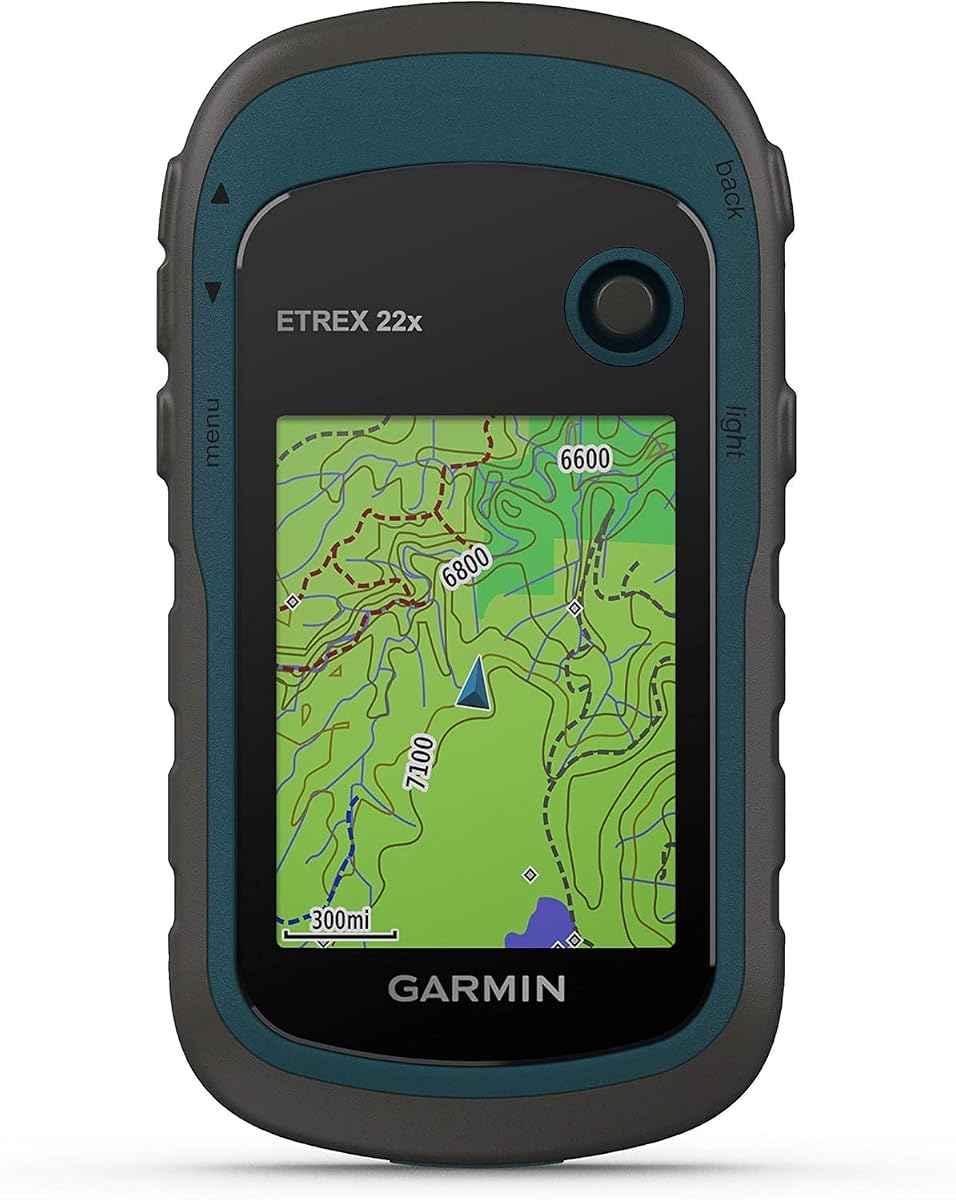
The Garmin eTrex 22x is the smallest dedicated navigation unit in the guide, with a 2.2-inch color display and a 4.3 rating. It is a rugged handheld GPS rather than a motorcycle-specific navigator, but its compact size, long battery life, and standalone mapping make it relevant to riders who value minimalism or use one device for motorcycles, cycling, and hiking.
We may earn a commission when you buy through this link, at no additional cost to you.
Preloaded Topo Active maps include routable roads and trails, while the internal eight gigabytes of memory provides room for additional map downloads. A microSD card slot expands storage further. Support for both GPS and GLONASS satellite systems can improve positioning in challenging environments where receiving signals from one constellation alone may be less dependable.
The screen has 240-by-320 pixels and is sunlight-readable, but it is small by modern navigation standards. It also lacks the motorcycle-specific features that distinguish the zūmo XT3, including a lean-angle gauge, motorcycle route discovery, group-rider location, and handlebar-oriented rugged mounting. A suitable RAM mount or equivalent secure bracket may be needed, and a screen this small requires more visual attention than a larger display.
The eTrex 22x is a compelling choice for riders who want offline navigation without a smartphone, especially when the motorcycle is used for dual-sport exploration and the same device must support other outdoor activities. Riders who need larger maps, touch-friendly controls, or integrated ride data should choose a motorcycle-specific unit instead.
Preloaded Topo Active maps and downloadable content allow navigation without cellular service or a paired smartphone. The eTrex 22x is therefore well suited to remote routes where dependable offline guidance matters.
Combining GPS with GLONASS can improve the chances of maintaining a clear satellite fix in difficult terrain. That makes the unit useful beyond paved-road riders, especially when it is shared with hiking or cycling activities.
We may earn a commission when you buy through this link, at no additional cost to you.
The right choice depends on whether the device must guide a live ride, locate a parked motorcycle, record road-facing video, or provide several functions in one package. Consider the riding environment, installation constraints, connectivity, and operating system before making a selection.
A navigation device displays maps, directions, routes, and ride information while the motorcycle is moving. An asset tracker instead helps locate a motorcycle after it has been parked or moved to an unfamiliar location. A dedicated rider may want both, but combining both roles in one small device is less common than choosing one primary function and adding the other separately.
Screen size affects map readability, route overview, and the amount of information visible at a glance. The Garmin eTrex 22x uses a compact 2.2-inch display, while the Garmin zūmo XT3 reaches 4.7 or 6 inches, and connected motorcycle displays extend to 7 or 8.1 inches. Sunlight readability, anti-glare treatment, resolution, night mode, and glove-friendly touch operation matter as much as raw size.
Wireless CarPlay and Android Auto systems depend on a compatible smartphone, operating system, location permissions, and an active cellular or wireless data connection. The Apple Find My tracker requires an iOS device, while the cross-platform tracker supports Apple Find My and Google Find Hub. Dedicated Garmin features may also depend on the Tread app, cellular service, or an optional map and performance plan.
Motorcycle electronics face vibration, rain, dust, temperature changes, and constant exposure to sunlight. The Garmin zūmo XT3 models carry IP67 ratings, the A-ONE Pro display system and 7-inch safety-screen model are also IP67-rated, and the 8.1-inch CarPlay screen has an IPX7 rating. The cross-platform tracker uses IP68, while the remaining products should be evaluated using the detailed housing and installation claims provided by their manufacturers.
A large display can obstruct controls, cables, brake reservoirs, or the rider's sightline. Measure the available handlebar area before selecting a 6-, 7-, or 8.1-inch model. Small trackers require less space but need a secure metal surface, while hardwired CarPlay systems require access to a reliable power source and careful cable routing.
Location accuracy and update frequency depend on the tracking network. Find My and Google Find Hub devices use crowdsourced compatible devices and require no SIM card, while the LandAirSea 54 uses its own cellular service and subscription. Real-time alerts, geofencing, global coverage, and historical playback are useful for active monitoring but should not be confused with a navigation display or guaranteed continuous satellite updates.
Street-only maps may be enough for touring, while dual-sport riders should seek topographic layers, trails, downloadable satellite imagery, and adventurous road options. The Garmin zūmo XT3 offers a rich motorcycle route-planning environment, the eTrex 22x supports Topo Active maps, and CarPlay-based systems inherit the mapping choices available through the rider's phone.
A lean-angle gauge, G-force summaries, acceleration data, group-rider positions, and track statistics can improve the value of a dedicated GPS. Dash cameras add a front or rear record of the ride, while TPMS supplies tire pressure and temperature. These extras increase utility but may also require subscriptions, compatible sensors, larger housings, additional storage, or more complex wiring.
Begin with a complete compatibility check before installation. Confirm the motorcycle's handlebar dimensions, available electrical connection, screen clearance, and the device's supported voltage or connector. For smartphone-connected products, update the phone's operating system and navigation apps, enable the required permissions, and test wireless connectivity before the first ride. For trackers, pair with the correct ecosystem and verify that location updates appear as expected.
Install the main unit where it remains visible without blocking instruments, controls, or the ignition. Tighten the bracket evenly and secure every cable away from hot exhaust components, steering mechanisms, suspension movement, and sharp edges. Follow the provided wiring diagram for a hardwired installation. After mounting, perform a short stationary test to confirm that the display, power, touch controls, cameras, TPMS readings, and Bluetooth connections remain stable under vibration.
Care for the device according to its stated water-resistance rating and the instructions supplied with the product. Clean the screen with a soft damp cloth, avoid abrasive cleaners, and keep magnetic trackers away from cards with magnetic stripes, implanted medical devices, and other sensitive items. Check the mount and connectors periodically, replace tracker batteries on schedule, and preserve recorded files before formatting or replacing storage media.
No. A tracker is primarily designed to report the location of a parked or misplaced motorcycle, while a navigation system provides maps, turn-by-turn directions, route planning, and information during a ride. A rider who needs both may use a dedicated navigator and a separate compact tracker. Some multifunction displays combine navigation, cameras, and ride data, but they still differ from a concealed asset locator.
Dedicated units such as the Garmin zūmo XT3 and eTrex 22x include onboard mapping and can provide core navigation without cellular service. Wireless CarPlay, Android Auto, group-rider locations, and some connected features require an active data connection. Compact Find My and Find Hub trackers also rely on nearby compatible devices and therefore need network availability for location reports.
The Dual-Network Vehicle Tracker supports Apple Find My on iPhone and Google Find Hub on Android. The Apple Find My tracker listed in this guide pairs with iOS devices, while the LandAirSea 54 uses its own web-based software and SilverCloud app with a required cellular subscription. Check the ecosystem and service requirements before making a purchase.
No. A larger screen can show more map detail and information, but it may crowd the handlebars, obscure controls, or become distracting. The Garmin zūmo XT3 at 4.7 inches offers a more compact dedicated option, while the 7- and 8.1-inch connected screens favor visibility and media controls. The best size is the largest one that remains safely mounted without obstructing the riding view.
Many of the listed systems have meaningful water-resistance ratings, including IP67 or IPX7 protection. Water resistance does not mean every unit can withstand the same exposure, so check the exact rating and installation instructions. Keep connectors properly seated, avoid directing high-pressure water at openings, and follow the manufacturer's guidance for use during heavy rain or water crossings.
A tracker reports the motorcycle's location, while a dash camera records video from the road. Some systems, including the A-ONE Pro, 8.1-inch CarPlay Screen, and 7-inch Waterproof Motorcycle GPS, combine navigation, recording, and location functions. A concealed asset tracker such as the Apple Find My device is much smaller and generally provides location rather than a recorded view of the ride.
Many riders use a RAM-style handlebar or fork mount to secure a handheld Garmin eTrex 22x. The device itself is not motorcycle-specific, so the mount must prevent screen movement, maintain line of sight, and keep controls unobstructed. A dedicated zūmo unit may be easier to integrate because it is designed for motorcycle vibration, glove operation, and handlebar use.
Core navigation on the Garmin zūmo XT3 and eTrex 22x does not inherently require a subscription, although optional map layers, group features, and performance functions can use paid plans. CarPlay and Android Auto rely on the rider's phone service, and some trackers require either a cellular plan or no plan at all. Review all recurring costs before installing a device.
The Garmin zūmo XT3 with its 4.7-inch display is the leading choice for riders who want a compact, dedicated motorcycle navigator with rugged construction, topographic maps, and motorcycle-specific riding tools. The WonVon 5-inch system is the best value-oriented connected option, while the A-ONE Pro offers the richest combination of a bright display, cameras, GPS ride data, and phone integration.
Start by defining the job. Choose a navigator for live directions, a small tracker for locating a parked motorcycle, or one of the multifunction displays when cameras, TPMS, blind-spot warnings, and ride recording justify the larger installation. The Garmin eTrex 22x is ideal for minimal standalone navigation, and the cross-platform tracker is compelling for iPhone and Android users who want a compact locator with a long battery life.
Before purchasing, verify handlebar clearance, mounting hardware, power requirements, phone compatibility, weather resistance, and any subscription that supports optional features. Product specifications and availability can change, so shoppers should review the current listing carefully and ensure the device matches both their motorcycle and the type of guidance or tracking they actually need.