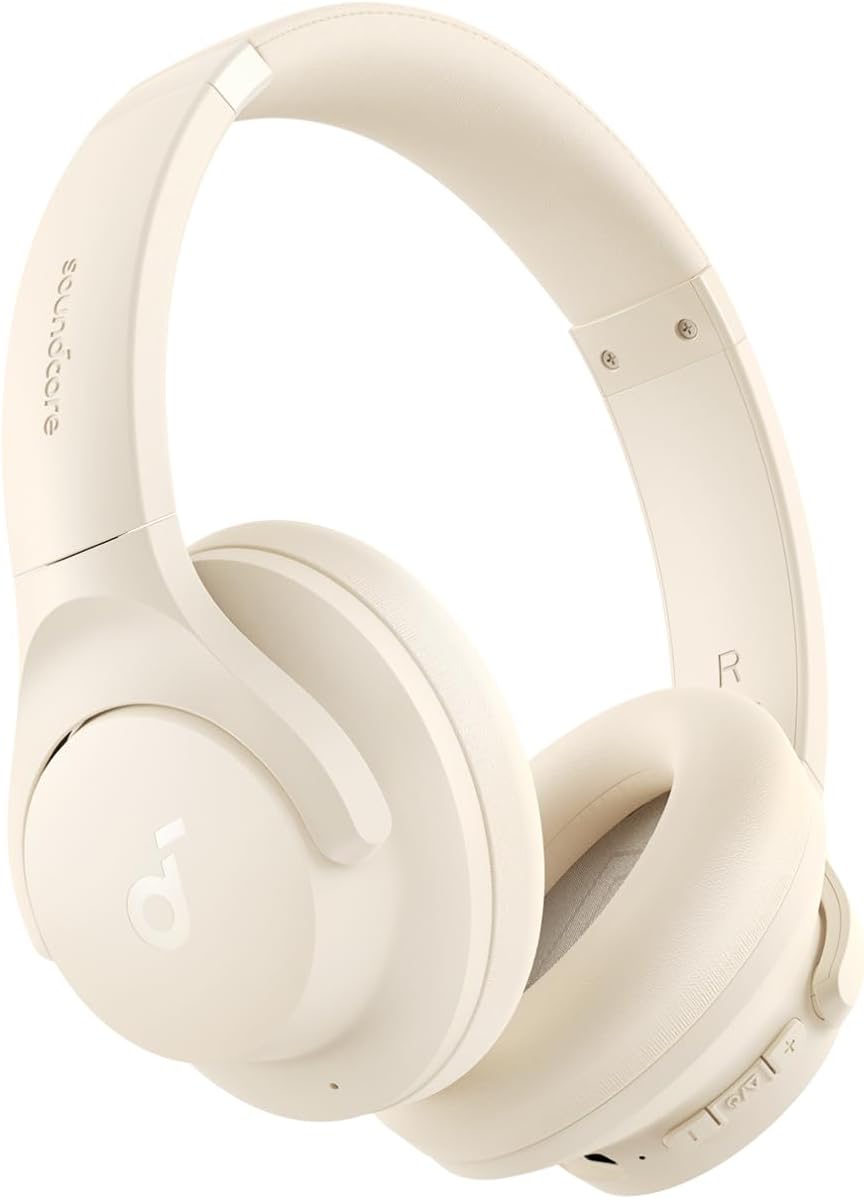
Soundcore Q20i Hybrid ANC
4.5Editor score
Four-microphone adaptive noise control
Forty-hour ANC battery life
Dual-device wireless connectivity
Our guide compares the best headphones for large ears, evaluating comfort, drivers, noise cancellation, battery life, connectivity, and fit for different needs.
Headphones for large ears should combine a roomy interior, gentle pressure distribution, dependable adjustability, and comfortable ear cushions. The best models avoid pinching smaller ears while remaining secure during travel, focused work, gaming, and long listening sessions. They also need to sound balanced enough for music and work clearly across daily environments.
We compared all ten products using the supplied specifications, focusing on driver size, headphone or ear-cup design, noise-control features, battery life, wired and wireless connectivity, microphone support, app controls, and practical travel features. The list includes studio-oriented models, wireless ANC headphones, gaming headsets, and an on-ear option for shoppers who prioritize low weight.
Each entry explains where that model is most practical, including its strongest features and honest limitations. The award labels identify the three standout choices, while the comparison table offers a quicker view of the field. Product availability and prices can change, so confirm current listings and fit-related details before buying.
4.5Editor score
4.2Editor score
4.6Editor score
The comparison below places every model by form factor, core audio hardware, noise-control capability, and everyday connectivity. It highlights the trade-offs shoppers face when choosing between lightweight wireless comfort, bass-heavy tuning, studio accuracy, long battery life, and wired reliability.


The Soundcore by Anker Q20i earns a 4.5 rating and stands out as a capable all-rounder for shoppers who want generous everyday features without moving into premium territory. Its four built-in microphones, hybrid active noise cancellation, transparency mode, and BassUp tuning make it especially useful for offices, commutes, and busy streets.
We may earn a commission when you buy through this link, at no additional cost to you.
The strongest advantages are practical rather than decorative. A full charge supports up to 40 hours with ANC on, while a five-minute top-up adds four more hours. Multipoint connectivity keeps a laptop and phone available simultaneously, and the included AUX cable enables a different sound path with higher-resolution audio. Inside the soundcore app, listeners can adjust EQ, select ANC or transparency modes, enable HearID, and access other settings.
There are trade-offs. Four-microphone noise filtering is not available when listening through AUX, so buyers who regularly alternate between wireless and wired modes should understand that difference. The included cable also adds a little bulk, and the app-based feature set will not appeal to someone who wants completely device-independent controls. Those limitations are reasonable given the model’s feature density.
For large ears, the Q20i is a strong starting point because it combines an over-ear format, generous battery life, adjustable app features, and a balanced set of connectivity options. It is best for commuters, students, and hybrid workers who want a dependable pair of large headphones with meaningful noise control.
The four-microphone system filters background sound in wireless mode, making the Q20i useful in packed offices and on public transportation. Transparency mode provides a convenient middle ground when announcements, conversations, or street navigation require awareness.
Multipoint connectivity, AUX listening, customizable EQ, and firmware updates give the headphones more flexibility than a basic wireless model. Buyers should download the app after setup to make the most of the available controls.
We may earn a commission when you buy through this link, at no additional cost to you.
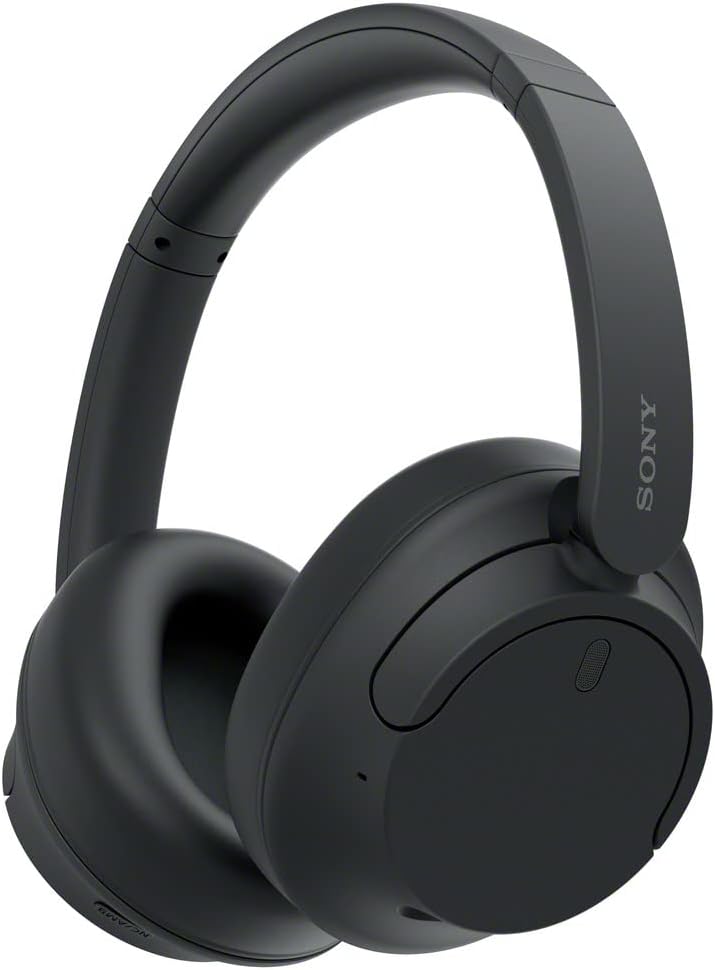
The Sony WH-CH720N has a 4.2 rating and is selected for shoppers who put long-session comfort near the top of their priorities. At 192 grams, Sony describes it as its lightest wireless noise-canceling headband model, making it a compelling option for larger heads and ears that may find bulkier designs tiring.
We may earn a commission when you buy through this link, at no additional cost to you.
Its noise-canceling system uses two noise sensors and Sony’s Integrated Processor V1. Adaptive Sound control and adjustable ambient sound help tune the experience to different environments, while beamforming microphones support clearer hands-free calls. The supplied features also include multipoint connection, DSEE processing for compressed music, and up to 35 hours of battery life. A three-minute charge can add approximately one hour of playback.
The main limitation is that its 35-hour maximum battery is shorter than the figures offered by several wireless competitors in this list. Sony also emphasizes processing and wireless convenience rather than a specific Hi-Res wired specification, so listeners seeking a studio-grade wired path may prefer another option. Its light weight also means it offers less perceived physical isolation than some larger designs.
The WH-CH720N is best for commuters, students, office workers, and anyone who wants a light over-ear headphone with dependable ANC. For large ears, the combination of low weight, an adjustable headband, adaptive controls, and a well-balanced sound profile makes it the most broadly recommended model in this guide.
The 192-gram construction is the model’s defining advantage for all-day use. Its over-ear cups still deliver the passive coverage people expect from a full-size headphone, but the lower weight can reduce the cumulative strain associated with heavier frames.
Dual sensors, Adaptive Sound control, adjustable ambient sound, and beamforming microphones cover commuting, office, and call needs. Multipoint switching also prevents the headphones from being tied to only one source device.
We may earn a commission when you buy through this link, at no additional cost to you.
The Sony ULT WEAR has a 4.3 rating and targets listeners who want a large, cushioned wireless headphone with a dedicated bass control. Its distinctive ULT button raises the low-end output, while the rest of the feature set focuses on noise cancellation, travel convenience, clear calls, and dependable everyday connectivity.
We may earn a commission when you buy through this link, at no additional cost to you.
The thermo-foaming cushions are designed to mold around the ear, which is relevant for people seeking a roomy over-ear fit. The swivel-fold mechanism and supplied compact case make it easier to pack. Other highlights include dual noise canceling, Sony’s V1 processor, beamforming microphones, wind-noise reduction around the microphone, multipoint pairing, and intelligent wearing detection for automatic pause and playback.
The design is not aimed at listeners who want strictly neutral or flat tuning. Activating the ULT feature can make the bass far more assertive, which works well for modern music, action films, and gaming but may overwhelm softer recordings. Its stated battery life of up to 30 hours is also below the strongest wireless options here, although a three-minute charge provides up to 90 minutes of additional listening.
This model is ideal for someone who prioritizes physical cushioning and bass presence over all-day wireless endurance. It also suits travelers because the folding design and case reduce packing volume. For large ears specifically, the molded cushions and substantial over-ear structure make it worth close consideration, especially if you enjoy a powerful low-frequency presentation.
The ULT button provides a direct way to increase low-frequency impact without permanently committing to an extremely bass-heavy profile. This makes the headphones more flexible for different genres than a fixed consumer tuning would.
A swivel-fold layout and compact case reduce the space required in luggage or a work bag. Multipoint connectivity, wearing detection, and clear-call microphones add practical value for travel and workdays.
We may earn a commission when you buy through this link, at no additional cost to you.
The OneOdio Pro-10 earns a 4.4 rating and serves large-ear listeners who want full-size studio-style headphones with flexible monitoring. Its large 50mm neodymium drivers are designed for powerful bass, clear vocals, and crisp highs, while the soft cushions and stretchable headband form a more traditional over-ear structure.
We may earn a commission when you buy through this link, at no additional cost to you.
The 90-degree swiveling ear cups are the model’s most useful specialty. They allow one ear to remain open for DJ cueing, mixing, or monitoring, and they make it easier to position the other cup correctly around the ear. Its wired design connects with smartphones, laptops, tablets, desktop computers, audio interfaces, DJ mixers, amplifiers, and devices offering a 3.5mm or 6.35mm jack.
The absence of wireless connectivity is a significant restriction for commuting and mobile use. There is also no active noise cancellation, so the Pro-10 is better suited to a desk, studio, rehearsal room, or home listening position where reliable wired access matters more than portability. Buyers should confirm that their preferred device includes the necessary connection and adapter.
The Pro-10 is a compelling recommendation for DJs, musicians, gamers using a wired setup, and home listeners who prefer a spacious over-ear design. It is especially relevant to larger ears because the large drivers, deep cushioning, and flexible headband create a more accommodating physical package than many compact headsets.
The swiveling cups allow partial monitoring without removing the headphones. That is valuable for DJs and musicians, while the adjustable headband helps position the open cup more naturally around the outer ear.
Support for common 3.5mm and 6.35mm connections makes the Pro-10 useful with a wide range of music and production equipment. The included share-audio port can also feed another compatible pair without an external splitter.
We may earn a commission when you buy through this link, at no additional cost to you.
The TOZO HT3 has a 4.6 rating and leads this group in stated battery endurance, with up to 90 hours of continuous playback. It is a feature-rich wireless headphone aimed at travelers, students, gamers, and multitaskers who want a long interval between charges and several ways to connect.
We may earn a commission when you buy through this link, at no additional cost to you.
Four high-sensitivity microphones support adaptive and hybrid noise cancellation, while 40mm dynamic drivers cover music, movies, and gaming. Bluetooth, AUX 3.5mm, and USB-C modes broaden device compatibility, and a 10-minute charge provides an additional nine hours. For large ears, the most relevant feature is the set of removable, replaceable breathable ear pads, which allow the headset to be refreshed without replacing the entire headphone.
Its many controls may require an adjustment period. The TOZO App offers 32 EQ modes, while the headphone also provides spatial audio, personalized sound settings, AI call noise reduction, gaming-oriented functions, a voice assistant, and left-right balance adjustment. Buyers who want a simple traditional headphone may find that breadth unnecessary. The foldable construction also places portability ahead of the more substantial feel of a fixed studio frame.
The HT3 is best for long journeys, heavy study periods, and users who value flexibility across devices. Removable cushions and extended battery life make it particularly practical for large ears, while the abundant app features allow the sound and communication settings to be tailored to different routines.
A stated 90-hour maximum gives the HT3 a clear advantage for long flights, road trips, and multi-day listening. Quick charging helps when a full cycle is not practical, though the maximum figure is likely to vary with ANC and feature use.
Removable ear pads are valuable for large ears because cushion compression and wear can affect both comfort and seal. Replacing them when necessary can restore comfort and extend the useful life of the headphones.
We may earn a commission when you buy through this link, at no additional cost to you.
The KVIDIO 65H carries a 4.5 rating and emphasizes physical comfort, wireless simplicity, and long battery life. Its over-ear cushions use soft memory-protein foam, while the adjustable headband and flexible ear muffs are designed to reduce pressure around the ear and accommodate different head shapes.
We may earn a commission when you buy through this link, at no additional cost to you.
The headphones weigh only 0.44 pounds, making them a practical option for long study sessions, home-office work, and travel where neck and head fatigue are concerns. Dual 40mm drivers provide the sound foundation, and Bluetooth 6.0 supports a stated connection range of up to 33 feet. The rechargeable 500mAh battery offers up to 65 hours of playtime, with a full charge taking approximately 2.5 hours. A backup 3.5mm cable allows continued listening when the battery is depleted.
The most obvious compromise is the lack of active noise cancellation. In a loud office, airplane, or subway, outside sound will remain more present than it would with an ANC-equipped alternative. There is also less emphasis on advanced app controls, multipoint pairing, spatial processing, and call-focused microphones. Buyers seeking a straightforward headset may see that as a benefit, but travelers should account for environmental noise.
The KVIDIO 65H is best for buyers who prioritize soft cushions, low weight, and uncomplicated wireless listening. It is a natural candidate for larger ears because the manufacturer specifically highlights a pressure-reducing fit, flexible earmuffs, and memory foam around the ear.
Memory-protein foam, an adjustable headband, and flexible earmuffs form the model’s strongest comfort argument. The light 0.44-pound frame further reduces the burden of an all-day over-ear headset.
The stated 65-hour battery covers extended work and travel periods, while the included 3.5mm cable provides a fallback. It is a practical option for anyone who prefers dependable audio over elaborate smart features.
We may earn a commission when you buy through this link, at no additional cost to you.
The Sony MDR7506 has a 4.7 rating, the highest among the ten products, and is a trusted choice for professional monitoring and home audio. Its name, driver specification, and long-term studio design make it a natural fit for users who value sound detail and dependable wired performance over wireless convenience.
We may earn a commission when you buy through this link, at no additional cost to you.
The headphones use 40mm neodymium drivers with a stated frequency response of 10Hz to 20kHz. Their closed-ear configuration provides external-noise reduction and consistent isolation, while the rugged frame and folding construction suit repeated studio or home use. Beamforming microphones support clear hands-free calling, and the included 1/4-inch adapter broadens compatibility with professional equipment.
The fixed nine-foot cable is not detachable, which means a damaged cable cannot be replaced without replacing the headphone. There is no active noise cancellation, Bluetooth, or app-based tuning, and the long lead can be inconvenient at an untethered desk. The included earpad and headband pad system can also change the fit and seal, so large-ear buyers should consider replacement pads if the stock cushions feel too small or shallow.
The MDR7506 is best for recording, mixing, broadcasting, critical listening, and anyone already working with wired studio equipment. Its high rating and detailed driver specification make it a strong specialist choice. For large ears, the over-ear cups and extensive replaceable-pad ecosystem offer meaningful room, provided the initial fit is verified.
A 10Hz–20kHz frequency range and 40mm neodymium drivers support detailed reproduction across low, mid, and high frequencies. The closed-back design creates a consistent environment for recording and mixing tasks.
The rugged frame and folding design suit regular use, and the included soft case protects the headphones between sessions. The fixed cable is simple and reliable, although it offers no convenient replacement path if damaged.
We may earn a commission when you buy through this link, at no additional cost to you.
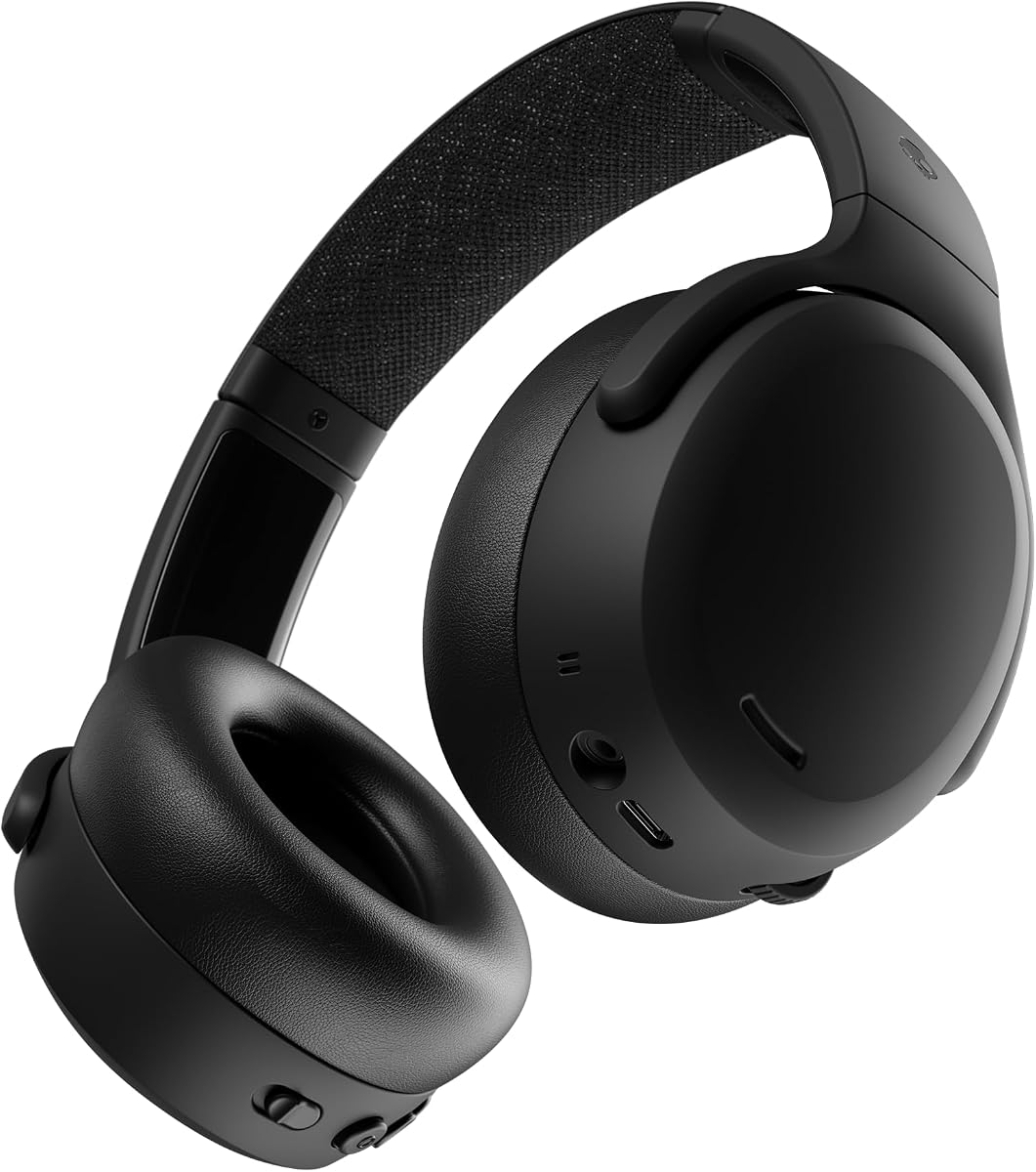
The Skullcandy Crusher ANC 2 has a 4.6 rating and is the premium recommendation for listeners who want a large wireless headphone with a deliberately powerful low end. Its patented Crusher system combines two full-range 40mm drivers with additional dual bass drivers, creating a sound intended to be felt as well as heard.
We may earn a commission when you buy through this link, at no additional cost to you.
The model’s four-microphone active noise cancellation is adjustable, allowing the level of isolation to be tuned rather than treated as a fixed on-or-off feature. It provides up to 60 hours of battery life with ANC off, and a ten-minute charge adds four hours. The Skullcandy app supports Personal Sound by Mimi, EQ adjustment, ANC and Stay-Aware modes, while multipoint pairing permits seamless transitions between two devices.
Its greatest compromise is tonal preference. The Crusher bass system is the defining feature, but listeners who prefer a restrained low end may find it excessive even at lower settings. The physical design also has the presence and weight associated with a premium over-ear model, so buyers wanting the lightest possible travel headphone should look elsewhere. Battery life is shorter when noise cancellation is active than the headline maximum.
The Crusher ANC 2 is best for bass enthusiasts, movie listeners, gamers, and commuters who want rich wireless sound with strong customization. It earns the Best Premium label because it combines a distinctive multi-driver design, adjustable ANC, personalization tools, multipoint connectivity, and fast charging in one capable package.
Two full-range drivers are joined by dedicated bass drivers to create the Crusher effect. This is a deliberately consumer-focused signature designed for visceral impact rather than the neutral response sought in a professional studio headphone.
Adjustable ANC lets users balance isolation with environmental awareness, while Personal Sound by Mimi and EQ controls expand the tuning options. Multipoint keeps two devices ready for calls, music, and work.
We may earn a commission when you buy through this link, at no additional cost to you.
The JLab JBuds Lux ANC has a 4.5 rating and is built around extensive app control, flexible connectivity, and strong battery performance. Its 40mm drivers provide full-range sound, while Lab Spatial Audio adds a more dimensional presentation for compatible content and settings.
We may earn a commission when you buy through this link, at no additional cost to you.
The JLab app provides EQ modes, custom sound adjustments, ANC and Be Aware level controls, remappable buttons, and safe-hearing limits. Those tools can help create a more comfortable listening environment for sensitive ears. Hybrid ANC is stated to reduce noise by up to 35 dB, and the battery lasts more than 40 hours with ANC enabled. Wireless Share Mode can send audio to another compatible pair of JLab headphones.
Multipoint keeps two devices connected, while the included USB-C cable supports wired listening. Compared with the Skullcandy Crusher ANC 2, the JBuds Lux ANC does not promise the same forceful bass or specialized multi-driver impact. The listing also does not provide a specific Hi-Res audio or frequency-response figure, so technical buyers should judge it primarily on its stated feature set and overall sound character.
The JLab JBuds Lux ANC is a strong recommendation for students, office workers, and families who want flexible sound controls and easy sharing. It is especially useful for listeners who want to adjust ANC and awareness levels themselves. The over-ear format, 40mm drivers, and long battery life make it a credible choice for large ears.
EQ, ANC strength, awareness levels, control remapping, and safe-hearing limits are all available through the JLab app. This level of control is useful for adapting the same headphones to commuting, shared offices, and longer study sessions.
Bluetooth multipoint and wireless audio sharing make the headphones easy to use across a personal and work device setup. The USB-C wired option adds another listening path when battery preservation or stable connectivity matters.
We may earn a commission when you buy through this link, at no additional cost to you.
The Beats Solo 4 has a 4.6 rating and offers a compact alternative to the full-size over-ear models in this guide. Its on-ear format, ultralight ergonomic frame, flex-grip headband, and adjustable angled cups are designed to deliver a stable fit without the weight of a larger headphone.
We may earn a commission when you buy through this link, at no additional cost to you.
Custom acoustic architecture and updated drivers provide powerful, balanced sound, while Personalized Spatial Audio with dynamic head tracking creates a more immersive presentation for supported media. The battery lasts up to 50 hours, and Fast Fuel charging adds up to five hours of playback from a ten-minute charge. High-resolution lossless listening is available through the USB-C cable or a 3.5mm connection.
The main limitation is that on-ear cushions generally cover less of the ear than over-ear pads. That means less passive isolation, less direct driver contact, and potentially less perceived comfort for people whose ears extend well beyond the cup. The absence of active noise cancellation further limits its appeal in loud environments. Large ears may also find the adjustable band less accommodating than a model with more vertical extension.
Despite those caveats, the Solo 4 is a strong choice for portability, understated styling, and long battery life. It works with both iOS and Android, includes useful call and voice-assistant support through the built-in microphone, and uses Class 1 Bluetooth. It is best for listeners who want the lightest design in the group without giving up wireless convenience or charging speed.
The ultralight frame, flex-grip band, and angled adjustable cups keep the design stable without a full over-ear structure. It is easier to carry than the bulkier ANC and studio alternatives in this list.
Class 1 Bluetooth, multipoint-style convenience implied by the broad device support, and USB-C or 3.5mm listening cover several connection needs. Fast Fuel makes a short stop at a charger more useful during busy days.
We may earn a commission when you buy through this link, at no additional cost to you.
The most important consideration is physical clearance rather than a generic size label. Shoppers should compare cup depth, cushion softness, headband adjustment, driver dimensions, weight, and the manufacturer’s fit information while keeping their listening environment and preferred sound style in mind.
Headphones for large ears need enough cushion space for the outer ear without pressing the helix, earlobes, or jaw against a hard cup wall. A roomy interior is especially important if you wear glasses, have a broader head shape, or prefer full over-ear coverage. Pay close attention to the product’s over-ear versus on-ear design, because the Solo 4 intentionally uses smaller on-ear cups while the rest of the list uses larger over-ear structures.
Choose a model with a deep, flexible cushion and enough headband adjustment to center the driver over the ear. A physical fit cannot be guaranteed from specifications alone, so read recent fit-related reviews and consider return options when possible.
Weight becomes more noticeable after several hours, particularly when the headband presses downward. The Sony WH-CH720N is specified at 192 grams, while the KVIDIO 65H weighs 0.44 pounds, making them especially relevant to shoppers concerned about neck strain. Heavier studio or bass-focused designs may feel more substantial but can also distribute weight differently across a wider frame.
Prioritize a lightweight, adjustable design for long work sessions. Also look for broad or well-padded headbands and avoid tightening the fit excessively just to keep a loose-feeling pair in place.
Larger drivers can move more air and may provide fuller low-frequency output, but size alone does not determine sound quality. The OneOdio Pro-10 uses 50mm neodymium drivers for bass-focused studio use, the Skullcandy Crusher ANC 2 combines full-range and dedicated bass drivers, and several other models use 40mm units. Sound preferences matter more than a simple driver-size comparison.
Choose a balanced driver for general listening, a dedicated bass system for visceral impact, and a wired studio model for monitoring. Always consider the headphone’s intended tuning rather than assuming a larger driver is automatically more comfortable or accurate.
Active noise cancellation can make a long commute or noisy office considerably easier to manage, especially when the headphone also has a comfortable passive seal. The TOZO HT3 advertises 45 dB of hybrid ANC, the JLab JBuds Lux ANC states up to 35 dB, and Sony models use dedicated noise-sensor and processing systems. Transparency or ambient modes allow temporary awareness without completely removing the headphones.
Prioritize ANC if you regularly travel or work around distractions. If you need to hear children, colleagues, or announcements, choose a model with an adjustable awareness mode and test the controls for ease of use.
Battery estimates vary with noise cancellation, volume, spatial audio, and other features. The TOZO HT3 leads the listed maximum at 90 hours, followed by the KVIDIO 65H at 65 hours and the Skullcandy Crusher ANC 2 at 60 hours with ANC off. Faster charging can be more meaningful than a headline maximum when a long trip or workday begins with a partial charge.
Compare both maximum playback and quick-charge performance. If ANC is important, check the estimated duration with that mode enabled rather than relying only on the largest possible figure.
Wireless models can include Bluetooth multipoint, app controls, spatial processing, firmware updates, and wired fallback. The Q20i, Sony models, TOZO HT3, JLab, and Beats Solo 4 support multipoint or two-device connectivity. Studio products such as the MDR7506 and OneOdio Pro-10 use wired connections that may be preferable for latency, reliability, and equipment compatibility.
Choose multipoint if you alternate between a phone and computer. Choose wired headphones for production equipment, gaming desks, or zero-latency workflows. Confirm that the included cable and adapters fit your devices before purchasing.
Large headphones are easier to wear but harder to pack. The Sony ULT WEAR uses a swivel-fold design and includes a compact case, the MDR7506 folds into a supplied soft case, and the TOZO HT3 and KVIDIO 65H also emphasize folding portability. Replaceable ear pads, such as those offered by the TOZO HT3, can extend useful life and allow fit adjustments.
Consider the included case, cable storage, and cushion replacement options. For travel, balance bulk against battery life and noise control rather than choosing the largest battery specification alone.
Begin by fitting the headband evenly and placing the ear cups so each driver sits over the center of the ear. Do not push the cups unusually far forward or backward. If the headband feels tight, check whether the cushions are compressed or whether the lowest adjustment position has been used. The goal is a light, even seal rather than force.
For wireless models, download the manufacturer’s app, complete the firmware updates, and configure ANC, transparency, EQ, multipoint, and spatial settings in an environment where you can hear the differences. Test every mode, inspect the microphone during a call, and confirm that the included wired cable produces the intended sound when that connection is supported.
Store the headphones in their case, avoid wrapping the cable tightly around the frame, and clean the cushions and grilles according to the manufacturer’s guidance. Replace worn ear pads when possible, keep moisture away from charging ports, and avoid leaving the headphones in extreme heat or direct sunlight for long periods.
Over-ear headphones are usually a safer choice because their cups surround more of the ear and do not rest directly on the earlobe. They also tend to provide better passive isolation and access to larger drivers. However, fit still varies, so shoppers should look for deep cushions, flexible headbands, and adjustable cups rather than assuming every over-ear model will be comfortable.
Look for a complete over-ear design, generous cushion depth, broad vertical headband adjustment, and a lightweight frame. Product photos can also reveal whether the cups appear larger than the included ear pads. If possible, review recent buyer feedback about pressure points and compare the headphone’s measurements with the dimensions of your head and ears.
Active noise cancellation is most valuable during flights, train travel, noisy offices, and other environments with sustained background sound. It is less essential for home listening or controlled studio work. A comfortable passive seal and good cushioning can provide meaningful isolation on their own, while transparency modes help when environmental awareness is important.
Memory foam cushions can distribute pressure more evenly and adapt to different ear shapes, making them a helpful option for long sessions. Their firmness can change over time, and a soft pad does not guarantee comfort if the cup itself is too shallow. Replaceable cushions are useful because they can be renewed or changed as they wear.
Wireless headphones offer greater portability, device switching, noise cancellation, and app-based personalization. Wired headphones can provide stable connectivity, broad professional compatibility, and a direct monitoring path for recording or DJ work. Choose according to where you listen most often and whether portability or studio-level connection flexibility matters more.
Several models in this guide support multipoint or dual-device connectivity, including the Q20i, Sony WH-CH720N, Sony ULT WEAR, TOZO HT3, Skullcandy Crusher ANC 2, and JLab JBuds Lux ANC. Multipoint allows the headphones to remain connected to two devices and switch as needed. Check the manual for supported pairing behavior and individual call controls.
On-ear headphones place the pads directly on the ear, making them smaller and lighter but often providing less isolation and less room for larger ears. Over-ear headphones enclose the ear within the cup, usually delivering a more spacious fit, stronger passive isolation, and roomier driver placement. The Beats Solo 4 is the on-ear option in this guide.
Start with a loose, symmetrical fit and make small adjustments rather than pulling the headband tight. Check that the ear is fully inside the cushion without the edge of the cup touching the outer ear. If discomfort develops, alternate between the included cable and wireless mode where supported, and consider replaceable or differently shaped ear pads for the chosen model.
The Sony WH-CH720N is the broadest recommendation for listeners who want a lightweight frame, adaptive noise control, balanced sound, and straightforward two-device switching. The Soundcore Q20i is the strongest budget-oriented all-rounder, while the Skullcandy Crusher ANC 2 takes the premium slot for shoppers who prioritize powerful bass and detailed personalization.
Prioritize physical fit before any other feature. The TOZO HT3 and KVIDIO 65H offer especially relevant comfort details, including breathable or memory-foam cushions, while the OneOdio Pro-10 and Sony MDR7506 suit listeners who need dependable wired monitoring. Noise cancellation, battery life, sound signature, and wired or wireless operation should then be matched to the listener’s normal environment.
Finally, check the current listing for the exact color, included accessories, warranty information, and latest product details. Product prices and availability can change, so the final purchase should reflect both the shopper’s comfort requirements and the features used most often.