
Razer Viper V3 Pro 8KHz
4.6Editor score
54-gram esports shell
8K HyperPolling wireless
CS2-specific Dragon Lore design
Discover the best mouse for CS2, comparing wireless latency, sensors, weight, polling, battery life, switches, ergonomics, and competitive features.
A competitive mouse for CS2 should translate hand movements into immediate, predictable aim corrections. Sensor accuracy, button response, low-latency wireless, stable tracking, and an effective shape matter more than decorative features, especially when every flick, spray, and micro-adjustment can influence a round.
This guide compares ten leading gaming mice using their supplied specifications, customer ratings, connectivity, weight, polling capabilities, sensor performance, battery life, and control layouts. The selection covers lightweight esports designs, ergonomic wired and wireless models, and special editions created for Counter-Strike players.
Each review explains who benefits from a particular mouse and where alternatives may fit better. The rankings reflect the information available for November 2026 rather than personal testing, while product availability, software behavior, and prices can change. Always verify current details before purchasing.
4.6Editor score

4.6Editor score

4.4Editor score
The comparison below highlights the supplied specifications that most affect competitive CS2 play, including connection method, weight, polling rate, sensor resolution, switch design, battery life, and programmable controls.



The Logitech G PRO X2 SUPERSTRIKE combines a 4.6 customer rating with one of the most unusual feature sets in this guide. Built around a HERO 2 optical sensor, it supports tracking above 888 IPS, 88 g-force acceleration, and sensitivity up to 44,000 DPI, providing ample range for fast flicks and controlled spray patterns in CS2.
We may earn a commission when you buy through this link, at no additional cost to you.
Its distinguishing feature is the Haptic Inductive Trigger System, which provides real-time feedback as the trigger is pressed. Ten actuation points and five rapid-trigger reset levels make it possible to tune how early a firing input registers. Combined with 8K LIGHTSPEED wireless polling, the mouse is aimed at players who value both input timing and a traditional competitive shape.
The battery is listed at 60–90 hours, and a USB-A-to-USB-C cable is included for charging. Compatibility extends to PC and Mac, while POWERPLAY 2 support can provide an alternative to conventional charging. The trade-off is dependence on G HUB for advanced features and the separate cost of POWERPLAY if a player wants that ecosystem.
This is a strong recommendation for competitive players who want more control over trigger timing, particularly those comfortable fine-tuning software. It combines low-latency wireless, a high-resolution sensor, and feedback-oriented switches in a package that stands apart from conventional three-button esports designs.
The Haptic Inductive Trigger System gives shooters a clear physical cue while allowing ten actuation points and five rapid-trigger reset levels. That combination can help players create a trigger range suited to tap shooting, bursting, or rapid click inputs.
LIGHTSPEED wireless supports 8K polling, while the included rechargeable setup is rated for 60–90 hours. The optional POWERPLAY 2 system is intended for players who prefer uninterrupted play.
We may earn a commission when you buy through this link, at no additional cost to you.
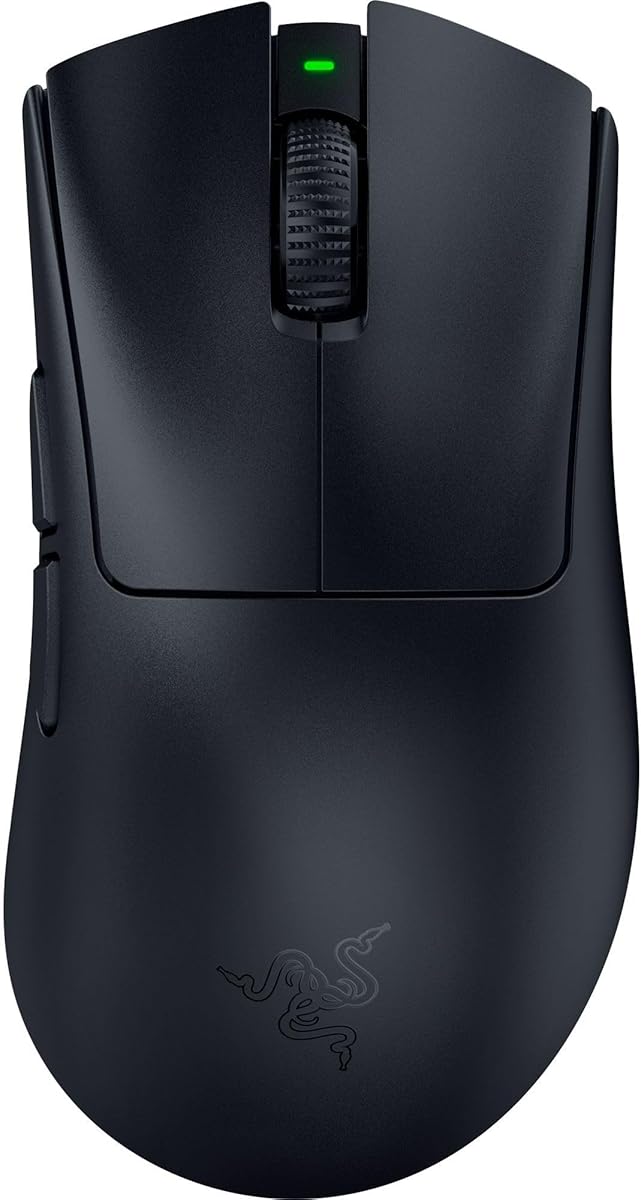
The Razer Viper V3 Pro 8KHz is a purpose-built CS2 edition with a 4.6 rating and a striking Dragon Lore theme. Its 54-gram body is designed for quick flicks, while the Focus Pro 35K Optical Sensor Gen-2 supports detailed tracking, one-DPI-step adjustments, and operation across a wider range of surfaces, including glass.
We may earn a commission when you buy through this link, at no additional cost to you.
Razer HyperPolling technology enables a stated polling rate of up to 8,000 Hz when paired with the appropriate wireless connection. The Gen-3 optical switches offer 0.2 ms actuation and a 90-million-click lifecycle, targeting a responsive and consistent competitive experience.
Battery life is rated at up to 95 hours, which should cover many practice sessions and competitive schedules. The main caveats are that optimal mouse accuracy requires attention to Windows pointer settings and Razer Synapse, while the themed design may appeal less to players who prefer a conventional black competitive mouse.
Choose this model when CS2-specific presentation matters alongside top-tier speed. It offers a balanced mix of low weight, high polling, a capable sensor, and rapid optical switching, making it one of the most focused options for competitive Counter-Strike.
The CS2 Edition and Dragon Lore-inspired appearance distinguish this model without changing the core competitive priorities. It remains a lightweight 54-gram mouse built around fast movement and precise corrections.
Up to 8,000 Hz HyperPolling and 0.2 ms optical actuation target input responsiveness. The 90-million-click switch rating also provides reassurance for sustained high-click play.
We may earn a commission when you buy through this link, at no additional cost to you.
The SteelSeries Wireless Gaming Mouse CS2 Dragon Lore Edition is a themed option aimed directly at Counter-Strike players. Its 3.7 rating is the lowest in this roundup, so buyers should place more emphasis on personal fit, warranty terms, and current software support. Visually, it draws inspiration from the coveted AWP | Dragon Lore skin.
We may earn a commission when you buy through this link, at no additional cost to you.
Quantum 2.0 wireless offers a lag-free 2.4GHz gaming connection, with Bluetooth available for other devices. The stated battery life of up to 200 hours is one of the strongest figures in the guide, reducing the likelihood that charging will interrupt a practice routine.
Aim tracking comes from an 18K DPI TrueMove Air optical sensor co-developed with PixArt. Its clicks are guaranteed for 80 million, and the manufacturer describes the switches as remaining responsive across FPS, RPG, and action games. However, the supplied specifications do not advertise an 8K polling rate, making it less compelling for players focused on the highest possible report rate.
The mouse is best suited to CS2 fans who value its special design, dependable wireless connectivity, and exceptional battery endurance. Competitive players centered on maximum polling speed should instead examine the 8K-capable models in the guide.
The Dragon Lore edition gives a CS2 setup a more game-specific identity than a standard gaming mouse. Its appeal is primarily visual, making it especially interesting for players who regularly use themed peripherals.
With up to 200 hours of stated battery life, the SteelSeries model supports long practice sessions and travel. Bluetooth is also available for non-gaming devices, although 2.4GHz is the appropriate mode for competitive play.
We may earn a commission when you buy through this link, at no additional cost to you.
The Razer Viper V3 HyperSpeed earns a 4.4 rating and stands out as a practical choice for CS2 players who prioritize wireless convenience without moving to a top-tier 8K model. At 82 grams, it offers a lighter feel than many general-purpose gaming mice while retaining a familiar esports silhouette.
We may earn a commission when you buy through this link, at no additional cost to you.
The Focus Pro 30K Optical Sensor supports detailed tracking and is positioned to function across a wider variety of surfaces, including glass. A forward sensor placement can also benefit players who prefer a particular approach to aim correction. On the top of the mouse, an accessible button cycles through five DPI stages or can be reassigned.
Battery life is a major strength. Razer specifies up to 280 hours on a single AA battery, reducing charging or battery replacement concerns during a long competitive schedule. The trade-off is that the Gen-2 mechanical switches have a 60-million-click rating, and the supplied data does not claim 8K polling.
For players who want a dependable, lightweight wireless mouse with long battery life and a capable sensor, this is a strong value-oriented recommendation. It may lack the absolute input speed of premium 8K devices, but its core competitive specifications are well balanced.
A stated 280-hour battery life makes the Viper V3 HyperSpeed particularly appealing for regular competitive sessions. The single-AA format also keeps the overall design light and straightforward to maintain.
The top-mounted DPI button makes it easy to move among five stages without opening software. Players can also customize that button, making it useful for a frequently assigned in-game command.
We may earn a commission when you buy through this link, at no additional cost to you.
The Razer DeathAdder V4 Pro combines a 4.4 rating with a re-engineered ergonomic shape and a weight of only 56 grams. That balance may appeal to CS2 players who want rapid swipes and precise tracking in a shape more substantial than the most compact esports shells.
We may earn a commission when you buy through this link, at no additional cost to you.
Its Focus Pro Optical Sensor Gen-2 reaches 45,000 DPI, tracks at 900 IPS, and is stated to maintain 99.8% accuracy. HyperSpeed Wireless Gen-2 supports up to 8,000 Hz polling, while a USB-C wired mode can maintain the same advertised polling rate for players who prefer a connection without wireless concerns.
Gen-4 optical switches are rated for 100 million clicks, and an optical scroll wheel offers another control option. Razer Synapse allows adjustment of DPI, lift-off distance, polling rate, Dynamic Sensitivity, and Smart Tracking. These software controls are valuable for players willing to build a precise personal configuration.
The primary caveat is battery configuration. The 150-hour figure applies at 1,000 Hz, so players running 8K polling will use power more quickly. Overall, this is an excellent choice for ergonomic, lightweight players who want high-end sensor and polling specifications.
The 45K sensor, 900 IPS tracking capability, and 99.8% stated accuracy support detailed aim adjustments. Sensor placement and settings remain important, but the hardware provides generous resolution for competitive tuning.
Players can use HyperSpeed wireless at up to 8K polling or connect through USB-C. Maintaining high polling in both modes makes this a versatile choice for stationary setups and changing play locations.
We may earn a commission when you buy through this link, at no additional cost to you.
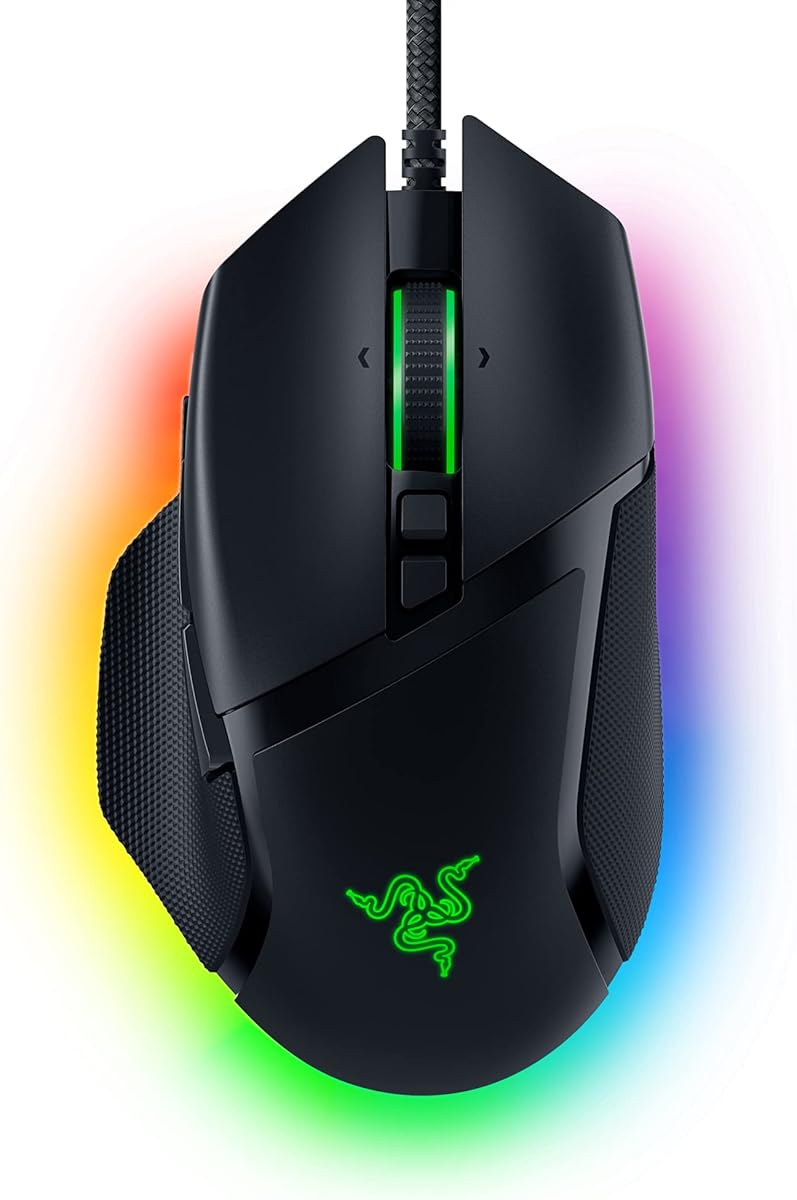
The Razer Basilisk V3 is a 4.6-rated wired gaming mouse designed for players who prefer control-rich ergonomics over the minimal shape of a tournament mouse. Its palm support, thumb rest, and accessible button positions can make it a comfortable choice for long CS2 sessions, particularly for hand shapes that benefit from a fuller body.
We may earn a commission when you buy through this link, at no additional cost to you.
The Focus Plus 26K optical sensor provides high sensitivity and tracking described as free from smoothing. Optical Gen-2 switches offer 0.2 ms actuation and a stated lifetime of up to 70 million clicks. Eleven programmable buttons can be assigned to macros and secondary functions, while the HyperScroll tilt wheel supports smooth or tactile operation.
A wired connection removes battery management and wireless interference from the equation. The trade-off is that the Basilisk V3 is not designed for the absolute lightness associated with many esports competitors, and its extensive controls are unnecessary for players who never use them.
The Basilisk V3 is a strong recommendation for hand comfort, feature access, and a reliable wired setup. It may not be the first choice for tournament mobility, but it provides an excellent control platform for a CS2 installation used across shooters, communication tools, and other games.
The thumb rest and palm-supporting form favor players who prefer a full-sized grip. That support can reduce the need to reposition the mouse constantly during long sessions, although it is less minimalist than a pure esports design.
Eleven programmable buttons and a dual-mode tilt wheel expand the available actions. These controls are particularly useful for push-to-talk, utility commands, and managing settings without leaving a match.
We may earn a commission when you buy through this link, at no additional cost to you.
The Razer Basilisk V3 X HyperSpeed brings the familiar Basilisk ergonomic shape to a wireless platform. Its 4.4 rating reflects a balanced package for CS2 players who value comfort and flexible connectivity, while the nine customizable controls add utility beyond the three main gaming inputs.
We may earn a commission when you buy through this link, at no additional cost to you.
Razer HyperSpeed wireless is intended for low-latency gaming, while Bluetooth supports longer use across other devices. The supplied figures list up to 285 hours on HyperSpeed and 535 hours on Bluetooth, although actual endurance depends on usage and settings. Multi-device support also makes the mouse convenient for a mixed desktop setup.
The Razer Advanced 18K optical sensor is designed to provide stable tracking without spinouts, and Gen-2 mechanical switches carry a 60-million-click rating with gold-plated contacts. Chroma RGB lighting adds visual customization and can react with compatible games, though lighting is not a substitute for competitive performance.
This model fits players who want wireless freedom and an ergonomic grip but do not require the highest polling rate. It may also serve as a broader productivity peripheral, making the multi-device support more useful than it would be for a dedicated tournament mouse.
HyperSpeed keeps the competitive connection wireless while Bluetooth handles everyday use. Multi-device support lets the mouse move between a gaming PC and another computer without requiring a full esports-only setup.
Nine customizable controls provide access to macros and secondary actions without sacrificing the familiar Basilisk grip. The layout is useful for communication shortcuts and less demanding games as well as CS2.
We may earn a commission when you buy through this link, at no additional cost to you.
The Razer Viper V4 Pro is a 4.5-rated esports mouse built around extreme lightness. At 49 grams, it is the lightest option in this guide, a distinction that may appeal to players who make frequent arm movements, rapid flicks, and abrupt resets during CS2 rounds.
We may earn a commission when you buy through this link, at no additional cost to you.
Its Focus Pro 50K Optical Sensor Gen-3 tracks at up to 930 IPS and 90 G acceleration. Frame Sync is designed to align sensor data with the PC and reduce latency. HyperSpeed Wireless Gen-2 supports true 8,000 Hz polling and is stated to deliver 55% lower latency than the previous generation.
Battery endurance depends strongly on the selected mode. The mouse can run for up to 180 hours at 1,000 Hz, while 8K polling reduces the stated maximum to 45 hours. Gen-4 optical switches offer a tactile-feeling click, an optical scroll wheel, and a 100-million-click lifespan.
The Viper V4 Pro is a compelling option for aggressive, movement-focused competitors. The 49-gram chassis is its defining feature, while the 50K sensor, 8K connection, and included grip tape complete a modern tournament-oriented package.
At 49 grams, the Viper V4 Pro is built for rapid directional changes. Its weight is nine percent lower than the previous generation according to the supplied specifications, reinforcing its focus on agile competitive play.
The choice between 1K and 8K operation has a major effect on battery life. Competitive players should decide which priority matters more before locking in a polling configuration.
We may earn a commission when you buy through this link, at no additional cost to you.
The Razer Basilisk V3 Pro is a wireless ergonomic mouse for players who want tournament-quality sensor performance and extensive customization. Its 4.4 rating reflects a capable package, with a 35K optical sensor, 13 programmable controls, Chroma lighting, and a configurable Hyperscroll tilt wheel.
We may earn a commission when you buy through this link, at no additional cost to you.
The sensor can track across a broad range of surfaces, including glass, and supports 1-DPI-step adjustments for fine sensitivity changes. Gen-3 optical switches provide 0.2 ms actuation and a 90-million-click lifecycle. A multi-function trigger adds another layer of control, useful for communication commands or other push-button actions.
Battery life reaches up to 140 hours on HyperSpeed wireless. True 8,000 Hz polling requires the Mouse Dock Pro or HyperPolling Wireless Dongle, both sold separately. This separates the base mouse from premium polling configurations and should be considered before purchase.
The Basilisk V3 Pro is ideal for a feature-oriented CS2 setup where comfort, sensor resolution, and shortcuts matter. It is less suitable for players seeking the lightest possible shell or a mouse that includes 8K wireless hardware by default.
Thirteen easy-access controls, 1-DPI-step adjustments, and configurable scroll behavior create a wide tuning space. Razer Synapse remains necessary for the deepest changes, so players should be comfortable maintaining a personal configuration.
The base unit supports normal HyperSpeed wireless operation and up to 140 hours of stated battery life. Reaching 8K requires an additional compatible dock or dongle, which must be factored into the intended setup.
We may earn a commission when you buy through this link, at no additional cost to you.
The Logitech G PRO X Superlight 2 is a 4.5-rated, 60-gram wireless esports mouse that remains a compelling option for CS2. It was developed with input from professional players and prioritizes the streamlined characteristics competitive shooters require: low weight, rapid response, dependable tracking, and minimal visual clutter.
We may earn a commission when you buy through this link, at no additional cost to you.
The HERO 2 sensor supports tracking above 888 IPS and sensitivity up to 44,000 DPI, with zero smoothing, acceleration, or filtering according to the supplied specifications. LIGHTSPEED wireless supports 8K polling, and the rechargeable battery is rated for up to 95 hours. POWERPLAY compatibility offers another route to extended play for compatible setups.
LIGHTFORCE hybrid switches deliver a tactile click and are intended to balance response with reliability. Zero-additive PTFE feet support smooth gliding, while the 60-gram body keeps the mouse light. Compared with feature-heavy ergonomic models, it offers fewer visible secondary controls, which many tournament-focused players may consider an advantage.
This mouse is a strong recommendation for players seeking a conventional esports shape and a well-rounded balance of speed, endurance, and precision. Those wanting adjustable trigger haptics may prefer the newer SUPERSTRIKE, while the Superlight 2 remains a focused option for clean, lightweight play.
At 60 grams, the Superlight 2 is light enough for quick flicks while retaining a familiar full-size competitive profile. It is a versatile choice for players migrating from heavier general-purpose mice.
HERO 2 tracking up to 44,000 DPI and 8K LIGHTSPEED wireless support a modern competitive configuration. The 95-hour battery rating adds a useful endurance advantage over many high-polling alternatives.
We may earn a commission when you buy through this link, at no additional cost to you.
The right CS2 mouse is one that supports your grip, sensitivity style, and competitive priorities without introducing avoidable friction. Weight, sensor behavior, polling, switches, connectivity, battery life, and software should be evaluated together rather than by choosing a single headline specification.
A precise sensor keeps cursor movement faithful to the mouse, allowing consistent flick placement, recoil control, and micro-corrections. The products here range from an 18K sensor to 50K and 44K options, but maximum DPI does not automatically mean superior play. Sensor tracking speed, acceleration handling, surface compatibility, and calibration often influence real-world consistency more than the largest headline number.
Choose a sensor with stable tracking on the surfaces you actually use. Competitive players generally benefit from a forward-positioned sensor when they prefer a particular aiming style, while software features such as 1-DPI steps can make fine sensitivity changes easier. Avoid unnecessary smoothing or acceleration, and confirm that current game settings do not distort mouse input.
Polling rate describes how frequently the mouse reports movement to the computer. Higher rates can reduce the interval between physical movement and digital input, making the mouse feel more immediate during fast actions. Several selections in this guide support 8,000 Hz, either directly or with an additional Razer accessory.
Prioritize reliable low-latency wireless over a theoretical maximum. The connection should remain stable in a crowded environment, and the mouse should maintain its advertised mode during play. Some models trade battery life for 8K operation, so the practical configuration matters as much as the specification printed on the box.
Weight influences how effortlessly a mouse can change direction. Lightweight designs can make rapid swipes and flicks feel less constrained, while a fuller ergonomic body may be more comfortable for players who use a palm grip and keep their wrist relatively still. The models here range from 49 to 82 grams, plus fuller ergonomic shells.
Do not assume the lightest mouse is automatically the most comfortable. A low weight can benefit fast movement, but shape, feet, and grip style remain critical. If possible, compare dimensions with a mouse you already enjoy and read current user feedback about comfort and build quality.
Main click switches affect responsiveness, durability, sound, and feel. Optical and hybrid designs can offer extremely fast actuation, while mechanical switches may provide a more familiar click and lower-rated actuation figures. The number of clicks a switch is rated for is also relevant for players who spray rapidly and use high click rates.
For CS2, the trigger can be as important as the main buttons. The Logitech SUPERSTRIKE offers haptic feedback and multiple actuation settings, which is useful for players who want to tune firing behavior. Most tournament-style three-button mice prioritize simple, fast clicks instead.
A mouse should fit the way you hold it. Claw-grip players often benefit from a compact shell with distinct front and rear areas, while palm-grip players generally prefer a fuller body with a supportive palm area. Fingertip users need enough room for small movements without the shell feeling cramped.
Consider both the general footprint and the angle of the buttons. Extra controls should not force awkward finger travel, and the mouse should remain comfortable during long sessions. The Viper products target fast esports movement, whereas the Basilisk line prioritizes ergonomic support and accessibility.
Wireless mice remove cable restrictions and can feel natural at a desk, but competitive reliability depends on a stable connection. Models using a dedicated 2.4GHz receiver or low-latency wireless technology are designed for gaming, while Bluetooth may prioritize power efficiency and broader device compatibility.
Battery figures can be misleading when they represent a particular polling mode. The Viper V4 Pro, for example, provides very different endurance at 1,000 Hz and 8,000 Hz. A rechargeable mouse is convenient for regular use, while removable-battery designs can be convenient for players who keep spare cells available.
Gaming software can control DPI, polling, button assignments, lift-off behavior, lighting, and device profiles. These tools are useful because they let a player adjust the mouse without repeatedly changing operating-system settings. They also introduce a learning curve and can change over time, so the quality and stability of the current software should be considered.
Look for a mouse that remains fully usable with standard settings if software is unavailable. For advanced tuning, Razer Synapse supports the Razer selections in this guide, while Logitech G HUB provides advanced controls for the Logitech models. Confirm the software works with your operating system before relying on specific functions.
A competitive mouse should feel solid, glide consistently, and withstand frequent use. Check the supplied information for switch longevity, weight, feet material, and included accessories. For instance, the SUPERSTRIKE uses large UHMWPE feet, while the Viper V4 Pro includes grip tape, a wireless dongle, and a USB-C cable.
Accessories can affect setup quality more than expected. A high polling mode may require a specific receiver or dock, and some wireless configurations may rely on a USB-A receiver. Review what is in the box and whether your computer has the required port before ordering.
Begin by installing the appropriate software, connecting the mouse in its intended competitive mode, and checking that Windows pointer acceleration and Enhance pointer precision are disabled. Apply your preferred sensitivity in the gaming software, then test several common movements, including straight tracking, fast flicks, wide arcs, and short corrections. Avoid changing multiple settings at once, because isolating one adjustment makes it easier to judge the result.
Optimize the physical setup as well. Use a consistent, clean mouse surface with enough room for the movement style you employ, and make sure the feet can glide without catching on textured fabric or debris. For wireless models, keep the receiver close to the computer and away from possible interference. A wired mouse should have enough cable slack to avoid dragging against the edge of the desk.
Care for the mouse by keeping the sensor and feet free from dust, and clean the surface periodically with a soft, dry cloth. Do not apply liquid directly to the shell, buttons, or sensor. Check wireless battery levels before important sessions, keep spare batteries available for removable-cell models, and update software periodically. If clicks feel inconsistent or tracking becomes erratic, test the mouse on another surface and another PC before assuming the issue is software-related.
A lightweight mouse can make rapid flicks and directional changes feel easier, but weight is only one part of the equation. Shape, grip, sensor tracking, feet, and button response also influence comfort and consistency. The lightest option is not automatically best for every player, particularly those who prefer a fuller palm-supporting shape.
An 8K polling rate can shorten the interval between mouse movement and input reporting, although the practical difference depends on the entire system and the player. A stable connection, consistent sensor, suitable sensitivity, and comfortable grip generally have a more noticeable effect on performance than polling alone.
A wired mouse provides a simple, consistent connection without battery management, while modern wireless models can offer comparable low-latency performance when used with their intended receiver. Wireless is convenient for shared desks and travel, but competitive players should verify connection stability in their environment.
There is no single universal DPI for CS2. The right setting depends on mousepad size, resolution, sensitivity, and personal preference. Players commonly use lower in-game sensitivity with moderate desktop DPI, but the best approach is to maintain comfortable movement while reserving enough space for flicks.
Optical switches can provide very fast actuation and help reduce mechanical debounce, which may suit players who want immediate click registration. The feel still differs between models, and rapid clicking can create more noise than some traditional switches. Click feel and sound are personal preferences rather than clear performance categories.
A themed model does not automatically aim better or perform differently from a standard competitive mouse. The SteelSeries Dragon Lore edition and Razer Viper V3 Pro CS2 Edition mainly distinguish themselves through appearance and edition-specific branding. Choose a theme for visual identity, but prioritize sensor quality, shape, connectivity, and build when making the main decision.
Any battery rating that comfortably covers your practice and match schedule is usually sufficient. Competitive polling modes can reduce endurance significantly, as shown by the Viper V4 Pro's separate 1K and 8K figures. Rechargeable models are convenient for routine use, while players using AA batteries may prefer a long-lasting wireless design.
Newer models may introduce higher polling rates, lighter designs, improved sensors, or specialized trigger systems. Established models can remain excellent because their shape, software, and core performance are already familiar. Compare the actual competitive specifications and ensure the included receiver or accessories support your preferred setup.
The Logitech G PRO X2 SUPERSTRIKE is the most feature-rich overall choice, combining 8K wireless polling, a 44K sensor, configurable trigger actuation, and haptic feedback. The Razer Viper V3 Pro 8KHz stands out for its 54-gram competitive build and CS2-specific presentation, while the Razer Viper V3 HyperSpeed offers a more practical balance of weight, sensor quality, and exceptional battery life.
Your priority should determine the winner. Extreme agility favors the 49-gram Viper V4 Pro or 54-gram Viper V3 Pro, while a palm-supporting shape points toward the Basilisk range. Wired simplicity, long wireless endurance, themed styling, and adjustable trigger feedback each matter differently, so a feature that does not match your playstyle should carry little weight.
Before making a final purchase, confirm the mouse shape, included accessories, receiver requirements, operating-system support, and current software status. Product specifications and prices can change over time, so check the latest listing and customer feedback for November 2026 before placing an order.


