
ACR ResQLink View RLS PLB
4.8Editor score
Return Link Service confirmation
Five-year battery life
Built-in buoyancy and strobes
Compare the best Personal Locator GPS Beacon options, comparing satellite SOS, GNSS accuracy, displays, durability, battery life, and field-ready features.
A personal locator GPS beacon is a compact emergency communications device designed to transmit a distress alert and location when conventional cellular or radio coverage is unavailable. The best models combine satellite SOS capability, dependable GNSS positioning, visible strobes, long battery life, and rugged construction for hiking, boating, climbing, travel, and fieldwork.
This guide compares ten leading options based on the supplied specifications, including satellite coverage, display visibility, activation simplicity, buoyancy, waterproofing, operational life, attachment options, and communication features. It covers dedicated personal locator beacons as well as one satellite communicator with expanded two-way messaging, helping readers choose a device suited to their activities and emergency priorities.
Each review explains the stand-out features, practical limitations, and ideal use case of its featured product, while the side-by-side table makes the major differences easier to assess. Product availability, registration requirements, and pricing can change, so confirm the current listing details and local rescue-service requirements before purchasing.
4.8Editor score

4.7Editor score
4.5Editor score
The comparison below highlights the emergency signaling, positioning, power, visibility, and usability features that distinguish these devices, with concise specifications for each of the ten featured products.



The ACR ResQLink View RLS PLB combines a conventional personal locator beacon workflow with a visual position display and Return Link Service. Its 4.8 rating reflects a highly appealing balance of emergency confirmation, satellite compatibility, and outdoor durability. The result is particularly compelling for travelers who want reassurance that a distress alert reached search-and-rescue authorities.
We may earn a commission when you buy through this link, at no additional cost to you.
Return Link Service is the defining feature because it confirms that the emergency distress signal has been received, allowing the beacon owner to know the alert entered the rescue network. The device also supports GPS, Galileo GNSS, and MEOSAR compatibility. A digital screen makes position information easier to check, while the infrared strobe, standard strobe, and built-in buoyancy improve the chance that rescuers can detect it.
There is no subscription requirement, which removes a recurring service from the ownership equation. The stated five-year battery life and more than 28 hours of operational life support use during long expeditions. The compact, lightweight format and multifunction clip system also make it practical for life jackets, belts, packs, and other outdoor gear. A premium feature set naturally makes it more specialized than a basic distress beacon.
This is the strongest all-around recommendation for hikers, climbers, boaters, and international travelers who value both position visibility and confirmation that the distress alert was received. Users must register the beacon correctly and understand that Return Link Service is not the same as tracking an everyday route. For those seeking a complete, confidence-building emergency device, the added functionality justifies a premium selection.
The most important benefit is operational certainty: the owner receives confirmation that search and rescue has received the emergency signal rather than merely assuming that activation succeeded. That confirmation can reduce uncertainty during an already stressful situation. It does not guarantee the outcome of a rescue, but it adds a useful communication layer between the user and the emergency infrastructure.
Return Link Service confirms receipt of the distress alert by search-and-rescue services. This feedback helps distinguish a completed satellite transmission from a device that was activated but unable to deliver a usable alert.
The digital display provides location information, while the standard and infrared strobes improve visibility under different conditions. Together, these features make the beacon useful before rescuers arrive and easier to locate afterward.
We may earn a commission when you buy through this link, at no additional cost to you.
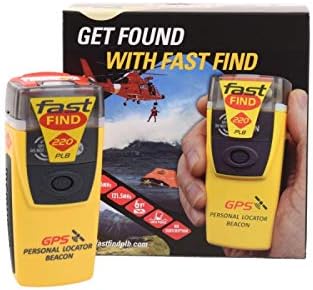
The McMurdo FastFind 220 is a focused personal locator beacon that prioritizes fast activation and straightforward emergency use. Its 4.5 rating makes it a practical entry point for people who want satellite distress capability without a display or expanded messaging functions. The device is particularly attractive for hikers, campers, and travelers who understand the importance of registration.
We may earn a commission when you buy through this link, at no additional cost to you.
Activation requires deploying the antenna, pulling the anti-tamper seal, and pressing the ON button. That sequence is easy to rehearse, which matters when a real emergency involves injury, cold, confusion, or limited dexterity. This listing is programmed with the US country code, and the beacon can function elsewhere, although international users need to consider the appropriate registration and emergency-service arrangement.
Registration is legally required in most countries and is central to effective response. Emergency contacts and travel details can help search-and-rescue teams evaluate the alert, and the absence of registration information may delay an operation. This requirement is not a flaw unique to the FastFind 220; it is an important condition of responsible PLB ownership. Users should also treat the device strictly as a tool for grave and imminent danger.
The FastFind 220 is best for buyers seeking a simple, dependable distress beacon with a relatively accessible entry point. Its limitation is that it does not offer a screen for checking position or a communicator for everyday messages. Those omissions are acceptable for someone whose primary requirement is a compact SOS beacon that activates quickly and reaches international rescue services.
The budget recommendation rests on purposeful simplicity rather than stripped-down performance. By concentrating on activation, satellite distress signaling, and global operation, the FastFind 220 avoids unnecessary interface complexity. It is a strong match for solo adventurers who will carry it reliably but do not want to manage a two-way satellite messaging device.
The deploy-antenna, pull-seal, press-on sequence minimizes decision-making under pressure. Regular practice in a safe setting can make this process familiar without triggering a false emergency alert.
A correctly completed registration connects the device to the relevant search-and-rescue authority and provides identity and emergency-contact information. Travelers crossing borders should verify which authority and contact details apply to their itinerary.
We may earn a commission when you buy through this link, at no additional cost to you.
The ACR ResQLink View PLB425 is a buoyant GPS personal locator beacon designed for outdoor users who need both satellite distress signaling and visual location information. Its 4.6 rating reflects a capable feature combination, including a 406 MHz emergency signal, a 121.5 MHz homing signal, and bright LED and infrared strobes.
We may earn a commission when you buy through this link, at no additional cost to you.
Its buoyant, rugged, and lightweight construction suits boaters as well as hikers, campers, climbers, and RV travelers. The included attachment options include a belt clip, oral inflation tube clip, straps, and lanyard, allowing the beacon to remain accessible in different activities. Global coverage through the COSPAS-SARSAT system sends the distress message directly to search-and-rescue agencies.
The model can also send pre-canned non-emergency self-tests and GPS tests to multiple contacts by text and email when used with the optional 406Link testing subscription. That is separate from emergency operation, which is described as requiring no subscription. Users should distinguish diagnostic messaging from distress alerting and follow the manufacturer’s instructions to avoid accidental activation.
This beacon is a strong choice for people who divide their time between land and water or want visual confirmation of their position. It is less minimal than the FastFind 220 and involves a separate optional service for certain test messages. Even so, the combination of buoyancy, direct satellite transmission, position display, and multiple visibility signals makes it well suited to serious outdoor use.
The water-emergency capability is the central benefit. Built-in flotation helps the device remain available at the surface, while the strobes improve the chance of visual detection. Its array of included clips also solves a common practical problem: a beacon that is secure but difficult to reach in an emergency is less useful than one carried where it can be activated immediately.
Buoyancy provides an important layer of protection for marine use, while the included straps, lanyard, and clips allow secure carry on land. Attachment choice should be based on how quickly the beacon must be reached.
The combination of bright LED and infrared strobes supports visual detection in different conditions. The infrared output is especially useful when a standard bright light is less effective or disruptive.
We may earn a commission when you buy through this link, at no additional cost to you.
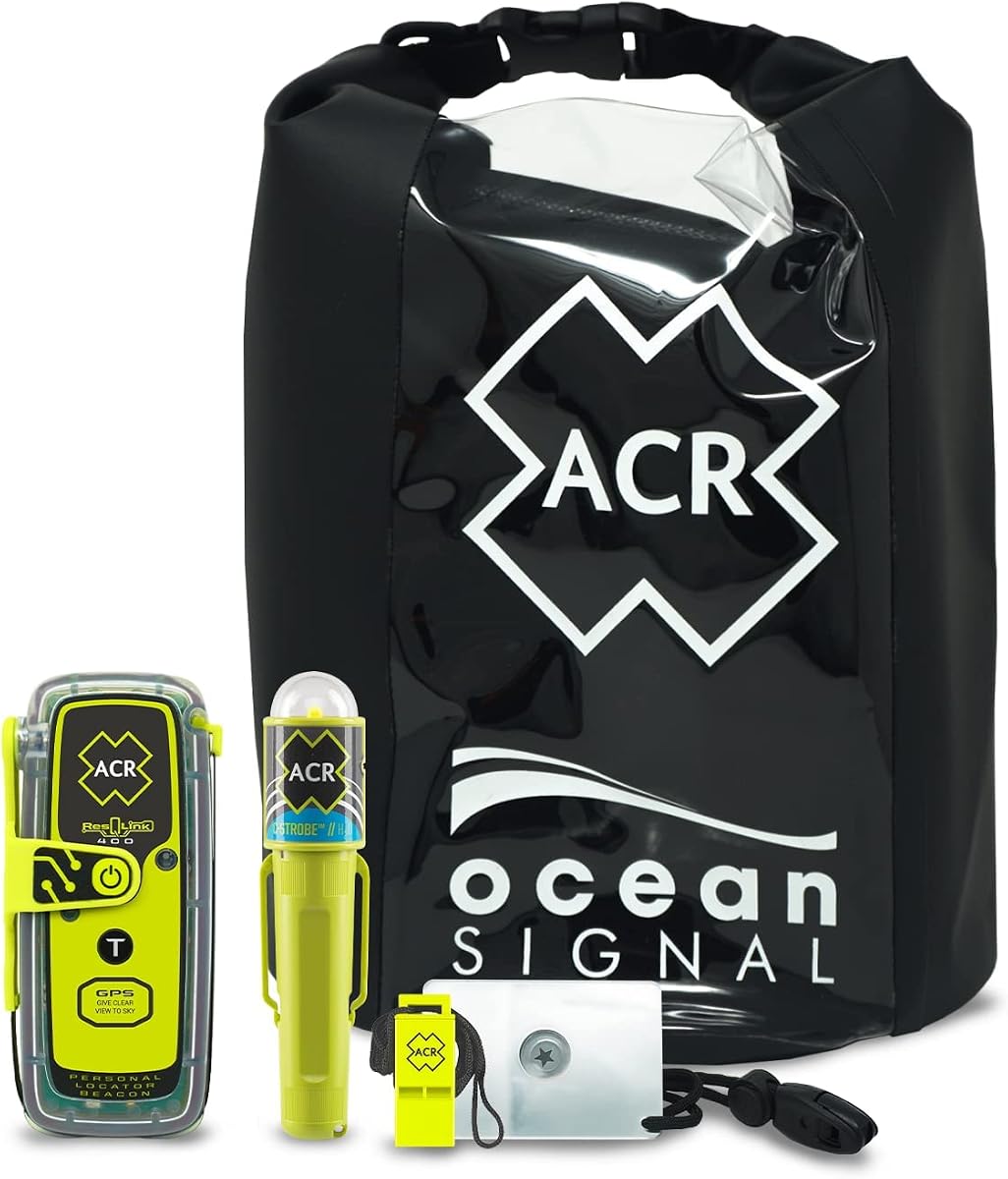
The ACR ResQLink 400 Survival Kit pairs a GPS personal locator beacon with several low-technology signaling tools. Its 4.7 rating makes it an attractive option for readers who want a layered emergency kit rather than a single-purpose device. The included C-Strobe H2O light, Res-Q whistle, signal mirror, and RapidDitch drybag create several complementary ways to attract attention.
We may earn a commission when you buy through this link, at no additional cost to you.
The beacon provides the core satellite-based response, while the other accessories support nearby searchers or situations in which rescuers are close but cannot immediately identify the wearer. The C-Strobe H2O light offers waterproof, high-visibility signaling, the whistle produces audible attention, and the mirror can reflect sunlight over distance. The drybag helps keep essential gear dry and accessible.
That layered approach has obvious benefits, although it also introduces trade-offs. The kit takes more space than a beacon alone and requires users to become familiar with every item. None of the accessories should create a false sense of security: a whistle, mirror, or local light cannot replace the long-range satellite alert delivered by the PLB. The main device remains the central emergency tool.
This kit is a good match for hikers, campers, paddlers, and families assembling emergency equipment for remote travel. It may be especially attractive to buyers who want physical signaling tools alongside a satellite beacon. Those seeking the simplest possible carry solution can choose the standalone ResQLink 400 listing, while this bundle makes more sense when carrying a compact preparedness kit is acceptable.
The bundle’s strength comes from redundancy without unnecessary complexity. Each accessory addresses a different scenario: the beacon works at a distance, the light provides a visual cue, the whistle offers a quiet low-power option, and the mirror can work without batteries. The drybag then organizes and protects the equipment for wet conditions.
Satellite distress signaling and local visibility tools serve different stages of an emergency. Carrying both can improve the amount of information and attention available to rescuers.
The RapidDitch drybag helps protect essential equipment from water and keeps items together. It is especially relevant for boating, kayaking, and rainy mountain trips.
We may earn a commission when you buy through this link, at no additional cost to you.
The Ocean Signal rescueME PLB1 focuses on compactness, straightforward activation, and low weight. With a 4.6 rating, it stands out as a dedicated beacon that is easy to carry without adding much bulk to a backpack or life jacket. The stated weight of just four ounces and 30 percent smaller size than the manufacturer’s next-smallest beacon reinforce that focus.
We may earn a commission when you buy through this link, at no additional cost to you.
One-handed operation is perhaps its most valuable usability feature. An injured or gloved user can operate the device with one hand, reducing the chance that fumbling or dropping it will delay activation. A 66-channel GPS receiver supports positioning, and a one-candela high-intensity strobe helps rescuers locate the device visually. The unique mounting clip makes attachment to a life jacket straightforward.
The PLB1 is waterproof to 49 feet, making it suitable for demanding marine environments, and it offers more than 24 hours of operational life with a seven-year battery. It also operates without a subscription through international government rescue satellites. Its limitations are chiefly about simplicity: there is no screen for viewing position, and it does not serve as a general two-way satellite communicator.
This is an excellent choice for sailors, paddlers, hikers, and travelers who prioritize a beacon small enough to carry every day. It is also well suited to anyone who may need to activate the device one-handed under difficult conditions. Buyers wanting position confirmation or ongoing message exchange should instead consider a View model or the Garmin communicator.
The compact rescueME PLB1 proves that a dedicated emergency beacon can remain highly capable without a large interface. Its main strengths are easy handling, substantial stated battery life, and strong environmental resistance. Those traits make it especially practical for users who are more likely to carry a smaller device consistently than a feature-heavy unit they might leave behind.
The four-ounce design minimizes the space required for satellite distress protection. A device that fits comfortably in a pocket, pack, or life-jacket mounting clip is easier to include on every trip.
One-handed operation supports activation when the user is injured, wearing gloves, or handling other equipment. Practicing the sequence in advance helps make the action automatic.
We may earn a commission when you buy through this link, at no additional cost to you.
The ACR ResQLink 400 PLB is a dedicated satellite distress beacon built around straightforward emergency signaling. Its 4.7 rating reflects a capable mix of global coverage, dual GNSS support, no-subscription operation, and high-visibility strobes. It avoids the extra interfaces of a communicator while preserving the core function most outdoor users need.
We may earn a commission when you buy through this link, at no additional cost to you.
A 406 MHz distress signal is supported by a homing signal, while Cospas-Sarsat and MEOSAR compatibility provide broad satellite-system coverage. GPS and Galileo GNSS support location determination for the rescue alert. The LED and infrared strobes improve visibility in low-light and nighttime conditions, giving rescuers another way to locate the user.
The lack of a subscription is a meaningful advantage for a dedicated emergency device. It avoids the ongoing service model associated with many satellite communicators and keeps the product focused on distress alerts. However, the absence of a display means users cannot conveniently check a live position, and the beacon still needs proper registration so the responsible search-and-rescue authority has appropriate owner and emergency-contact details.
The ResQLink 400 PLB suits hikers, climbers, boaters, and international travelers who want satellite SOS capability without message plans or complex menus. It is also a sensible choice for people who own a separate GPS or phone and do not need those features duplicated in the beacon. For simpler carrying needs, users should evaluate the different versions and kits available in the broader ACR range.
This model’s balanced feature set makes it a dependable middle ground within the list. It combines worldwide rescue infrastructure, contemporary GNSS support, and conspicuous visual signaling without turning the device into a general communications platform. That balance also clarifies its role: it is an emergency tool, not a substitute for a phone, map, or primary navigation device.
Compatibility with Cospas-Sarsat and MEOSAR systems supports international rescue operations, while no subscription is required for emergency use. Registration remains necessary for authorities to identify the owner.
GPS and Galileo GNSS support offer broader satellite availability than a single-system approach. That can improve positioning options in challenging terrain and remote locations.
We may earn a commission when you buy through this link, at no additional cost to you.
The ACR ResQLink View Survival Kit combines a position-viewing satellite beacon with several conventional emergency tools. Its 4.7 rating reflects a well-rounded bundle for hikers, campers, boaters, and travelers who appreciate both electronic and physical ways to call for help. The core PLB offers GPS tracking, a visual display, and rapid rescue signaling.
We may earn a commission when you buy through this link, at no additional cost to you.
The included C-Strobe H2O rescue light supplies waterproof LED signaling, while the Res-Q whistle provides a loud audible signal. A signal mirror can reflect sunlight across long distances, and the RapidDitch drybag keeps essentials protected from water. These accessories are useful when people are close enough to observe or hear them, whereas the satellite beacon addresses a remote emergency.
The main trade-off is pack weight and organization. A complete kit can be bulkier than carrying a standalone beacon, and accessories tucked away without a consistent routine may be difficult to locate. It is also important not to treat local signaling devices as substitutes for activating the PLB. The most useful emergency kit is one in which the owner knows exactly which item serves which purpose.
Buyers who want both a visual position display and a wider emergency assortment will find this kit compelling. It is less attractive for minimalist packers, who may prefer the standalone View beacon or a smaller dedicated PLB. It is also a better fit for vehicle-based trips or group kits where extra signaling equipment can be divided among travelers without burdening every person.
The display adds an important layer of confidence because users can view position information on the device. Combined with strobe signaling and satellite distress capability, it provides several ways to communicate location and presence. The surrounding accessories extend that value beyond the moment the beacon is activated, making the package especially useful as a broader remote-area preparedness system.
The screen lets users review position information directly on the beacon. It is a valuable feature for travelers who want more visibility than a no-display emergency beacon provides.
The rescue light, whistle, mirror, and drybag create a practical support system around the central PLB. Regularly checking that each item remains accessible helps prevent the bundle from becoming disorganized.
We may earn a commission when you buy through this link, at no additional cost to you.
The ACR ResQLink 410 RLS is a compact satellite SOS beacon centered on Return Link Service. Its 4.5 rating reflects a useful combination of emergency confirmation, global compatibility, buoyancy, and visibility. It offers a middle path between a basic no-display PLB and more feature-heavy devices by focusing on feedback from the rescue network.
We may earn a commission when you buy through this link, at no additional cost to you.
Return Link Service alerts the owner when search and rescue has received the distress signal. The beacon also supports GPS, Galileo GNSS, and MEOSAR compatibility for broad positioning and satellite coverage. LED and infrared strobes provide additional visibility, while built-in buoyancy and a multifunction clip system support portable outdoor use.
The product requires no subscription and provides more than 24 hours of operational life with a stated five-year battery life. Its lack of a visible screen is the clearest distinction from the ResQLink View models. That makes the device simpler to carry and use, but it also means the owner cannot routinely inspect position information on the beacon itself.
This model is well suited to travelers who prioritize confirmation that an emergency alert reached the proper authority without needing a full messaging interface. It works particularly well for hikers, climbers, and boaters who want a compact unit with flexible attachment options. Buyers who regularly check their position or expect two-way communication should consider a View model or satellite communicator instead.
The strongest reason to choose this product is the combination of RLS and global compatibility in a buoyant, light form. The 24-plus-hour operating duration provides a substantial emergency window, while the five-year battery specification suggests that routine charging will not be a central part of ownership. Proper registration remains a non-negotiable part of making the rescue workflow effective.
Return Link Service provides confirmation that the distress signal has been received by search and rescue. It provides valuable feedback without turning the device into a two-way communicator.
GPS, Galileo GNSS, and MEOSAR compatibility support modern positioning and rescue infrastructure. Built-in buoyancy adds usefulness for marine and flood-prone environments.
We may earn a commission when you buy through this link, at no additional cost to you.
The ACR ResQLink 400 No Display is a streamlined satellite emergency beacon for users who do not need a screen or two-way communications. It carries a 4.8 rating, making it one of the highest-rated entries in this comparison. The supplied listing identifies manufacturer part number 2921 and presents the device as the no-display version of the ResQLink 400.
We may earn a commission when you buy through this link, at no additional cost to you.
Its chief attraction is disciplined simplicity. A dedicated PLB can remain on a belt, pack, life jacket, or other accessible location without becoming a general-purpose communications device. The other ResQLink 400 variants in this list establish the broader family’s emphasis on satellite distress signaling, bright strobes, and global Cospas-Sarsat and MEOSAR coverage.
Because the supplied information for this specific listing is comparatively brief, buyers should review the full manufacturer specifications and package contents on the current product page. In particular, they should confirm activation steps, dimensions, battery details, water resistance, included mounting accessories, and registration requirements rather than assuming that every bundle contains the same accessories as the survival kit.
The no-display design is acceptable for experienced outdoor users who treat the beacon strictly as an emergency tool and rely on a separate phone, watch, paper map, or GPS for navigation. It may be less satisfying for travelers who want to verify their own position on the device. Buyers seeking those features should review the View models, while people prioritizing low complexity should appreciate this version.
This recommendation appeals to those who want a trusted category specialist without a crowded interface. Its high rating supports its position in the shortlist, but responsible purchasing still depends on registration, a realistic carrying plan, and periodic self-testing. A simple beacon works best when the owner knows how to activate it and keeps it accessible when conditions deteriorate.
Eliminating the display leaves a dedicated emergency device rather than a multifunction tracker. This can reduce accidental interaction and make the beacon easier to carry.
The supplied listing is concise, so shoppers should confirm the included clips, accessories, activation instructions, and manufacturer part number. Similar model names can refer to materially different packages.
We may earn a commission when you buy through this link, at no additional cost to you.
The Garmin inReach Mini 3 Plus is the most communication-focused product in the group, offering satellite messaging, interactive SOS, location sharing, weather, and trip-planning features in a compact device. Its 4.7 rating reflects a capable combination of ruggedness, app integration, and emergency coordination. It is an excellent fit for travelers who want more than a one-way distress beacon.
We may earn a commission when you buy through this link, at no additional cost to you.
The Iridium satellite network supports texts, voice messages, group messages, and, when paired with a compatible smartphone, photo sharing through the Garmin Messenger app. An interactive SOS alert reaches Garmin Response, a continuously staffed emergency coordination center that receives the user’s location and supports two-way communication during a crisis.
The scratch-resistant color touchscreen has IP67-rated durability for impact, severe weather, and demanding terrain. The internal rechargeable battery provides up to 350 hours in a ten-minute tracking mode or up to 95 hours in performance messaging mode. Garmin Explore and Messenger apps add weather forecasts, trip planning, LiveTrack location sharing, distance, time, elevation data, voice commands, and preset messages.
The central trade-off is the subscription-based messaging service and greater interface complexity compared with dedicated PLBs. Users may need to maintain an account and understand where each tracking or messaging mode consumes battery. The bundle also includes a microfiber cleaning cloth, a generic ten-foot USB Type A to USB Type C cable, and a USB wall charger, which adds convenience but does not replace the need for a compatible charging setup.
Choose the inReach Mini 3 Plus when routine check-ins, detailed location sharing, and emergency conversation matter more than having the smallest possible dedicated beacon. It is especially relevant to expedition travelers, field professionals, and families coordinating trips across remote areas. Readers who only need a simple distress alert and wish to avoid a messaging service may prefer one of the no-subscription PLBs in this guide.
Garmin Response maintains two-way communication after an interactive SOS alert, allowing responders to receive location information and coordinate with the user. This adds context that a one-way distress beacon cannot provide.
LiveTrack, group messaging, weather information, and voice commands turn the device into a broader remote-area communication tool. These features are valuable for planned check-ins and for keeping relatives informed during an expedition.
The stated battery durations vary dramatically by use, with up to 350 hours in ten-minute tracking and up to 95 hours in performance messaging. Choosing an appropriate mode helps balance communication availability with endurance.
We may earn a commission when you buy through this link, at no additional cost to you.
A suitable personal locator GPS beacon should be easy to activate, registered correctly, carried where it can be reached, and capable of delivering a useful distress alert when cellular service is unavailable. The following factors help narrow the options according to environment, experience, and desired functionality.
A dedicated personal locator beacon is designed primarily to send a distress alert and location. It usually has fewer controls, requires little routine interaction, and several models operate without a subscription. A satellite communicator adds two-way messaging, check-ins, media sharing, weather functions, and interactive emergency coordination. This makes the communicator more versatile for planned trips, but also more complex and dependent on an active messaging plan.
The activation sequence should be understandable and possible with cold, wet, injured, or gloved hands. Devices with one-handed operation, a straightforward switch sequence, and minimal confirmation steps may offer an advantage in a real emergency. Read the instructions before the trip and rehearse activation without sending an alert. Also consider where the device will be carried so it does not become trapped in a pocket or inaccessible under heavy clothing.
GNSS positioning determines the location included in an emergency alert, while a visible screen allows the user to review coordinates directly. GPS and Galileo support can improve satellite availability compared with a single constellation. Display-equipped models are useful for travelers who want confirmation of their fix or for sharing a location manually. No-display beacons are simpler, smaller, and less distracting, but offer less visible feedback.
Compare both the battery's service life and the beacon's stated emergency operating duration. A long standby specification is valuable for infrequent trips, while operating life matters after activation. Dedicated PLBs often use replaceable or long-life batteries, whereas the Garmin communicator uses an internal rechargeable battery and different modes consume power at very different rates. Select a power model that fits the trip length and your access to charging.
Marine users should distinguish waterproofing from buoyancy. A waterproof device can survive immersion, while a buoyant device is designed to remain at the surface if it falls into water. The rescueME PLB1 has a stated 49-foot waterproof rating, while several ACR models are described as buoyant. Consider the activity, attachment method, and likelihood of immersion rather than relying on a general outdoor-rated label alone.
A strobe can help rescuers detect a beacon after they reach the reported area. LED strobes provide visible light, while infrared strobes can help in certain low-light or nighttime situations. A digital display has a different purpose: it helps the user view position data. Rescue lighting, audible whistles, and signal mirrors can complement a PLB, especially when rescuers are nearby, but they should never replace the satellite alert.
PLBs must generally be registered so search-and-rescue authorities know the owner and can use the provided emergency contacts. International travelers should verify the correct programming and registration authority for each destination. Some listings are programmed for a particular country even though the hardware can operate elsewhere. Registration information can also include travel plans and emergency contacts, so it should be reviewed before each major journey.
The most capable beacon is not useful if it is too heavy to carry or stored where it cannot be reached. Compare stated weight, dimensions, buoyancy, water resistance, and included clips. For boating, a life-jacket mounting clip is useful; for hiking, a belt or pack attachment may be more appropriate. Survival bundles provide useful backup tools but add bulk, so the safest choice is one the user will consistently carry and know how to use.
Begin by reading the manual, identifying the activation control and antenna, and completing the required registration before the device is needed. Learn the emergency sequence in a safe environment without sending a real alert. If the model includes self-test or diagnostic messaging, use those features as directed rather than activating the distress function for a practice drill.
Carry the beacon on a belt, pack, life jacket, lanyard, or other agreed attachment that suits the activity. Keep it protected from impact but readily accessible, and do not bury it in equipment that may be separated from your body. Maintain a separate navigation method and an emergency plan. Satellite positioning complements a map and compass; it does not replace either one, and a beacon is not intended for routine route finding.
Inspect the device, contacts, straps, and attachment hardware before every trip, and verify that any required subscription is active when using a communicator. Keep contacts and relevant travel information current. Follow the manufacturer's battery and charging guidance, protect ports and seals from moisture and dirt, and store the unit in a dry, temperature-appropriate place. Replace or service the device according to manufacturer instructions and seek professional advice if it has been damaged or has operated unusually.
Several dedicated PLBs operate without a subscription for emergency alerting, including the ACR and Ocean Signal models featured here. Some diagnostic or testing features may use an optional service, but those should be distinguished from emergency use. Satellite communicators such as the Garmin inReach Mini 3 Plus generally require an active messaging plan for their communication features.
A PLB is primarily designed to send a distress alert and location after activation. It usually has fewer features and a simpler interface. A satellite communicator supports two-way messages, tracking, group communication, weather, and interactive emergency coordination, making it more versatile but also more complex and service-dependent.
Water resistance varies by model. The Ocean Signal rescueME PLB1 is specified as waterproof to 49 feet, while several ACR products are described as buoyant. Waterproofing and buoyancy are separate qualities, so buyers should check both the stated rating and the intended marine use before taking a device on the water.
Yes, registration is required by law in most countries and is essential for an effective rescue response. It tells the responsible authority who owns the device and provides emergency-contact information. International travelers should confirm the correct authority, programming, and contact details for every destination they visit.
No. A personal locator beacon is an emergency communications device, not a primary navigation tool. Its position-finding function supports the distress alert, but safe travel still requires an appropriate map, compass, route plan, and knowledge of local conditions. Even a satellite communicator should complement rather than replace sound navigation practices.
Follow the manufacturer's testing schedule and instructions. A self-test or GPS test may check internal functions and messaging without creating a false distress alert, whereas activating the actual SOS control should be avoided except in a genuine emergency. Periodic checks also help ensure contacts, battery condition, and registration information remain accurate.
A display is useful when you want to view position information directly and may have more complex requirements for sharing coordinates. A no-display beacon is easier to keep compact and focuses entirely on emergency signaling. Display-equipped models are often preferred by travelers, while minimalist users may value the simpler controls and smaller footprint.
Carry it where it remains accessible and is unlikely to be separated from you. A life jacket is appropriate for boating, while a belt, lanyard, or high pocket may work on land. Use the manufacturer’s mounting system, check it frequently, and avoid placing the device deep inside a pack where searching for it could delay activation.
The ACR ResQLink View RLS PLB is the leading all-around choice because it combines a position display, Return Link Service confirmation, modern GNSS support, no-subscription rescue operation, built-in buoyancy, and strong visibility features. For buyers seeking a simpler dedicated device, the McMurdo FastFind 220 offers straightforward activation, while the Garmin inReach Mini 3 Plus stands apart for interactive emergency support and ongoing satellite communication.
Prioritize the needs of the actual trip: simple one-way signaling, position visibility, buoyancy, two-way messages, battery endurance, and the ability to carry and operate the device comfortably. Register the unit, learn the activation sequence, maintain emergency contacts, and keep a separate navigation method. A well-prepared user is more likely to benefit from a simpler beacon than from an advanced device they do not understand.
Before buying, verify the current manufacturer specifications, package contents, local registration rules, and any service requirements for the exact listing. Product availability, features, and pricing can change, so compare the current offer with the needs identified in this guide before making a final decision.