
Amazfit Bip 6
4.2Editor score
140-plus workout modes
Personalized AI coaching
Up to 14-day battery
Interval training rewards a watch that captures short, repeatable efforts without distracting you from the work itself. A useful interval smartwatch should offer accurate heart-rate data, clear workout records, dependable battery performance, and an interface that remains readable between sets. Recovery guidance and structured training tools can make it even more valuable.
This guide compares ten smartwatches and fitness trackers based on the features relevant to high-intensity exercise, including HIIT profiles, built-in GPS, heart-rate monitoring, workout guidance, water resistance, connectivity, and battery claims. It covers established Garmin running watches, Amazfit models, and more affordable general-purpose trackers rather than restricting the list to one brand.
Each review explains where the watch is strongest, where its capabilities are more limited, and which type of interval athlete may prefer it. The overall recommendations favor devices with purposeful workout profiles, useful performance metrics, and clear recovery context. Features, ratings, availability, and current prices can change, so confirm the latest details before buying.
4.2Editor score

4.6Editor score
4.4Editor score
As an Amazon Associate we earn from qualifying purchases.
The table below compares the ten watches by interval-training relevance, workout coverage, positioning, connectivity, and endurance. It highlights each model's most important specifications without treating every fitness-tracker metric as equally useful for structured high-intensity work.


The Garmin Forerunner 165 is the strongest all-around recommendation in this guide for interval training because it combines purpose-specific activity profiles with the training and recovery context needed to improve from one session to the next. Its 4.6 rating reflects a well-regarded balance of running performance, ease of use, and battery endurance. The 43mm AMOLED touchscreen remains bright and clear, while physical buttons help with quick control during exercises.
We may earn a commission when you buy through this link, at no additional cost to you.
Its built-in GPS records pace and distance without requiring the paired phone, and the wrist-based heart-rate sensor supplies a continuous workout metric. More than 25 built-in activity profiles include running, cycling, HIIT, and strength, so the watch can move naturally between hard efforts, recovery periods, and complementary training. Daily suggested workouts adapt based on performance and recovery, while Garmin Coach and race-adaptive plans add structure for athletes who want more than a stopwatch.
The training-effect labels are particularly valuable for interval training because they help explain what an aerobic or anaerobic session contributed to fitness. Recovery-time estimates indicate how long the body may need before another high-effort workout. The morning report also brings together sleep, recovery, training outlook, weather, and HRV status, although Garmin notes that these readings are close estimates rather than medical measurements. These features are estimates, but they create a useful framework for adjusting workload.
This is not the most specialized interval timer in the category, and its 43mm footprint may feel modest when compared with the Amazfit Bip Max. Even so, it offers the most persuasive combination of sport support, adaptive guidance, recovery insight, and reliable endurance. Choose it if your routine alternates HIIT sessions with runs, cycling, strength work, and recovery days, and you want metrics that help explain performance rather than simply count them.
Interval athletes often know a session felt hard but need context for the next one. Training-effect labels, recovery-time estimates, and adaptive suggestions turn the watch into a record of physiological workload, helping the user decide when another demanding block is appropriate.
With built-in GPS, heart-rate tracking, and more than 25 profiles, the Forerunner 165 handles outdoor efforts alongside HIIT, cycling, running, and strength sessions. Its 19-hour GPS battery also avoids charging between busy training days.
We may earn a commission when you buy through this link, at no additional cost to you.
This 1.83-inch smart watch is a compelling budget-oriented choice for athletes who want more than basic step counting. Its 4.9 rating indicates strong customer reception, while the generous sports-mode library includes running, cycling, yoga, gym training, hiking, and ball games. A bright HD touchscreen makes it easy to view live workout information, start activities, and move through menus between intervals.
We may earn a commission when you buy through this link, at no additional cost to you.
The watch tracks heart rate throughout the day, monitors sleep duration and patterns, and records daily movement. During exercise, its 130-plus modes give users a straightforward way to label a session and review basic results. Bluetooth calling is another practical feature for people who want to handle a call without reaching for their phone. The interface also supports notifications, timers, alarms, sedentary reminders, and step monitoring, making it useful beyond the gym.
Its main limitation is the absence of listed built-in GPS. That means outdoor runners and cyclists may not receive independent route, pace, or distance tracking unless the associated app provides another means of recording those details. The supplied specifications also emphasize general fitness tracking rather than advanced interval analysis, recovery modeling, or training-effect labels. Compared with the Garmin and Amazfit watches with dedicated performance tools, it is better suited to straightforward workout logging.
Choose this watch if your definition of interval training is mainly structured exercise tracking at a modest cost, with heart rate, activity recording, sleep monitoring, and convenient phone connectivity as the priorities. It may not satisfy a serious endurance athlete who needs dependable standalone GPS and sophisticated workload analysis, but it gives beginners and casual fitness users an approachable and feature-rich option.
The 1.83-inch HD touchscreen provides enough space to review notifications, fitness data, and menus quickly. That visibility is useful when checking heart rate or elapsed time without making the phone part of every workout.
Bluetooth calling, sleep monitoring, sedentary reminders, and broad workout selection make this a versatile daily watch. Its IP68 rating also gives reassurance around sweat, splashes, and rain during daily wear and exercise.
We may earn a commission when you buy through this link, at no additional cost to you.
This 1.58-inch fitness tracker is a strong option for athletes who want interval-session tracking and continuous health monitoring in one compact device. Its 4.9 rating shows that many buyers are satisfied with the combination of features. The screen is described as ultra-high-resolution and capable of clear full-touch operation, while a side button provides an additional way to navigate.
We may earn a commission when you buy through this link, at no additional cost to you.
Its strongest area is all-day monitoring. The watch tracks heart rate continuously, along with blood oxygen and blood pressure readings, and records light and deep sleep stages along with wake times. These features can give an athlete a broader view of recovery between hard sessions. The fitness data and records are available in the companion app, although health readings from consumer wearables should be treated as general wellness indicators rather than diagnostic measurements.
More than 120 exercise modes cover a wide variety of activities, and the watch records steps, distance, and calories throughout the day. Call and message notifications improve its everyday usefulness, while IP68 water resistance supports wear during sweaty workouts and daily washing. The supplied information does not mention built-in GPS or detailed interval-training analytics, so outdoor athletes may find it less comprehensive than the Garmin options.
Choose this model if you want a compact tracker with an always-on display, constant heart-rate monitoring, sleep-stage information, and numerous workout modes without moving to a more specialized sports watch. It is particularly appropriate for indoor interval training, general fitness, and users who value health context alongside simple workout records. For outdoor racers needing independent GPS or coaches requiring detailed load analysis, one of the sport-focused alternatives is the stronger choice.
Continuous heart-rate and sleep-stage tracking can help reveal whether sleep and daily stress patterns are changing around a demanding training block. The information offers useful context, but it should complement rather than replace professional recovery assessment.
The 1.58-inch display includes an always-on clock option, full-touch controls, and a side button. That makes essential information and menu navigation accessible in a smaller package than some of the large-screen alternatives.
We may earn a commission when you buy through this link, at no additional cost to you.
The Amazfit Bip Max is the premium pick here for interval athletes who prioritize screen visibility, broad training support, and long battery life. Its 4.4 rating reflects a capable feature set, and the 2.07-inch AMOLED display is the largest in this comparison. The lightweight aluminum body and two-button layout keep the controls straightforward even when several different activities share the same watch.
We may earn a commission when you buy through this link, at no additional cost to you.
GPS uses support from five satellite systems, while downloadable offline maps provide turn-by-turn directions and off-track alerts. Four gigabytes of onboard storage can hold maps and media, making the watch more independent from a phone. For interval training, the 150-plus sport modes and dedicated options for HYROX, strength training, and yoga are especially relevant when a training plan mixes conditioning modalities.
The Zepp App provides subscription-free hybrid training guidance intended to balance endurance, strength, and recovery. Its smart metrics include VO₂ max, Training Load, and Training Effect, giving the watch more analytical depth than a general activity tracker. The BioCharge recovery score considers sleep quality, recent workouts, and stress to suggest when a user may be ready to push or should rest. Built-in aerobic workouts and gear tracking add useful long-term planning tools.
The main trade-off is size. A 2.07-inch display is excellent for checking metrics, but the watch may feel oversized on a smaller wrist and can be less discreet during sleep or daily wear. Some users may also need to engage the Zepp App for deeper planning and analysis. Even with those caveats, the Bip Max is the most compelling premium option here for people who want rich training information, standalone navigation, and minimal charging interruptions.
Training Load, Training Effect, and VO₂ max estimates add context beyond calories and elapsed time. The hybrid approach also places endurance, strength, and recovery together, which fits interval programs that vary from day to day.
A claimed 20 days of typical-use battery makes the Bip Max convenient for athletes who train heavily and dislike charging routines. Offline maps and onboard media further reduce its dependence on the paired phone.
We may earn a commission when you buy through this link, at no additional cost to you.
The Whitestone version of the Garmin Forerunner 165 delivers the same focused fitness-watch platform in a different color. Its 4.6 rating, AMOLED touchscreen, built-in GPS, and traditional button controls make it particularly approachable for runners and general athletes who want more training depth than a basic fitness tracker. The 43mm case is designed to remain lightweight during repeated efforts.
We may earn a commission when you buy through this link, at no additional cost to you.
Interval training benefits directly from the inclusion of HIIT, strength, running, and cycling profiles. The watch measures wrist-based heart rate and records pace and distance with its internal GPS. After each session, training-effect labels explain the primary benefit of the workout, while recovery-time estimates help communicate when another high-effort session may be appropriate. That feedback is more valuable than simply seeing a list of calories or minutes.
Personalized daily workouts adapt according to performance and recovery. Garmin Coach and race-adaptive training plans can also recommend sessions for particular goals, which makes the watch useful across multiple training phases. Smart notifications, incident detection, Assistance, and Garmin Pay add everyday convenience, subject to phone compatibility, setup, network coverage, and supported payment networks. These functions do not replace the core value of the watch, which is its workout and recovery ecosystem.
The color is the principal distinction from the black model, and availability should be checked carefully because the same watch name appears in different finishes. Its trade-offs remain the same as well: the screen is compact compared with large AMOLED alternatives, and the supplied features do not highlight a dedicated programmable interval timer. It is still an excellent choice for athletes who want Garmin training guidance, built-in GPS, and long battery life in a lightweight design.
Training-effect labels and recovery estimates provide a practical way to compare hard and easy days. Instead of treating every interval session as identical, the watch helps frame its likely contribution and suggested recovery period.
A touchscreen provides visual access to menus and metrics, while traditional buttons support quicker actions during exercise. That combination is useful when the watch must be operated between efforts or with sweaty hands.
We may earn a commission when you buy through this link, at no additional cost to you.
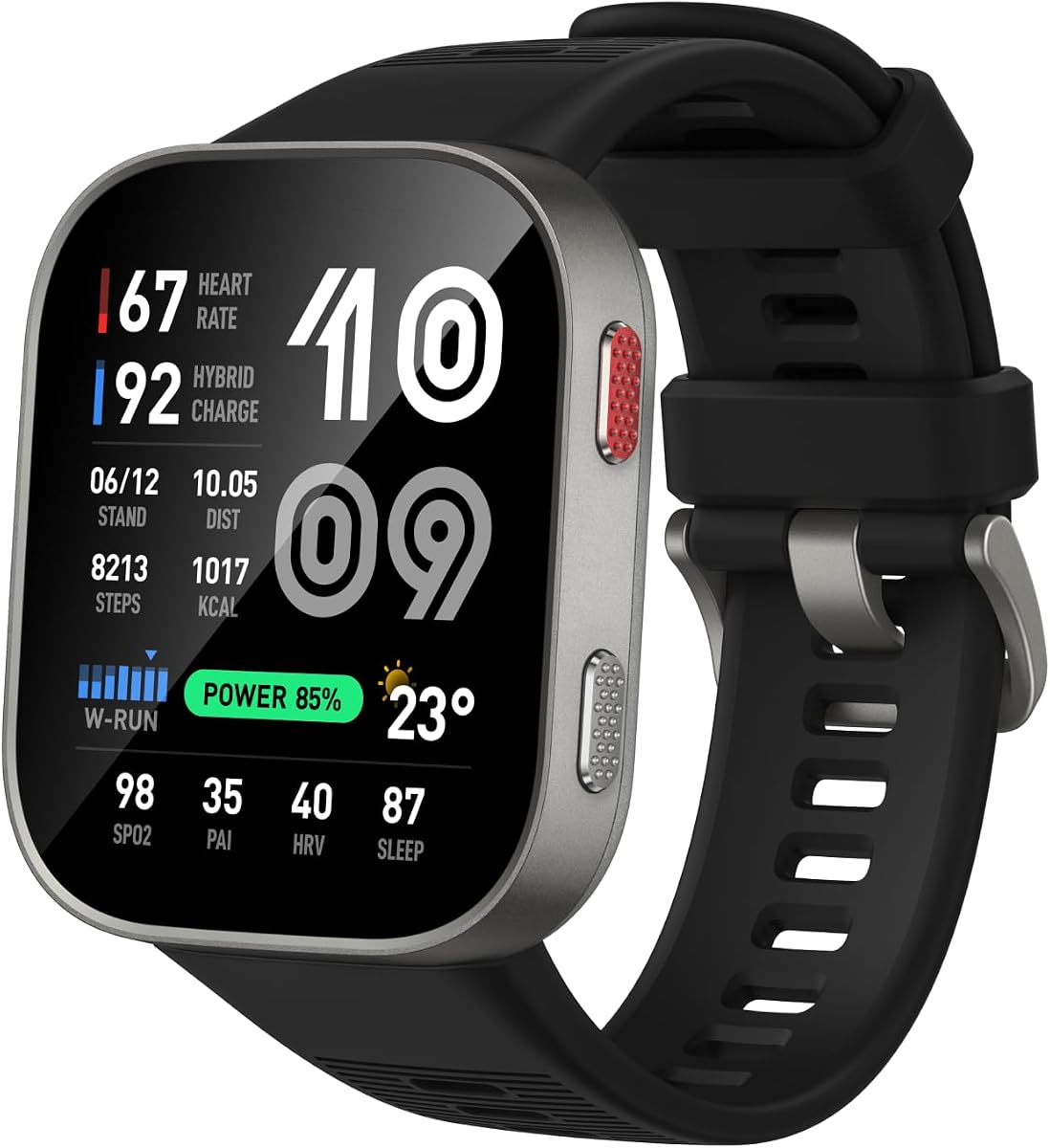
The Amazfit Bip 6 is the best budget recommendation for readers who want a dedicated GPS fitness watch without moving to the premium end of this list. Its 4.2 rating is lower than those of several generic trackers, but the supplied specifications provide a more purposeful combination of workout modes, navigation, coaching, health monitoring, and battery life. The 1.97-inch AMOLED display is large enough to present live metrics clearly and remains readable in bright sunlight.
We may earn a commission when you buy through this link, at no additional cost to you.
Built-in GPS is supported by five satellite systems, while free downloadable maps and turn-by-turn directions help outdoor athletes remain on course. More than 140 workout modes include dedicated HYROX Race and Strength Training options, alongside personalized AI coaching. These features make the Bip 6 useful for interval workouts that blend running, rowing-style conditioning, strength movements, or other disciplines, even though the supplied information does not describe a programmable repeat structure.
Continuous heart rate, sleep, blood-oxygen, and stress monitoring help users understand their condition between workouts. The watch is also rated for 50-meter water resistance, which supports swimming and exposure around water, but it is not described with the IP68 rating used by several alternatives. That distinction matters for buyers who expect high levels of splash, dust, or rain protection and should verify the manufacturer's guidance before exposing the watch to harsh conditions.
Battery life of up to 14 days is one of its strongest practical advantages, reducing charging frequency during a busy training block. The trade-off is that its 4.2 rating suggests some buyer experiences may be less compelling than those of the highest-rated products. It is still a well-rounded budget option with built-in navigation and sport-specific tools that many basic fitness trackers lack.
Five-system GPS, downloadable maps, and turn-by-turn directions are useful for outdoor intervals, trail workouts, and athletes who prefer leaving the phone behind. Route and off-course information add a level of independence.
Personalized AI coaching and 140-plus modes make it easy to record varied sessions. Dedicated HYROX and strength options are particularly relevant to fitness athletes whose conditioning alternates between aerobic intervals and resistance work.
We may earn a commission when you buy through this link, at no additional cost to you.
CMF Watch 3 Pro offers a compact but feature-rich option for interval athletes who want heart-rate detail, independent GPS, and strong phone connectivity. Its 4.2 rating reflects a capable but less universally acclaimed fitness watch. The 1.43-inch AMOLED display offers clear information in a compact case, while 130-plus sports modes support running, gym sessions, and other activities without requiring the watch to function solely as a phone accessory.
We may earn a commission when you buy through this link, at no additional cost to you.
The four-channel sensor monitors heart rate, blood oxygen, and stress in real time and is intended to improve accuracy during both activity and rest. GOMORE-powered analysis, seven-type motion recognition, and activity tracking contribute metrics for workouts, training load, recovery, and daily movement. The active score uses metabolic-equivalent information for broader fitness tracking. These functions are well aligned with interval athletes who want to compare daily workload with recovery rather than rely on elapsed time alone.
Connectivity is a major strength. Dual microphones, a built-in speaker, and AI-based noise reduction support calls directly from the wrist, and up to 30 contacts can be synchronized. Music control and quick replies add everyday utility. For training data, the Nothing X App can sync with Apple Health, Google Fit or Health Connect, and Strava, while insights include SpO₂, VO₂ max, and recovery tracking.
The 1.43-inch screen may feel restrictive when reviewing dense charts or many workout fields, and users who manage several health platforms may need time to configure the app and understand where each metric appears. Its 13-day smartwatch battery and IP68 rating make it a well-rounded option. Choose the CMF Watch 3 Pro when independent GPS, calls, sport analytics, and ecosystem flexibility matter more than a large display.
The advanced four-channel sensor supports continuous heart-rate, SpO₂, and stress tracking during rest and activity. For interval sessions, the watch also supplies workload, recovery, active-score, and motion-recognition information.
Calls, speaker audio, contact syncing, quick replies, and music controls make the watch useful beyond training. Apple Health, Google Health Connect, and Strava synchronization can also reduce the need to manage every service separately.
We may earn a commission when you buy through this link, at no additional cost to you.
The 2026 1.96-inch smart watch is an affordable, feature-heavy option for interval training, daily fitness, and wrist-based communication. Its 4.9 rating indicates strong buyer satisfaction. The large HD color touchscreen offers responsive navigation, and the supplied resolution and screen dimensions provide ample room for checking workout statistics, viewing notifications, or changing watch faces. It is designed to work with both Android phones and iPhones.
We may earn a commission when you buy through this link, at no additional cost to you.
Bluetooth 5.3 supports stable call making and answering, stored contacts, and call-history access. Social media notifications for services including Facebook, WhatsApp, Instagram, and Twitter arrive through vibration, allowing users to remain connected without taking out the phone. More than 110 sport modes include running, walking, hiking, basketball, boating, climbing, cycling, fitness, and football. During exercise, the watch can record heart rate, steps, calories, and distance in real time.
Health monitoring covers heart rate, blood oxygen, stress, sleep, and general activity, with weekly reports available in the companion app. The IP68 rating supports use around sweat, rain, handwashing, and other everyday exposure. A timer, stopwatch, alarm, music control, weather forecast, camera control, and calculator round out the everyday tools. This makes the watch a plausible entry point for someone who wants interval logging and smart features in one inexpensive device.
The active-use battery is listed at up to seven days, with standby time around 30 days, and a full charge takes roughly two hours. That is less convenient than the multiweek claims of the Garmin and Amazfit models. No built-in GPS is specified, and the feature list centers on basic real-time workout data rather than advanced training load. Choose it for budget-conscious indoor training, general fitness, and communication convenience.
The 1.96-inch HD color display makes live metrics, menus, and notifications easy to inspect. More than 200 downloadable watch faces and personal image options also let users tailor the watch to their preferences.
Bluetooth calling, contact storage, social notifications, music control, and camera control create a useful phone-free experience. IP68 protection and a seven-day active-use claim add everyday flexibility.
We may earn a commission when you buy through this link, at no additional cost to you.
The Garmin vívoactive 5 in Ivory is a strong general fitness choice for interval athletes who want recovery guidance and broad workout support in a 42mm case. Its 4.3 rating reflects a versatile smartwatch with more than 30 indoor and GPS sports applications. HIIT, walking, running, cycling, swimming, golf, strength, cardio, yoga, and Pilates are all represented, allowing the watch to follow a varied training schedule.
We may earn a commission when you buy through this link, at no additional cost to you.
Body Battery monitoring is central to its recovery approach. It considers sleep, naps, stress, and workouts to estimate when the body is charged or could benefit from rest. A sleep score, personalized sleep coaching, and HRV status add further context, though Garmin describes the data as close estimates. Workout benefit and recovery time help explain the effect of a session, making the watch useful for balancing intense intervals with easier days.
Preloaded cardio, yoga, strength, HIIT, and Pilates workouts offer structured options without requiring users to create every session manually. Additional workouts can be built in Garmin Connect, and Garmin Coach provides adaptive training plans. Music can be downloaded from Spotify, Amazon Music, or Deezer and played through connected wireless headphones, which is convenient for workouts that do not involve calls.
The 42mm design is less specialized for running than the Forerunner 165, so serious runners may prefer that model's stronger running orientation. Battery life is up to 11 days in smartwatch mode but drops to five days with the display always on. The Ivory finish gives the watch a lighter, more understated appearance. Choose it for broad fitness goals, structured indoor training, and a deeper understanding of daily readiness.
Body Battery, automatic nap detection, sleep coaching, and recovery-time estimates create a useful daily readiness picture. These features help users decide whether a planned interval session fits the day's recovery context.
With more than 30 sports applications and preloaded strength, cardio, HIIT, Pilates, and yoga workouts, the watch serves athletes whose programs include varied indoor and outdoor disciplines. Music support adds value to longer sessions.
We may earn a commission when you buy through this link, at no additional cost to you.
The black Garmin vívoactive 5 offers the same versatile fitness and recovery platform as the Ivory version in a more discreet finish. With a 4.3 rating, AMOLED display, built-in GPS, and up to 11 days of battery life in smartwatch mode, it is well suited to an active lifestyle. The 42mm size balances a reasonably easy-to-read screen with a wearable format suitable for sleep, office wear, and training.
We may earn a commission when you buy through this link, at no additional cost to you.
More than 30 sports applications include HIIT, swimming, running, cycling, walking, golf, and other indoor and outdoor activities. Preloaded workouts cover cardio, yoga, strength, HIIT, and Pilates, while Garmin Connect allows users to create their own sessions. Garmin Coach supplies adaptive plans, which can help someone follow a more structured approach than simply repeating a stopwatch routine.
Health and readiness features give this watch a broader appeal. Body Battery considers sleep, naps, stress, and workouts; wrist-based heart rate, morning reports, stress tracking, fitness age, and sleep coaching create a daily picture of wellbeing. Workout benefit and recovery-time metrics explain how training affects the body. The watch also supports automatic nap detection and nap logging, plus several additional tracking categories such as menstrual-cycle and pregnancy tracking.
Compared with the Forerunner 165, the vívoactive 5 is less oriented toward pace, distance, and running plans, making it better suited to general fitness and mixed disciplines. Its most important limitation is ecosystem dependence: the richer recovery and coaching features are most naturally accessed through Garmin Connect. Even so, the black model is an excellent option for an interval athlete who wants a compact everyday watch with serious training and recovery functions.
Body Battery and recovery estimates give athletes a reason to adjust intensity, while preloaded workouts make it easy to begin structured sessions. The combination supports both planning and interpretation.
The 42mm black case is easy to pair with casual clothing and unobtrusive enough for overnight tracking. Its 11-day smartwatch battery reduces charging interruptions, while music downloads allow phone-free listening.
We may earn a commission when you buy through this link, at no additional cost to you.
The right interval-training watch should make each effort easier to record and every training block easier to interpret. Compare workout modes, sensor behavior, battery life, recovery tools, display visibility, and connectivity rather than focusing only on the number of supported activities.
A dedicated HIIT profile is more useful than a long list of unrelated sport modes. It should suit repeated hard efforts, mixed cardio and strength work, or common conditioning formats such as HYROX. The Garmin Forerunner 165, both Garmin vívoactive 5 models, the Amazfit Bip 6, and the Amazfit Bip Max explicitly include HIIT-related options. These profiles can make it easier to record an interval session correctly and compare it with later workouts.
Check whether the app permits custom workouts, manual intervals, and rest timers. A large sports-mode count is useful only when the relevant mode accurately matches the activity. Prioritize a straightforward activity list and clear post-workout records over hundreds of labels that do not add useful training context.
Heart rate is one of the most frequently consulted metrics during intervals, so comfort and consistency matter as much as the advertised feature list. All ten watches in this guide include heart-rate tracking. The CMF Watch 3 Pro uses a four-channel sensor and emphasizes monitoring during activity and rest, while the Garmin watches pair wrist-based heart rate with recovery metrics. Wear the selected watch in a snug but comfortable position, and follow the manufacturer's guidance for sensor care.
For highly structured athletes, treat wearable heart rate as one input rather than a medical measurement. Garmin explicitly notes that several health and recovery readings are close estimates. Consistent conditions, including similar fit and placement, can make trends more meaningful than a single reading.
Built-in GPS is valuable for outdoor intervals because pace, distance, and route can be recorded without carrying a phone. It is explicitly listed for both Garmin Forerunner 165 models, both Garmin vívoactive 5 models, the Amazfit Bip Max, the Amazfit Bip 6, and the CMF Watch 3 Pro. The generic 1.83-inch watch, 1.58-inch fitness tracker, and 1.96-inch calling tracker do not list built-in GPS.
For trail running, outdoor cycling, and open-field conditioning, a watch with multiple satellite systems, downloadable maps, and turn-by-turn guidance offers greater independence. Indoor athletes can prioritize display size, interval mode, and recovery insights instead, but should verify how outdoor distance and route information is recorded.
Interval training can be demanding enough that recovery should influence the next session. Garmin's Body Battery, training-effect labels, and recovery-time estimates provide some of the most focused guidance in this group. The Amazfit Bip Max adds Training Load, Training Effect, VO₂ max, and BioCharge monitoring, while the Amazfit Bip 6 and CMF Watch 3 Pro include coaching and recovery-oriented features.
Look for metrics that explain workload rather than simply repeating heart rate. A good recovery system should connect recent training with sleep, stress, and overall readiness. These indicators remain estimates and should be used as planning aids alongside personal experience and professional advice.
Battery endurance determines whether a watch can follow a demanding schedule without becoming another device to charge. Garmin claims up to 19 hours of GPS use and 11 days in smartwatch mode for the Forerunner 165. The vívoactive 5 offers up to 11 days in smartwatch mode and five days with the always-on display. Amazfit claims up to 14 days for the Bip 6 and 20 days of typical use for the Bip Max.
These figures are not direct equivalents. A workout with GPS and an always-on display usually consumes more power than basic daily tracking. The 1.96-inch calling watch lists up to seven days of active use and around 30 days of standby, while the other general-purpose trackers do not provide equally detailed endurance claims in the supplied information. Evaluate the stated use case as well as the maximum figure.
Display size is a personal trade-off between readability and bulk. The Amazfit Bip Max leads with a 2.07-inch AMOLED screen, followed by the Amazfit Bip 6 at 1.97 inches and the 1.96-inch tracker. The Garmin Forerunner 165 and vívoactive 5 use more compact 43mm and 42mm cases, which may sit more comfortably on smaller wrists and remain easier to wear overnight.
Consider whether you need to glance at a detailed interval screen or simply want time, heart rate, and notifications. A bright AMOLED display helps outdoors, while physical controls can be useful during intense sessions. The best choice is the screen you can operate without distraction, not automatically the largest one.
Sweat, rain, pool water, and accidental splashes are common in interval training, making water resistance useful. The 1.83-inch smart watch, 1.58-inch fitness tracker, CMF Watch 3 Pro, and 1.96-inch tracker are listed with IP68 protection. The Amazfit Bip 6 has a stated 50-meter water resistance rating, and the Garmin watches are listed as suitable for swimming activities, although their exact water rating is not provided in the supplied data.
Do not assume every water-resistance level is appropriate for swimming or hot water. Check the manufacturer's instructions, avoid operating controls underwater unless specifically permitted, and rinse or dry the watch as directed. Water resistance can decline over time if seals become damaged.
Smart notifications, calls, music, and synchronized platforms can make a watch more convenient between workouts. The generic 1.83-inch watch and 1.96-inch tracker support Bluetooth calls, while the CMF Watch 3 Pro adds a speaker, microphones, contact syncing, and links to Apple Health, Google Fit or Health Connect, and Strava. Garmin users benefit from the connected training ecosystem in Garmin Connect and compatible music services.
Choose a platform that matches the phone and services you already use. Also consider how much interaction you want with the companion app. A watch may collect data effectively without extensive smartwatch features, whereas adaptive plans and recovery context often become more useful when the app is checked regularly.
Before the first hard session, charge the watch fully, install the compatible companion app, and complete its setup process. Set your preferred units, notification preferences, sleep goals, and user profile. Choose the activity profile that most closely matches the workout rather than using a generic profile simply because it is first in the list. For an interval session, establish a planned duration and recovery structure so the resulting record can be compared meaningfully.
Wear the watch snugly enough to maintain sensor contact without making it uncomfortable. If the device offers a specific heart-rate setting, use it consistently, and keep the sensor area clean and dry. Start a workout before the first effort and stop it only after the cooldown. Review active time, heart rate, distance where applicable, workout effect, and recovery information once the session ends. Compare like-for-like sessions rather than judging a short sprint set by the same standards as a long endurance ride.
Rinse the watch after pool workouts or exposure to dirt, and dry the strap and case thoroughly. Avoid pressing buttons underwater unless the manufacturer allows it. Charge the watch on a clean, dry surface, inspect the charging contacts when charging is unreliable, and keep the software and firmware updated. Replace the band when it becomes stretched or slippery, because secure sensor contact helps produce more consistent heart-rate trends.
The Garmin Forerunner 165 is the strongest overall choice because it combines dedicated HIIT profiles, built-in GPS, heart-rate tracking, training-effect labels, recovery estimates, and adaptive workout suggestions. The Amazfit Bip 6 and Bip Max are strong alternatives when a large display, GPS, coaching, and extended battery are priorities. The right choice still depends on whether your intervals occur mainly indoors, outdoors, or across mixed activities.
Not necessarily. GPS is most useful for outdoor runs, cycling, open-field drills, and workouts where independent pace, distance, or route tracking matters. Indoor athletes can prioritize a suitable interval profile, heart-rate monitoring, recovery metrics, screen readability, and battery life. If most training happens outside, verify that the watch includes built-in GPS rather than relying on the paired phone.
A specific HIIT or interval workout mode is the most directly useful feature because it labels the session correctly and organizes its records. Heart rate, elapsed time, distance, and recovery information add context, while a large number of sports modes is only helpful if the relevant activity appears. Custom interval programming and rest alerts are useful additions when the manufacturer supports them.
Wrist-based heart-rate readings can be useful for tracking trends and understanding effort, but they are not guaranteed to match laboratory or chest-strap measurements in every situation. Fit, movement, skin contact, and workout type can affect readings. For consistent comparisons, wear the watch the same way, use the same sensor mode when available, and treat the results as fitness guidance rather than a medical diagnosis.
A battery that lasts several active days can prevent charging from interrupting a busy training block. The Garmin Forerunner 165 claims up to 19 hours of GPS use, while the Amazfit models offer longer typical-use estimates. Actual endurance varies with GPS, always-on display, notifications, and music use, so compare the specific mode in which you will train rather than relying on a maximum headline figure.
Choose a running-focused watch when pace, distance, GPS accuracy, running plans, and recovery after runs are central to your program. A general fitness smartwatch is often better for varied sessions involving strength, yoga, cycling, swimming, or indoor conditioning. The Garmin vívoactive 5 sits between those categories, while the Forerunner 165 leans more heavily toward running and interval training analytics.
Most can record workouts without the phone, but independent GPS, onboard maps, and offline media vary by model. Watches with built-in GPS are better for outdoor independence, while every listed watch benefits from phone connectivity for notifications, calls, syncing, and deeper app analysis. Even a standalone workout record can later be synchronized through the companion app when connectivity returns.
First compare the workout experience: interval modes, timer flexibility, GPS, heart-rate behavior, screen controls, and post-workout metrics. Then examine recovery tools, battery life in your preferred mode, water resistance, phone compatibility, and app usability. Finish choices should also fit your wrist size and daily routine, because a technically capable watch is less useful if it is uncomfortable or distracting.
The Garmin Forerunner 165 takes the overall recommendation because it offers the most balanced package for repeated hard efforts: dedicated HIIT support, built-in GPS, continuous heart-rate tracking, adaptive suggestions, training-effect context, and recovery estimates. The Amazfit Bip Max is the premium alternative for those who want a larger display, offline maps, extensive sports modes, advanced workload metrics, and exceptional typical-use endurance. The Amazfit Bip 6 delivers the most focused budget combination of GPS, coaching, workout breadth, and battery life.
Prioritize the features that will shape your actual training. Indoor athletes may get the most from a reliable HIIT profile, heart-rate display, timer controls, and recovery insights. Outdoor users should favor built-in GPS, route tracking, and battery endurance under continuous tracking. A screen that remains readable, a band that stays secure, and an app you understand are at least as important as a long feature list.
Ratings and specifications can change as products are updated, and current prices vary by finish, seller, and availability. Check the latest product listing, warranty terms, compatibility, and water-resistance guidance before purchasing. That final review helps ensure the chosen smartwatch remains a useful training partner rather than simply another gadget.