
24GHz Radar Sensor Bike Tail Light
5.0Editor score
Radar detection up to 230 feet
Dual-beam red lighting
Audible and visual alerts
USB-C rechargeable design
Our Bike Radar Tail Light guide compares ten radar lights for detection range, visibility, alerts, battery life, compatibility, mounting, and weather resistance
A bike radar tail light combines a conventional rear LED light with sensors that detect approaching vehicles, helping riders remain aware of traffic without repeatedly twisting around. The best model balances dependable detection, strong visibility, understandable alerts, useful mounting options, and enough battery life for the kind of rides you actually take.
This guide compares ten radar tail lights using the specifications and features provided for each product. It examines radar range, viewing angle, alert methods, braking behavior, light output, runtime, charging, device compatibility, waterproofing, installation, and the weight of the setup rather than assuming every cyclist needs the same capabilities.
The picks span compact budget devices, feature-rich universal options, and premium systems designed to work closely with compatible cycling computers. Each review explains the strongest reasons to consider the model, as well as the compromises that may matter to commuters, road riders, mountain bikers, and touring cyclists. Prices and availability can change, so confirm current details before buying.
5.0Editor score

4.8Editor score

4.3Editor score
The table below compares all ten radar tail lights by radar reach, lighting capability, alert method, and notable compatibility. Use it to narrow the field, then read the individual reviews for installation details, trade-offs, and ride-specific recommendations.




The COOSPO TR70 earns a place at the top because it brings together the features cyclists most often want from a modern rear safety light: a 140-meter radar range, 70 lumens of output, automatic vehicle warnings, brake detection, and a claimed 40 hours of continuous use. Its 4.5 rating reflects a well-rounded package, while the combination of app and Garmin computer support makes it useful across both casual and data-focused riding setups.
We may earn a commission when you buy through this link, at no additional cost to you.
The radar system is designed to alert riders when a vehicle approaches, while the light automatically flashes and raises its intensity during sudden braking. Seven modes—Low, High, Breathing, Day Flash, Night Flash, Group Ride, and Radar-Only—let you tune the behavior for daytime visibility, nighttime riding, or group use. The 220-degree visibility angle is especially valuable because rearward awareness is not limited to a narrow, perfectly aligned line of sight.
Battery endurance is one of the TR70's strongest selling points. The advertised 40-hour runtime provides considerable freedom for commuters and touring riders, and the USB-C port simplifies routine charging. There are, however, a few operational details to keep in mind. The unit must be charged before first use, and the manufacturer advises against fast charging. Its IPX7 rating offers reassuring rain protection, while the quick-release mount supports round, D-shaped, and aero seatposts.
The TR70 is a strong recommendation for a rider who wants a flexible all-purpose unit without committing to one device ecosystem. It works particularly well if you already use a compatible Garmin cycling computer or are willing to use the COOSPO app. Choose it when you value a broad lighting-mode selection, a long advertised runtime, and a tool-free mount more than the very latest premium threat-classification features.
The TR70 combines rear vehicle detection with automatic flashing and a high-intensity braking response. That layered warning is useful because it communicates both the presence of traffic and your own change in speed, helping following road users recognize your intentions.
Garmin display support, app connectivity, seven lighting modes, and broad seatpost compatibility let one device cover commuting, road, mountain biking, and group rides. Radar-only mode can also reduce unnecessary lighting when visibility conditions are favorable.
We may earn a commission when you buy through this link, at no additional cost to you.
The Garmin Varia RTL515 is the most established choice in this group, combining a rearview radar and tail light with visual and audible warnings for approaching vehicles. It holds a 4.8 rating, the highest among the ten products, and its 153-yard radar reach is among the longer stated ranges. The compact vertical housing is particularly well suited to road bicycles and riders who want a clean, established cycling-computer setup.
We may earn a commission when you buy through this link, at no additional cost to you.
Integration is the defining advantage. It pairs with Garmin Edge computers, compatible smartphones, select Garmin wearables, and the radar display unit. The Varia app adds graphical information, tones, and vibration alerts, while third-party ride-tracking apps such as Ride with GPS can overlay radar warnings onto maps. For riders whose entire training environment is already Garmin-based, this creates a more cohesive experience than an isolated rear light.
Visibility is another major strength. The light is advertised as visible to motorists from up to one mile away in daylight, which is especially valuable on open roads with fast traffic. Runtime depends on the selected mode: up to 16 hours in day flash and up to six hours in solid mode. Peloton mode supplies a lower-intensity flash for group rides, reducing the likelihood of dazzling riders directly behind you.
The RTL515 is ideal for cyclists who want proven radar alerts integrated into a compatible Garmin setup and do not need the newest hardware in the category. Its principal compromise is that solid-mode runtime is relatively short, which matters for riders who prefer a continuous light during long tours. The possible need for a separate seat-rail mount also makes installation planning important. Within the Garmin ecosystem, though, it remains a compelling, rider-friendly choice.
Radar warnings can appear on an Edge computer or compatible wearable, allowing riders to monitor the road ahead without sacrificing situational awareness. App-based graphics add context to the direction and proximity of detected vehicles.
The mix of daylight visibility, solid output, and a dedicated peloton mode covers everything from solo commuting to group training. Selecting the appropriate pattern helps preserve battery life and avoids dazzling neighboring riders.
We may earn a commission when you buy through this link, at no additional cost to you.
The iGPSPORT SR mini is built for cyclists who want a long radar range and broad device compatibility. It can detect vehicles from as far as 160 meters, offers a 45-degree detection angle, and can track up to eight vehicles simultaneously. Those specifications put it near the front of the field for awareness capability, while its 4.3 rating suggests a generally favorable reception.
We may earn a commission when you buy through this link, at no additional cost to you.
The SR mini supports compatible iGPSPORT computers, including the BSC200S, BSC300T, BSC500, BiNavi series, and iGS800, as well as the iGPSPORT app. It also works with compatible Garmin, Wahoo, and Bryton computers and smartwatches that support standard radar protocols. That flexibility makes it a practical choice for riders who have upgraded computers over time and do not want their rear-light choice to dictate the rest of their cockpit.
Its light provides a wide 220-degree viewing angle and is advertised as visible from up to one mile. Multiple patterns—including steady, peloton, pulse, day flash, night flash, and radar-only—cover varying riding conditions. The built-in sensor detects braking and automatically increases brightness. Battery life reaches up to 20 hours in light mode and up to 25 hours in radar-only mode, with USB-C charging and automatic sleep and wake behavior.
The SR mini is a compelling recommendation for mixed-device ecosystems and riders who value tracking several vehicles at once. Its principal limitation is that you still need a compatible computer, smartwatch, or phone to receive meaningful visual warnings; it is not a fully self-contained display. The stated runtimes also fall short of the TR70 and R300, although they should suit many daily and weekend rides. For broad compatibility, this is one of the most flexible products in the guide.
Tracking up to eight vehicles provides a more complete rearward picture than a simple proximity warning. The 160-meter maximum detection distance also creates useful preparation time on faster roads.
Support for iGPSPORT, Garmin, Wahoo, and Bryton hardware reduces ecosystem lock-in. Confirm that your exact computer model and firmware support the appropriate radar protocol before installation.
We may earn a commission when you buy through this link, at no additional cost to you.
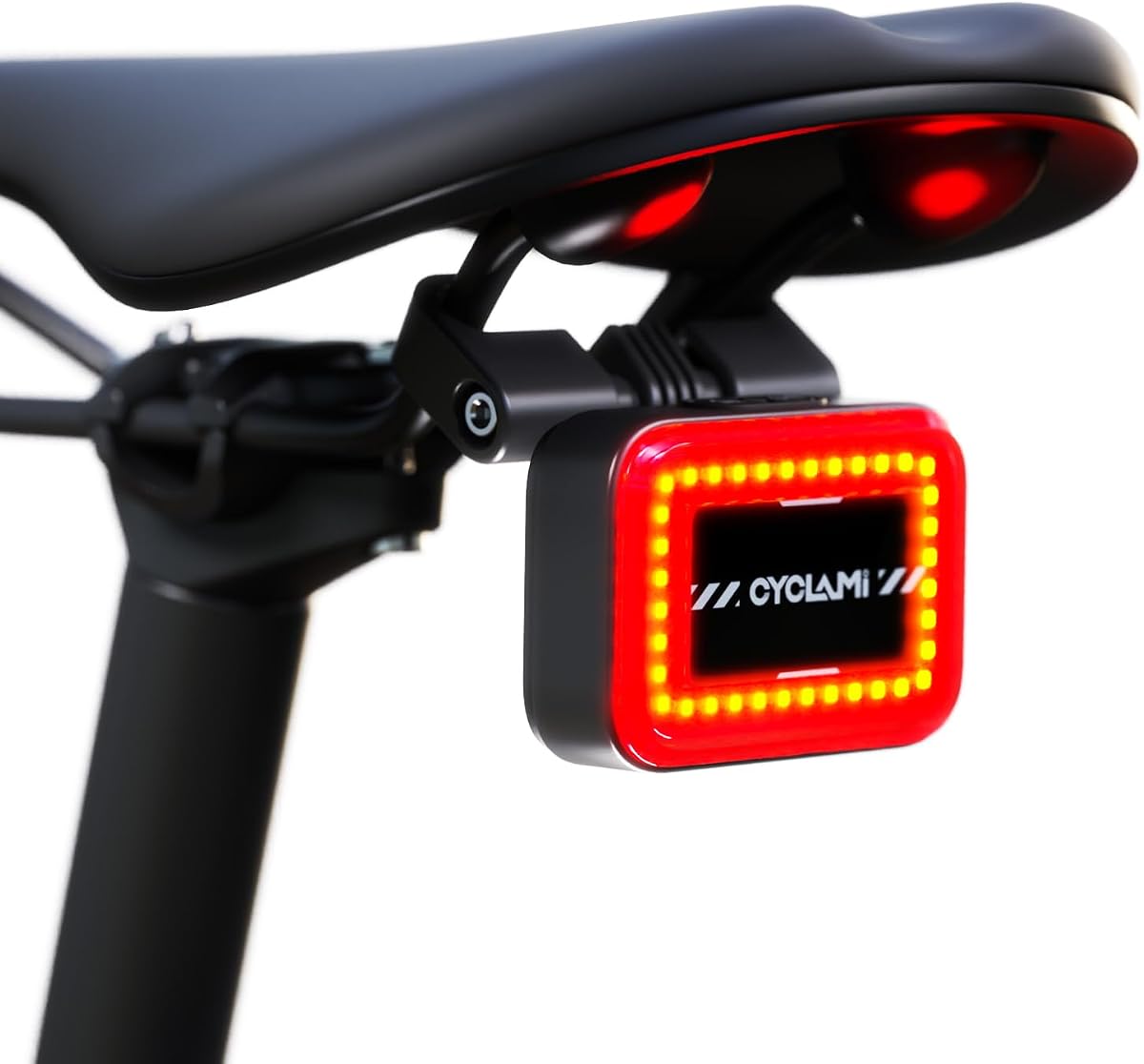
The 24GHz Radar Sensor Bike Tail Light is a straightforward radar-and-light package with a 5.0 rating. Its defining feature is the combination of 24GHz radar detection out to 230 feet, dual red lighting, audible and visual warnings, and an automatic braking response. For cyclists who want the basic benefits of rear traffic detection without paying for a full ecosystem integration, this compact option deserves serious consideration.
We may earn a commission when you buy through this link, at no additional cost to you.
The light uses a two-beam arrangement. A 58-lumen far beam is intended to help motorists notice the rider from farther away, while a 16-lumen near beam is suited to group riding, where an overly bright rear light can disturb the cyclists immediately behind. A built-in buzzer provides another notification channel, while deceleration triggers a high-beam-style warning for following traffic.
Eight lighting modes cover steady, fast flash, slow flash, warning flash, breathing flash, and running behavior. The 800mAh battery charges over USB-C in approximately two hours and provides up to eight hours of runtime. Its IP64 rating protects against splashes and dust, and the listed weight of 0.08 pound makes it one of the lightest units in the comparison.
This product is best for budget-conscious commuters and recreational riders who value a radar alert, audible warning, and brake sensing more than advanced computer displays. Its 230-foot range is shorter than the 140-to-160-meter figures claimed by several competitors, and the eight-hour runtime means frequent charging may be necessary. Even so, the core feature set and five-light-beam design make it a strong entry point.
The brighter far beam is intended for solitary road riding, while the dimmer near beam can reduce glare for riders following closely. This is a thoughtful distinction that makes the unit easier to use in mixed riding environments.
The internal buzzer and flashing light communicate a detected vehicle without requiring a cycling computer. That self-contained approach may be especially convenient for commuters who do not regularly use navigation electronics.
We may earn a commission when you buy through this link, at no additional cost to you.
The Garmin Varia RearVue 820 represents the premium end of this category, using advanced radar tracking to classify approaching vehicles as small, medium, or large. It also displays movement and threat level on compatible Edge computers, the Varia app, or supported Garmin watches. Its 4.3 rating does not lead the group, but the sophistication of its rearview information sets it apart from simpler proximity detectors.
We may earn a commission when you buy through this link, at no additional cost to you.
The 820 also offers exceptional advertised light visibility of up to 2 kilometers, or 1.24 miles. Battery life reaches 24 hours in day flash and 30 hours in radar-only mode. A brake light uses a distinct flash pattern to show that you are slowing or stopping, while same-speed tracking helps maintain awareness of vehicles that remain beside or behind you instead of quickly falling out of range.
There are important limitations to understand. Tracking may be unavailable at slower speeds or when the radar view is obstructed, and the seat-rail mount kit is sold separately. The device also focuses on Garmin's display ecosystem, so its strongest functionality is most accessible to riders using compatible Edge computers or watches. The Varia app, custom light patterns, and adjustable settings add flexibility, but the premium hardware is primarily intended for a connected setup.
Riders who prioritize detailed threat information, long visibility, same-speed awareness, and deep integration with Garmin devices will find the RearVue 820 compelling. It is less attractive if you need a simple, self-contained light, want broad cross-brand computer support, or prefer a turnkey seat-rail installation without another accessory. For the intended audience, however, this is the most technically advanced rearview system reviewed.
Vehicle-size classification, movement information, and threat-level displays help riders interpret what is happening behind them. Same-speed tracking is particularly useful in traffic where faster radar warnings would otherwise be repetitive.
The 1.24-mile visibility claim makes this one of the strongest lighting options in the guide, while 30 hours in radar-only mode supports long rides. Day flash balances visibility and runtime for frequent road use.
We may earn a commission when you buy through this link, at no additional cost to you.
The 60M Radar Brake-Sensing Light prioritizes a compact, self-contained design at 54 grams and 6.2 by 4.2 by 2.4 centimeters. Its radar detects cars from up to 60 meters and motorcycles from up to 30 meters, while a 54-degree coverage angle helps capture vehicles approaching through bends or within blind spots. The 4.2 rating reflects a capable package with understandable limitations.
We may earn a commission when you buy through this link, at no additional cost to you.
Audio warnings become more frequent as the detected vehicle closes in: one beep at 60 meters and two beeps at 10 meters. The light also uses a high-precision brake sensor to increase brightness by 20 percent when you decelerate. Its 40 COB LEDs provide a stated visible range of 500 meters, and five modes—steady, fast flash, slow flash, breathing, and SOS—cover common riding conditions.
The 1000mAh battery, vibration sensing, and IP64 protection make this a practical all-weather unit. It can be mounted on a seatpost or seatpost rail and removed quickly when the bike is unattended. Estimated runtimes range from three hours in some modes to six hours in slow flash, so charging between rides may be needed for frequent use. The housing combines aluminum alloy and plastic to balance durability with low weight.
This light is a good choice for riders who value a small, straightforward radar warning and do not need information on a cycling computer. Its compact dimensions are especially useful for road bikes and minimalistic setups. The shorter 30-meter motorcycle detection range and absence of rich display information are the main compromises. For urban riding where cars dominate the danger, it remains a sensible compact option.
The automatic 20-percent brightness increase communicates deceleration to traffic behind you. It works alongside the radar alert, giving drivers and following cyclists two distinct cues about your behavior.
At 54 grams, the unit can be mounted on either a seatpost or its rail. The quick-removal arrangement also helps riders move the device between bikes or store it securely when parked.
We may earn a commission when you buy through this link, at no additional cost to you.
The RAVEMEN NT201 combines an 80-lumen rear light with radar detection out to 140 meters. Its 4.0 rating places it near the lower end of the guide, but the hardware specification is appealing for riders who want strong lighting and standard ANT+ connectivity without depending on a dedicated phone app. Visual and auditory warnings appear through compatible cycling computers.
We may earn a commission when you buy through this link, at no additional cost to you.
Six lighting modes include high, low, slow flash, warning flash, daytime warning, and pulse. The brightest warning-flash mode lasts up to 16 hours, while slow flash extends runtime to 23 hours. The 80-lumen output and wide viewing angle are designed to improve daytime and low-light visibility, although the stated one-mile visibility figure is less expansive than the 1.24-mile claim of the Garmin RearVue 820.
A dynamic brake sensor activates the bright braking light as soon as you decelerate. Motion detection provides automatic sleep and wake-up, which is useful for preserving battery life when the bicycle is not moving. The light fits round and aero seatposts up to 4.5 centimeters wide, as well as saddles using a rail mount. Its IPX6 rating handles rain, although the charging cover should be tightened before riding.
The NT201 is recommended for ANT+ users who do not want a complicated app-based setup and value an 80-lumen light. The 4.0 rating is a reason to consider customer feedback and warranty terms carefully, while the 16-hour maximum figure applies to flash modes rather than continuous high output. Despite that modest rating, the straightforward connection process and generous light output make it a viable choice for commuting and road training.
The 80-lumen maximum is among the highest outputs in the comparison, and ANT+ support offers a familiar route into compatible bike computers. It is a good match for riders who prefer conventional wireless standards over proprietary app workflows.
Brake sensing removes the need to switch modes manually, while motion-based sleep and wake help preserve power between rides. The system becomes easier to live with once the initial setup is complete.
We may earn a commission when you buy through this link, at no additional cost to you.
The Wahoo Fitness TRACKR is designed to sit naturally within a Wahoo ecosystem, connecting with ELEMNT bike computers and the Wahoo app. It detects approaching cars up to 150 meters and provides real-time notifications on ELEMNT and other compatible computers and fitness watches. Its 4.2 rating and polished road-oriented design make it an attractive choice for Wahoo users.
We may earn a commission when you buy through this link, at no additional cost to you.
The lighting system responds to braking by increasing luminosity, helping following traffic recognize your change in movement. A continuous quick-alert flash pattern activates when a car enters the radar zone, adding a visual warning outside the main device display. The system also remembers the last-used lighting mode between rides, reducing repetitive setup at the start of every outing.
Battery Extender mode is a notable feature. It reduces luminosity when no vehicles are detected, helping conserve energy during longer rides. Settings can be enabled or disabled in the Wahoo app to accommodate regional traffic regulations, while ANT+ Smart Light Control enables hands-free management through an ELEMNT computer. These features make the TRACKR feel designed around regular training and navigation workflows.
The TRACKR is a strong recommendation for riders centered on ELEMNT devices and the Wahoo app, especially those who want adaptive lighting and traffic notifications in a unified display. Its radar provides proximity and approach information rather than the detailed vehicle classification found in premium Garmin models. The smart setup, mode memory, and battery management nevertheless make it one of the most convenient choices for compatible Wahoo users.
Traffic warnings appear directly on supported devices, while the Wahoo app handles configuration. The integration avoids unnecessary steps during repeated rides and keeps rear awareness within the same interface as navigation and training data.
Mode memory reduces setup repetition, while Battery Extender mode lowers output during quiet periods. Regional setting controls and Smart Light Control add another layer of control for frequent riders.
We may earn a commission when you buy through this link, at no additional cost to you.
The 60M Active-Alert Radar Light combines 24GHz radar, audio warnings, brake sensing, and a 40-LED rear light in a housing measuring 2.44 by 1.65 by 0.94 inches. Its 3.9 rating is the lowest among the selected products, so prospective buyers should weigh the feature set carefully against customer feedback. Functionally, it covers the basic needs of a compact radar safety light.
We may earn a commission when you buy through this link, at no additional cost to you.
The radar reaches 60 meters across a 54-degree angle and supports vehicles traveling from 10 to 120 km/h. One beep indicates detection at 60 meters, while two beeps provide a more urgent warning at 10 meters. Rapid flashing accompanies the alert. A brake sensor activates the brightest red output during sudden stops, and the stated 500-meter visibility helps make the rider easier to notice.
Five modes—steady, fast flash, slow flash, breathing, and SOS—provide basic lighting choices. The 1000mAh battery offers three to six hours of runtime depending on mode and recharges over USB-C in approximately two hours. Vibration wake-up activates the system when the bicycle is moving, while an IP64 housing and an aluminum-and-plastic shell help it tolerate rain, dust, and shocks.
This product is a practical choice for riders seeking a compact, inexpensive-looking unit with audible alerts and group-riding logic. Its radar filters same-speed teammates to reduce unnecessary warnings, which is useful during organized rides. The trade-offs are its short runtime and relatively limited detection distance. It works best for local commuting or shorter tours where frequent charging is acceptable.
The one-beep and two-beep pattern gives riders a simple indication of how close a detected vehicle may be. This makes the unit useful even when no cycling computer is present.
Same-speed filtering helps reduce alerts caused by teammates, while vibration wake-up limits unnecessary operation. Seatpost and saddle-rail mounts make it suitable for road bikes, mountain bikes, and e-bikes.
We may earn a commission when you buy through this link, at no additional cost to you.
The MagicShine SEEMEE R300 is the brightest product in this comparison, using high-power LEDs and optical lenses to produce 300 lumens across a 270-degree viewing angle. It also includes ANT+ radar detection out to 140 meters, giving it one of the strongest combinations of rear lighting and vehicle awareness. Its 3.9 rating is tied for the lowest, making the exceptional specification and lower rating worth comparing side by side.
We may earn a commission when you buy through this link, at no additional cost to you.
The advertised lighting visibility reaches 2,400 meters, or 1.49 miles, which is the longest stated figure among the products reviewed. The radar has a 35-degree detection cone and supplies visual and audible warnings on a compatible bike computer. Two independent buttons let riders control radar and light behavior separately, and a brake sensor supports the alert system during slowing.
A 3350mAh battery is one of the largest capacities listed, enabling up to 100 hours in energy-saving flash mode with radar switched off. That headline runtime is less representative of continuous radar use, so riders should understand the mode distinction. The IPX6 aluminum housing weighs 3.99 ounces, balances well on a seatpost, and is designed to dissipate heat.
The R300 is ideal for riders who prioritize maximum light output, a wide beam, and long flash-mode runtime. Its tool-free quick-release bracket fits most seatposts, making installation straightforward across road, mountain, gravel, and e-bike applications. The narrower 35-degree radar angle and ANT+ display requirement are the main compromises. Choose it when lighting performance matters at least as much as radar coverage.
The 300-lumen output and 270-degree spread create an exceptionally visible rear profile. That makes the R300 well suited to night commuting, unlit roads, and rides where conspicuity is the primary concern.
The 100-hour runtime is especially attractive for touring riders using the light intermittently. The key qualification is that this figure applies to the energy-saving flash mode with radar off, not continuous radar operation.
We may earn a commission when you buy through this link, at no additional cost to you.
A useful bike radar tail light should make you more aware of rear traffic while remaining easy to operate, readable in real conditions, and dependable throughout a ride. The most important factors are detection performance, alert delivery, visibility, device compatibility, runtime, mounting, and weather resistance.
A longer detection range gives you more time to evaluate traffic, move toward a safer lane position, or adjust your pace. The featured products range from 30 meters for motorcycle detection on one compact model to 160 meters for general vehicle detection on the iGPSPORT SR mini. Maximum range is only one part of the equation, however. A wide cone can detect vehicles entering from curves or blind spots, while a narrower cone may concentrate sensitivity directly behind the bicycle. You should also consider the stated operating speed range, because traffic is not always closing at the same rate as the cyclist.
Radar information is only useful if it reaches you in a form you can understand quickly. Some products provide visual and audible alerts on a compatible cycling computer, while others add a phone app with graphics, vibration, or tones. Standalone units rely on a built-in buzzer and flashing patterns. Integrated systems are generally better for navigating and training, although they require compatible hardware and a more involved setup. Check whether your exact computer model supports the required radar protocol before making a purchase.
A radar warning helps you react to a vehicle, but the tail light determines how readily drivers notice you in the first place. Brightness claims range from a 40-LED or 58-lumen setup to 80, 70, and 300 lumens. Higher output is useful on unlit roads, while wide viewing angles help cyclists remain visible from the side as well as directly behind. Daylight visibility claims also differ, with several products claiming visibility from one mile away and premium options extending beyond that.
Radar, multiple LEDs, displays, and wireless communications all consume power, so runtime depends heavily on the selected mode. Advertised figures range from three to six hours in some light modes to 30 or even 100 hours in specialized flash or radar-only settings. Look for the runtime of the modes you will actually use rather than the largest number in the specification list. USB-C charging is convenient, and vibration wake-up or automatic sleep can help preserve power between rides. Plan charging around your route length and access to a power source.
Automatic brake sensing adds a clear signal that you are slowing down. Some devices increase brightness during deceleration, while others use a dedicated flash pattern. These features are useful to drivers and cyclists following behind, particularly at night. A low-intensity peloton mode can reduce glare for riders immediately behind you. Because different sensors use different methods, you should also consider whether the brake activation feels consistent during gentle deceleration and hard stops.
The best mount is one that stays secure, permits easy removal, and fits the frame you ride. Seatpost and saddle-rail arrangements are the most common options, while some devices include clamps for round or aero posts. Check post width and shape, especially on aero frames. Tool-free quick-release systems are convenient for commuters who remove lights at each stop. If your bicycle uses an unusual seatpost or rail arrangement, verify the included hardware and any separately sold mount kit before ordering.
Rear lights are exposed to rain, road spray, mud, vibration, and significant temperature changes. Water-resistance ratings in this guide range from IP64 to IPX7. A higher rating generally indicates stronger water protection, but it does not mean the device is waterproof during charging or washing. Outdoor charging ports should remain covered in poor weather, and housings should be checked for cracks or damaged seals. Aluminum alloy and sturdy plastic constructions can improve durability without adding excessive weight.
A compact rear unit is easier to carry, less noticeable, and often easier to mount on different bikes. The listed weights range from 0.08 pound for the budget radar light to 3.99 ounces for the MagicShine R300, a small absolute difference but one that can matter on a minimalistic setup. Consider whether the buzzer could be distracting, whether controls work with cycling gloves, and whether automatic sleep or wake is supported. These everyday details often influence long-term satisfaction more than a small specification difference.
Begin by fully charging the light through its USB-C port before mounting it, and note that the COOSPO TR70 must receive an initial charge for activation. Install the selected mode before attaching the unit firmly to the seatpost or saddle rail. Pair it with your cycling computer or app, confirm that the radar connection appears, and test the visual, audible, and braking alerts in a safe location away from traffic.
Choose a light pattern that matches the environment. Use brighter or flashing modes for poor visibility, lower output or peloton mode in groups, and radar-only operation when a conventional light is unnecessary. Review the device before each ride to confirm that the selected mode, brightness, and regional alert settings are appropriate. If the display reports a detected vehicle, maintain forward attention and respond smoothly rather than making abrupt steering or braking movements.
After riding, disconnect the device if it will remain in the rain, wipe away mud and road spray, and inspect the seals and charging cover for damage. Charge the battery between long rides and avoid fast charging where the manufacturer advises against it. Check mounting bolts and the quick-release mechanism regularly, and update the associated app or cycling-computer firmware when updates are available.
Not always. Some models provide audible and visual warnings through a built-in buzzer and flashing light, while others are designed to display more detailed information on a compatible cycling computer. Computer integration usually provides clearer context about vehicle distance and approach, but it also adds setup requirements. Check the compatibility list before purchasing.
A practical alert needs to arrive early enough for a rider to move position or adjust speed without making a sudden maneuver. Detection ranges in this guide extend from 30 meters for motorcycles on one model to 160 meters for vehicles on another. Actual performance can vary with road curvature, obstacles, weather, and the speed difference between you and the detected vehicle.
No. Brightness is only one part of being seen, and a very intense light can be distracting when riding in a group. Beam angle, daytime flashing patterns, radar integration, mounting stability, and battery runtime all matter. Many riders benefit from a brighter mode for solo night riding and a lower-intensity peloton mode for group sessions.
A rear light makes you continuously visible, while a brake light communicates that you are slowing down. A radar tail light combines the general lighting role with traffic detection, and many models add automatic braking behavior. This gives following drivers and cyclists an additional cue about your movement.
The products in this guide have water-resistance ratings ranging from IP64 to IPX7, and several are specifically designed for wet-weather riding. Water resistance is not unlimited, however. Keep charging ports covered, avoid washing the device under a high-pressure stream, and inspect seals regularly, especially after rough rides or a fall.
It depends on the exact product and the protocols supported by your computer. The iGPSPORT SR mini is described as supporting compatible Garmin, Wahoo, Bryton, and iGPSPORT devices, while the COOSPO TR70 supports compatible Garmin computers and its own app. Garmin and Wahoo premium products have the strongest integration within their respective ecosystems. Verify the model number and current firmware support before buying.
Charge it after every ride if the runtime is short, or before a ride when the battery is below a confident level. Radar-only and energy-saving flash modes usually last longer than continuous high output. Automatic sleep, wake, and vibration sensing can reduce waste, but they do not eliminate the need for a charging routine on longer trips.
No. Radar improves awareness, but it is a supplemental safety system rather than a replacement for normal road awareness. You should still follow local traffic laws, maintain a safe line, use signals, and make sensible use of shoulder checks where appropriate. Radar can help you notice a closing vehicle sooner, especially during a long or distracted moment.
The COOSPO TR70 is the strongest all-around pick because it combines a 140-meter radar, 70-lumen lighting, seven modes, app and Garmin support, and a 40-hour advertised runtime. The Garmin Varia RTL515 is especially attractive for established Garmin users, while the 24GHz Radar Sensor Bike Tail Light provides the most approachable budget package with audible and visual alerts. The Garmin Varia RearVue 820 is the premium choice for detailed threat information and exceptional light visibility.
Your priorities should guide the final choice. Prioritize radar range and computer compatibility for fast road riding, maximum brightness for dark commutes, a compact self-contained design for casual riders, and long flash-mode runtime for touring. Group riders should look for a peloton mode and same-speed filtering, while frequent night commuters should examine beam angle, braking response, and charging needs.
Before purchasing, confirm that the radar protocol works with your current bike computer or phone, check the mount against your seatpost or saddle rails, and compare runtimes for the modes you will actually use. Product specifications, promotions, and availability can change, so review the current listing and manufacturer guidance before making a final decision.
