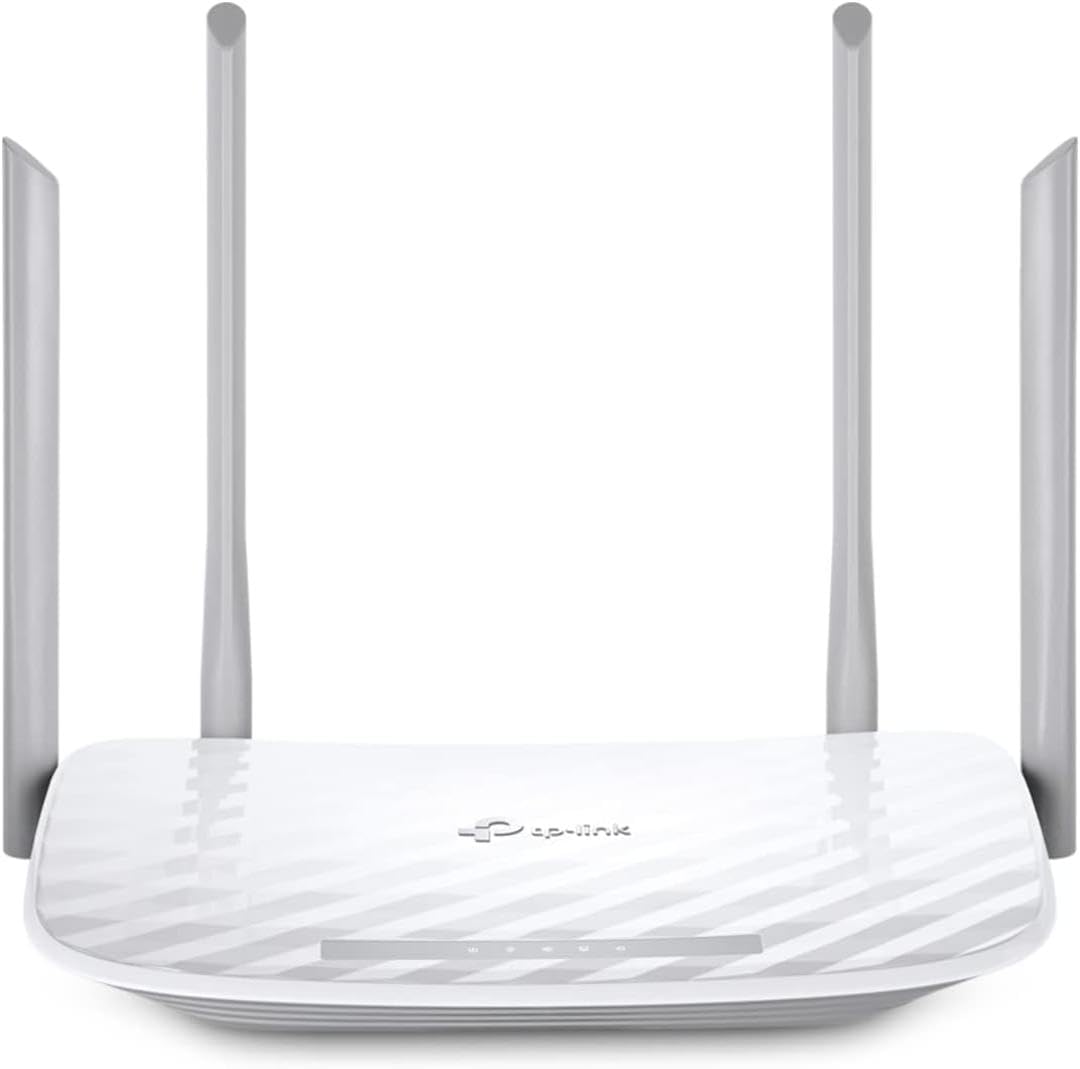
TP-Link Archer A54
4.3Editor score
WPA3 wireless security
EasyMesh whole-home expansion
Dual-band 1200 Mbps class
Explore the best parental control routers in our expert guide, comparing security, coverage, parental controls, VPN support, Wi-Fi speed, and management for
Parental control routers are the central point for creating a safer, more organized home network. The right model can combine scheduled access, device filtering, guest isolation, secure VPN features, broad Wi-Fi coverage, and intuitive management tools that help adults supervise connected children and teenagers without disrupting everyday browsing.
This guide compares ten routers according to the features families are most likely to value: wireless generation, coverage potential, simultaneous-device capacity, wired connectivity, parental control options, security tools, VPN support, and mesh compatibility. It covers general-purpose Wi-Fi routers, higher-capacity Wi-Fi 6E and Wi-Fi 7 systems, and a wired VPN-focused model for buyers with different network requirements.
Each pick highlights a distinct reason to consider it, from broad value and dependable dual-band networking to premium multi-gigabit performance and advanced family controls. Ratings and specifications reflect the supplied product information, while availability and prices change over time, so readers should confirm current listing details and compatibility before purchasing.
4.3Editor score

4.2Editor score

4.3Editor score
The comparison highlights wireless standards, approximate aggregate speed classes, key family-management or security capabilities, and the most important connection options. Because parental control depth varies by platform, buyers should also confirm the exact scheduling, filtering, and device-management tools available in the router's current software.


The TP-Link Archer AX21 carries a 4.4 rating and stands out as a balanced Wi-Fi 6 router for families that need stronger performance than an older dual-band model without moving to a premium multi-gigabit system. Its dual-band AX1800 class combines up to 1200 Mbps on 5 GHz with up to 574 Mbps on 2.4 GHz, creating a practical foundation for streaming, gaming, downloads, and numerous connected devices.
We may earn a commission when you buy through this link, at no additional cost to you.
Signal strength receives particular attention through four high-gain antennas, beamforming, and a front-end module chipset. OFDMA allows the router to communicate with multiple devices more simultaneously, which is valuable in a busy household where phones, televisions, speakers, laptops, and cameras may all be active. The design is dual-band, however, so it does not offer the additional 6 GHz spectrum found in Wi-Fi 6E and premium Wi-Fi 7 systems.
The supplied specifications emphasize security commitments, built-in OpenVPN and PPTP VPN servers, and broad internet service provider compatibility. They do not detail the router's granular parental scheduling, category filtering, or per-device controls. That distinction matters for this roundup: buyers prioritizing deeply specified content and time controls should investigate the current management interface, while those who mainly need robust coverage, modern wireless efficiency, and a straightforward family network may find the AX21 more than adequate.
This is a sensible recommendation for a medium-sized home that wants Wi-Fi 6, multiple-device efficiency, and useful security fundamentals without focusing on premium multi-gigabit ports. It is especially compelling for households that want a dependable central router and can manage family boundaries through device operating-system controls or TP-Link's broader application ecosystem. Confirm the current parental-control toolset before purchase, particularly if daily schedules and per-device exceptions are essential.
Beamforming, four external antennas, and the router's signal-focused front-end module work together to support reliable coverage across typical home environments. Actual performance still depends on device distance, walls, network traffic, and the placement of the router.
The built-in VPN server support and cybersecurity design focus make the AX21 appealing for households seeking stronger network controls. Buyers should still verify which optional security services, if any, require a separate subscription in the current software.
We may earn a commission when you buy through this link, at no additional cost to you.
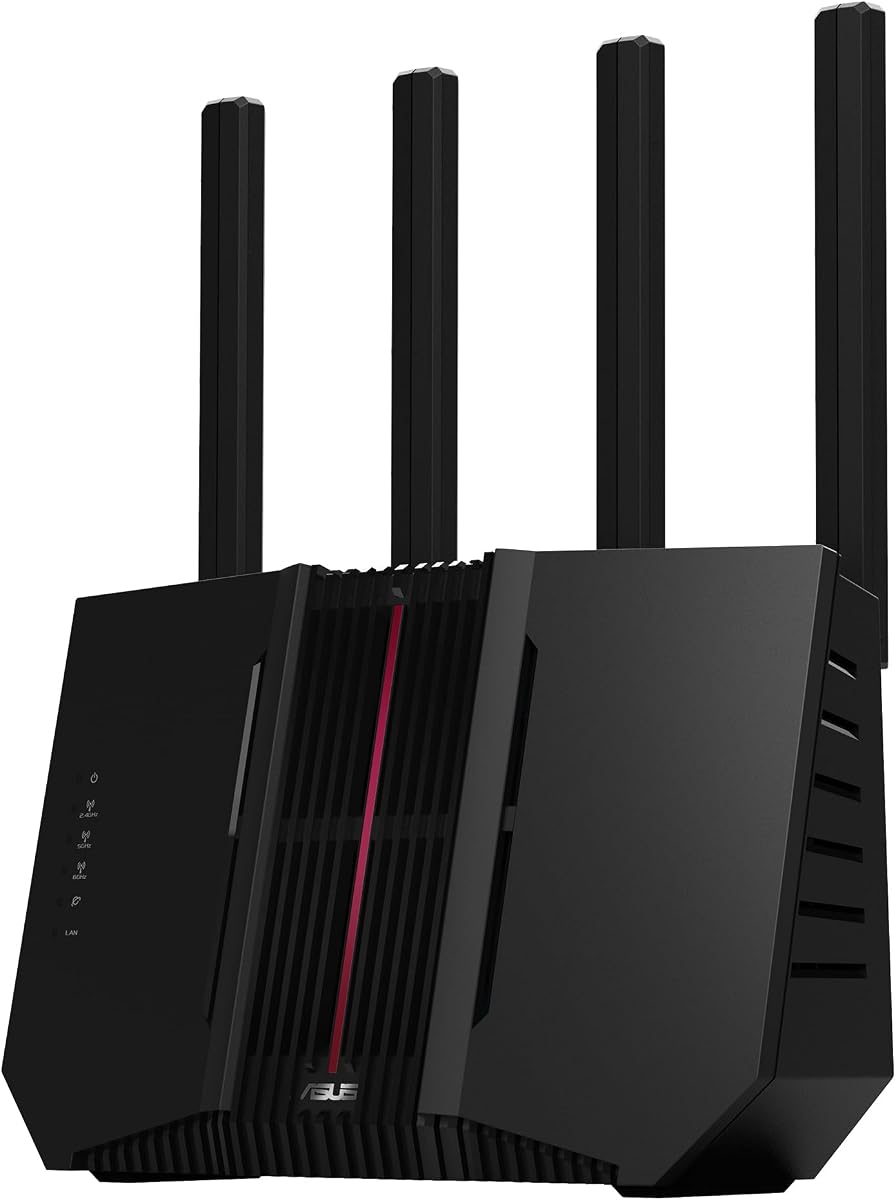
The ASUS RT-AX1800S is one of the clearest matches for the parental control router category in this list, with a 4.3 rating, built-in parental control features, subscription-free network security, and VPN support. It uses dual-band Wi-Fi 6, supports MU-MIMO and OFDMA, and provides enough underlying speed for demanding family use without introducing the complexity of a Wi-Fi 7 flagship.
We may earn a commission when you buy through this link, at no additional cost to you.
Its strongest family-management appeal is the combination of ASUS's named parental controls, AiProtection Classic powered by Trend Micro, and ASUS Instant Guard for creating a secure VPN connection away from home. The wording identifying the security approach as subscription-free is particularly useful for parents who do not want an additional recurring charge simply to access core network protection. Instant Guard offers a convenient way for adults to connect securely over public Wi-Fi.
Wired connectivity is unusually practical for the class. The router includes one Gigabit WAN port and four Gigabit LAN ports, allowing computers, game consoles, televisions, and other devices to benefit from stable Ethernet connections. The trade-off is that this is not a multi-gigabit platform, so buyers seeking 2.5-gigabit performance or specialized 10-gigabit aggregation should look higher in the roundup. It also uses only the 2.4 and 5 GHz bands.
The RT-AX1800S is best for families that place meaningful value on built-in supervision and security tools without wanting a subscription-based service. It also suits users interested in AiMesh expansion, since compatible ASUS equipment can create a more cohesive network. Check the current ASUS interface to confirm that its scheduling, filtering, and device-group workflows align with your family's specific rules, but its stated feature set makes it a strong middle-ground recommendation.
Built-in parental control functions and subscription-free AiProtection Classic reduce the likelihood that basic family management depends on a recurring plan. The available categories of controls, reporting, and exceptions should be confirmed for the current firmware and regional software version.
AiMesh compatibility makes the router a sensible starting point for a home that may expand beyond one floor or develop troublesome dead zones. Existing ASUS equipment can work together with it while preserving advanced management and security features.
We may earn a commission when you buy through this link, at no additional cost to you.
The TP-Link Archer BE230 earns a 4.2 rating and is our Editor's Choice because it combines an explicitly stated set of robust parental controls with modern Wi-Fi 7 hardware, flexible wired connections, and easy whole-home expansion. It gives families a more advanced control platform than many general routers while avoiding the need for a separate modem at the router itself.
We may earn a commission when you buy through this link, at no additional cost to you.
Its dual-band BE3600 class provides up to 2882 Mbps on 5 GHz and 688 Mbps on 2.4 GHz, using features such as Multi-Link Operation, Multi-RUs, and 4K-QAM. The processor is designed to manage high throughput and low latency across demanding networks. Coverage is stated for up to 2,000 square feet and as many as 60 devices at one time, although real results depend on construction, distance, interference, and device capabilities.
The standout feature for this guide is TP-Link HomeShield, which includes comprehensive network protection, robust parental controls, and real-time IoT security. The router also supports EasyMesh, allowing it to work with compatible routers and range extenders. A pair of multi-gigabit ports provides room for faster local connections: one 2.5 Gbps WAN/LAN port, one 2.5 Gbps LAN port, and three additional Gigabit LAN ports. Its limitation is that it remains a dual-band model and does not offer 6 GHz.
The BE230 is an excellent recommendation for a busy, connected household that wants modern Wi-Fi 7 performance alongside meaningful parental management. It suits families with 2.5-gigabit internet service, several high-use devices, or a plan to create a mixed EasyMesh network. Buyers should understand that it requires a separate cable or DSL modem, while families needing 6 GHz can consider the tri-band alternatives in this guide.
HomeShield places parental controls and IoT security at the center of the product rather than treating them as secondary features. It is a better match for this roundup when the priority is a router that can act as both the family connection hub and a centralized control point.
The two 2.5-gigabit ports can accommodate faster internet service, a high-end wired computer, network storage, or other demanding local connections. Three Gigabit LAN ports preserve wired options for devices that do not need the additional headroom.
We may earn a commission when you buy through this link, at no additional cost to you.
The ASUS RT-AX3000S receives a 4.2 rating and offers a compelling combination of scheduled parental controls, modern Wi-Fi 6 performance, and expandable networking. Its total networking speed is about 3000 Mbps, consisting of up to 574 Mbps on the 2.4 GHz band and 2402 Mbps on the 5 GHz band, giving it ample capacity for common family streaming and browsing demands.
We may earn a commission when you buy through this link, at no additional cost to you.
Parental control scheduling is named directly in the product information, making this model especially relevant to parents who want a routine around school, homework, gaming, and bedtime. Built-in VPN functionality and ASUS Instant Guard add ways to manage remote access, while AiMesh compatibility allows additional compatible ASUS routers to be added for seamless roaming. MU-MIMO and OFDMA improve efficiency when many clients are connected.
The main limitation is that the RT-AX3000S is a conventional dual-band design without a 6 GHz band. It also does not carry the multi-gigabit emphasis of the BE230, RT-BE82U, or RT-BE88U, so households seeking 2.5-gigabit wired connections may need a different option. Wireless performance also depends on the environment and the capabilities of the devices joining the network.
This router is recommended for families that prioritize scheduled boundaries and easy scaling beyond a single router. It is a particularly good fit for homes with an existing ASUS networking ecosystem, since AiMesh can preserve a unified management experience. Before buying, check the available parental categories, per-device limits, and scheduling granularity in the current ASUS administration software.
Parental control scheduling helps turn internet rules into repeatable routines rather than ad hoc restrictions. Specific feature behavior can vary with firmware, so families should review the available time-based and device-based options in the interface.
Adding compatible AiMesh equipment can improve reach in larger homes or properties with challenging layouts. The benefit is strongest when the extension devices come from the same ASUS ecosystem and are configured consistently.
We may earn a commission when you buy through this link, at no additional cost to you.
The TP-Link Archer A54 has a 4.3 rating and represents the most budget-conscious recommendation in this guide. It is built around dual-band Wi-Fi 5, offering up to 867 Mbps on 5 GHz and 300 Mbps on 2.4 GHz for 1200 Mbps of aggregate bandwidth. That is less futuristic than the Wi-Fi 6, Wi-Fi 6E, and Wi-Fi 7 models here, but it remains a capable foundation for everyday family connectivity.
We may earn a commission when you buy through this link, at no additional cost to you.
Its four external antennas and stated coverage of up to 1,000 square feet offer practical reach for apartments and modest homes. WPA3 support is a meaningful security advantage, while the Tether app provides a straightforward way to manage the network and maintain current firmware. EasyMesh compatibility also makes it possible to add compatible routers or range extenders when a single unit cannot cover the entire property.
The primary drawback is its older wireless generation. It lacks OFDMA, MU-MIMO, 6 GHz access, and the multi-gigabit wired options found in more advanced models. The supplied information also does not identify the router's detailed parental scheduling, filtering, or per-device management functions, so families with substantial supervision requirements should verify those capabilities in the current Tether interface.
The A54 is a strong recommendation for buyers who want a dependable, secure dual-band router without paying for newer wireless features they may not use. It is particularly appropriate for smaller homes, secondary networks, and families whose main priorities are WPA3, straightforward management, and easy later expansion. Those seeking richer stated controls and faster hardware should consider the ASUS RT-AX1800S or TP-Link Archer BE230.
WPA3 support gives the router access to a newer wireless security protocol for personal networks. It is one of the most important features to prioritize when selecting a value-oriented model that may remain in the home for years.
EasyMesh compatibility allows a family to improve whole-home coverage without discarding the Archer A54 as its starting point. A compatible extender or router can help address dead zones while maintaining a more unified experience.
We may earn a commission when you buy through this link, at no additional cost to you.
The TP-Link ER605 carries a 4.4 rating and provides a specialized alternative to the wireless routers in this roundup. It is a wired Gigabit VPN router designed for callers who want centralized routing, several WAN connections, and substantial firewall and VPN flexibility rather than consumer-style wireless coverage.
We may earn a commission when you buy through this link, at no additional cost to you.
Its port arrangement is unusually adaptable. The device includes one Gigabit WAN port, two Gigabit WAN/LAN ports, and two Gigabit LAN ports, allowing up to three connections to operate as WAN links and helping distribute bandwidth among services. A USB port supports 4G or 3G modem WAN backup, which can be valuable for small offices, remote work areas, or households that want an alternate uplink.
Security is the central selling point. The ER605 supports advanced firewall policies, denial-of-service defense, IP, MAC, and URL filtering, speed testing, SPI firewall functions, and multiple VPN protocols. Its stated VPN capacity includes up to 20 LAN-to-LAN IPsec connections and 16 each for OpenVPN, L2TP, and PPTP. Those details make it more relevant to technically informed buyers and small-business-style network managers than typical families seeking device-based parental scheduling.
The decisive compromise is that the ER605 has no built-in Wi-Fi. It can still serve as a gateway for wired equipment or connect to separate access points, but that requires additional hardware and planning. It is best recommended for users who value secure routing, multi-WAN operation, and VPN capacity more than turnkey wireless parenting. Families that need a single box for both Wi-Fi and supervision should use one of the ASUS or TP-Link Wi-Fi routers instead.
Three configurable WAN/LAN positions make it easier to balance or isolate internet connections. USB 4G backup provides another route to maintain connectivity, subject to the compatibility of the mobile modem.
IP, MAC, and URL filtering can restrict network access at a more technical level than basic wireless controls. The ER605 therefore appeals to administrators who understand firewall rules, VPN protocols, and network address management.
We may earn a commission when you buy through this link, at no additional cost to you.
The ASUS RT-BE88U earns a 4.3 rating and is the premium selection for households that want advanced family organization alongside exceptional wired performance. It uses Wi-Fi 7 technologies including Multi-Link Operation and 4096-QAM, with throughput stated at up to 7200 Mbps. A quad-core 2.6 GHz 64-bit processor gives the router substantial computing capacity for a busy network.
We may earn a commission when you buy through this link, at no additional cost to you.
Its wired capabilities distinguish it most clearly. The router includes a 10G SFP+ port and a standard 10G WAN/LAN port, enabling a wired network capacity of up to 34G. That is useful for high-end computers, network storage, creative workstations, and homes with exceptionally fast internet plans. The included USB port can also be prepared for 4G LTE or 5G mobile tethering, offering another WAN option for resilient connectivity.
For parental management, Guest Network Pro can establish up to five SSIDs, making it easier to separate children, guests, and internet-connected devices. The product also includes convenient parental controls, Instant Guard VPN connections, and comprehensive VPN support. AiProtection Pro powered by Trend Micro adds commercial-grade network security, while a one-tap security scan can help families check connected devices. AiMesh compatibility extends the system to a larger home when needed.
The RT-BE88U is best for demanding homes with fast broadband, numerous high-bandwidth devices, and an interest in keeping guest, child, and smart-home traffic organized. Its complexity and premium hardware may be unnecessary for a small household with modest internet service, but it provides the most compelling combination of multi-gigabit connectivity and sophisticated network segmentation in this roundup.
The 10G SFP+ and 10G WAN/LAN ports remove the usual Gigabit ceiling for demanding local traffic. They are particularly valuable when several computers, storage devices, and high-use applications need to exchange large files over a wired network.
Supporting up to five SSIDs gives administrators more freedom to place children, guests, and connected devices on separate networks. Dedicated segmentation can simplify rules and reduce unnecessary exposure between device groups.
We may earn a commission when you buy through this link, at no additional cost to you.
The TP-Link Archer AXE75 has a 4.3 rating and stands out as a tri-band Wi-Fi 6E router with a dedicated 6 GHz connection and broad whole-home expansion support. Its aggregate speed is up to 5400 Mbps, divided among 2402 Mbps on 6 GHz, 2402 Mbps on 5 GHz, and 574 Mbps on 2.4 GHz. The additional high-band spectrum can improve responsiveness for compatible modern devices.
We may earn a commission when you buy through this link, at no additional cost to you.
True tri-band operation and OFDMA are designed to support simultaneous transmission to many clients, which helps during evenings when household devices compete for bandwidth. A 1.0 GHz dual-core processor and 512 MB of memory provide more resources than basic routers, while the housing is designed for heat dissipation. The router is also compatible with EasyMesh routers, extenders, and wireless powerline adapters for larger homes.
Parental control availability comes through TP-Link HomeShield. The supplied information specifically identifies basic parental controls among the free features, along with basic network security, IoT device identification, quality of service, and weekly or monthly reports. It also describes HomeShield as a premium security service, so buyers seeking advanced content categories, granular scheduling, or expanded reporting should confirm which functions require a paid tier.
The AXE75 is a good recommendation for families with Wi-Fi 6E-compatible phones, laptops, or televisions that can benefit from the 6 GHz band. It also makes sense for users who value current tri-band wireless more than multi-gigabit Ethernet. Its basic free controls make it accessible, while the combination of an open 6 GHz band, strong memory, and EasyMesh support provides a balanced path toward advanced family management.
A dedicated 6 GHz band offers more available spectrum for compatible Wi-Fi 6E clients. It can reduce congestion in crowded 2.4 and 5 GHz environments and provide higher potential throughput for modern devices that support the band.
HomeShield includes basic parental controls and regular usage reports without requiring every family to begin with the most advanced paid plan. Households with complex filtering requirements should compare the current subscription tiers before deciding.
We may earn a commission when you buy through this link, at no additional cost to you.
The ASUS RT-BE82U has a 4.2 rating and delivers a balanced premium combination of Wi-Fi 7 performance, multi-gigabit Ethernet, and established ASUS security tools. It supports dual-band 802.11be wireless with speeds stated at up to 6500 Mbps. Multi-Link Operation allows compatible devices to use multiple bands simultaneously, aiming to improve stability and data-transfer efficiency.
We may earn a commission when you buy through this link, at no additional cost to you.
Five 2.5GbE ports provide more flexibility than the two 2.5-gigabit ports found on the TP-Link Archer BE230. They can serve a faster internet connection, a wired workstation, game console, television, or network storage device. The five-port arrangement gives a household more opportunities to prioritize high-traffic connections without depending on adapters or older Gigabit hardware.
AiMesh compatibility is another significant advantage for larger homes. It enables seamless roaming and access to advanced ASUS networking features, while commercial-grade AiProtection Pro powered by Trend Micro adds broader security coverage. A one-tap security scan and Safe Browsing are included. As with the other ASUS models, VPN capabilities are important for adults connecting remotely, although the supplied information for this product does not spell out the exact parental control menu.
The RT-BE82U is recommended for families that want high-end Wi-Fi 7 and abundant 2.5-gigabit connectivity but do not need a 6 GHz radio or 10-gigabit ports. It is a particularly good fit for modern homes with several wired high-bandwidth devices. Buyers should verify the current ASUS parental scheduling and device-grouping options if those functions are the decisive reason for purchasing.
Five 2.5-gigabit Ethernet ports are a major step above a typical all-Gigabit arrangement. A home can connect several modern devices without rationing the more advanced wired bandwidth between them.
AiProtection Pro, Safe Browsing, security scanning, and AiMesh expansion create a well-rounded platform for connected households. These features make the router suitable for families that want centralized oversight in a home expected to grow.
We may earn a commission when you buy through this link, at no additional cost to you.
The ASUS RT-BE9700 is the most technically advanced router in the roundup, with a stated Wi-Fi 7 aggregate speed of up to 9700 Mbps. It is a tri-band model that uses the 6 GHz spectrum, supports 320 MHz channels, and includes 4096-QAM. Multi-Link Operation allows devices to connect across multiple bands at the same time for more stable connections and efficient transfers.
We may earn a commission when you buy through this link, at no additional cost to you.
Its network architecture is designed for demanding homes and users with multiple WAN options. AI WAN detection can help establish an always-on connection, while the USB port supports 4G LTE and 5G mobile tethering. The title identifies two WAN capabilities, and the product is intended for users who want a high-end platform capable of serving both advanced wireless clients and demanding wired networks.
The stated subscription-free triple-level protection is valuable for families that want comprehensive security without a recurring service. Advanced site-to-site VPN, Instant Guard mobile access, and AiMesh compatibility broaden the router's role in remote work and whole-home networking. The trade-off is that this technical breadth may be unnecessary for a modest household, especially given the 3.9 rating, which is the lowest listed in this group.
The RT-BE9700 is best recommended to families with high-speed broadband, numerous modern devices, a genuine need for 6 GHz, and the technical confidence to take advantage of advanced WAN and VPN functions. It is less compelling for light internet use, small apartments, or buyers who simply want straightforward parental scheduling. Confirm that the current management platform provides the specific controls and reporting your family requires.
The 320 MHz channels and 4096-QAM capabilities provide substantial theoretical headroom for compatible Wi-Fi 7 devices. Real-world results depend on the client hardware, distance, interference, building materials, and available spectrum.
AI WAN detection and support for 4G LTE or 5G tethering can improve resilience when primary connectivity is interrupted. These options are particularly relevant to remote workers, home offices, and users who want a secondary connection path.
We may earn a commission when you buy through this link, at no additional cost to you.
A parental control router should balance manageable family rules with dependable coverage, appropriate wired speed, and security tools that do not create unnecessary administration. The following factors help separate models that are merely powerful Wi-Fi systems from those that can serve as practical household control centers.
Begin by listing the rules your family actually needs. A basic setup might rely on device schedules, while a more demanding home may need content categories, per-child exceptions, guest separation, usage reports, and the ability to pause access when a child finishes homework. TP-Link HomeShield and ASUS parental control systems are named in the supplied data, but feature depth can vary by hardware model, firmware, region, and subscription tier. Check the current administration interface for time restrictions, device grouping, category filtering, exception handling, and reporting before buying.
Choose the router whose controls match your household routine rather than one advertising a long feature list. A simple, readable interface that every caregiver can use is often more valuable than advanced controls that nobody understands.
Wi-Fi 6 models such as the Archer AX21 and ASUS RT-AX1800S remain capable for many homes, while Wi-Fi 6E introduces the less crowded 6 GHz band and Wi-Fi 7 models add features such as Multi-Link Operation and 4K-QAM. Faster theoretical speeds do not guarantee better real-world coverage. Walls, floors, electrical interference, router placement, and client capabilities all influence the result. For a large home, combine a suitable router with a compatible mesh system or access points.
Match the wireless standard to the devices that will actually connect. Buying a newer router helps most when household devices support it and high-bandwidth applications are creating genuine congestion.
Families often underestimate the number of devices that require network attention. Televisions, speakers, cameras, consoles, phones, laptops, and smart appliances may all be online even when they are not actively streaming. OFDMA and MU-MIMO improve efficiency in busy environments, and the Archer BE230 is stated to support as many as 60 devices at one time. Look for these technologies when several family members use the network simultaneously.
Capacity figures should be treated as guidance rather than guarantees. Heavy downloads, cloud gaming, video calls, and 4K or 8K streaming can quickly consume available bandwidth, making a higher-throughput model a better fit for demanding homes.
Modern families still rely on Ethernet for televisions, desktop computers, game consoles, and network storage. A Gigabit connection is sufficient for many conventional uses, while 2.5-gigabit ports provide meaningful headroom for fast broadband, large file transfers, and demanding local traffic. The ASUS RT-BE82U includes five 2.5GbE ports, and the TP-Link Archer BE230 includes two. The ASUS RT-BE88U goes further with a 10G SFP+ port and a 10G WAN/LAN port.
Count the wired devices in your home before choosing ports. Pay attention to how many can operate as WAN, because a multi-WAN router can also be useful for backup connections or traffic separation.
Parental controls are only one layer of household security. WPA3, IoT device identification, Safe Browsing, firewall protection, and malware or threat defenses can all help reduce risk. The ASUS models in this guide feature AiProtection tools, while TP-Link offers HomeShield on the Archer BE230 and AXE75. VPN functionality may include a server, a client, Instant Guard, or site-to-site connections. These options help adults protect remote access and can support a home office or a small business.
Determine whether advanced protection requires a subscription. A router with useful free controls can provide better long-term value than a more expensive system whose most relevant family features are locked behind an ongoing plan.
A strong single router is not automatically ideal for every floor plan. TP-Link's EasyMesh-compatible models can work with compatible routers and extenders, while ASUS AiMesh products can create a unified system with compatible ASUS hardware. Expansion matters most in homes with masonry, long hallways, multiple floors, dead zones, or separate living spaces. It also provides flexibility if the family later adds an office, guest suite, or outdoor coverage requirement.
Plan the primary router location before buying additional equipment. A centrally placed unit with open line of sight usually produces a better foundation than relying on repeated expansion to compensate for poor initial placement.
Network segmentation can simplify family management. A separate guest SSID keeps visitors away from personal devices, while dedicated child, smart-home, and work networks can carry different rules. The ASUS RT-BE88U supports as many as five SSIDs through Guest Network Pro, making it a notable option for households that want more granular organization. Other ASUS models also support Wi-Fi 6, Wi-Fi 7, VPN, and AiMesh features that can complement a segmented approach.
Separate networks do not replace device-level controls, but they can make filtering and troubleshooting easier. They are especially helpful when children use gaming consoles, smart TVs, and connected speakers that do not offer the same management options as phones and computers.
A sophisticated router is only useful if the adults responsible for it can configure it. The TP-Link Tether app is named for the Archer A54 and BE230, while ASUS provides browser-based and mobile-oriented management for its routers. Look for a clear device list, straightforward schedule editor, visible status indicators, and firmware-update process. The supplied TP-Link information also recommends keeping firmware current through the app for the best performance.
Favor a system that makes routine actions fast. Updating a child's schedule, pausing a device, adding a guest, or checking a report should not require advanced networking knowledge every time.
Begin with a secure administrator password, updated router firmware, and a clearly separated adult management account. Connect the modem or optical network terminal to the router, complete the initial setup, and position the router in an open central area rather than beside a television, microwave, enclosed cabinet, or corner. After internet access is working, create a schedule for each child's primary devices before applying restrictive content categories, which makes troubleshooting accidental lockouts easier.
Build the home network in stages. Add parent devices, children's devices, work equipment, smart-home devices, and guests to the appropriate groups. Test each rule by attempting to use a restricted service outside and inside the allowed schedule. If the household includes a mesh system or range extenders, update all related equipment and confirm that devices roam smoothly instead of remaining associated with a distant access point.
Review family controls and connected-device lists on a regular basis, especially after children receive new phones, consoles, or computers. Keep firmware current, change administrative credentials if there is any sign of unauthorized access, and periodically review reports for unfamiliar devices. For a wired VPN router, maintain supported firmware and compatible 4G modem lists, and preserve a tested backup path so a primary WAN failure does not interrupt the household.
A modern Wi-Fi router often includes enough scheduling and filtering for basic family routines. A dedicated or more advanced router becomes more useful when you need per-device exceptions, detailed reports, multiple isolated networks, VPN features, or stronger control over smart-home equipment. Start with the controls your family will genuinely use rather than paying for capabilities you may never configure.
Parental controls help manage what household devices can access and when they can use the internet. A VPN protects traffic by encrypting a connection and can also create a secure path into the home network. The two features serve different purposes, so a router may offer strong security and VPN functions while still needing dedicated parental scheduling, or provide family controls without advanced VPN capabilities.
It depends on the building's construction, floor plan, router placement, and number of connected devices. A larger home may benefit from a mesh-compatible router paired with compatible extenders or additional access points. Central placement and realistic expectations for walls and floors are often more important than the maximum speed printed on the box.
Many routers provide basic scheduling, device grouping, and filtering at no charge, while advanced content categories, historical reports, and expanded security services may require a subscription. TP-Link HomeShield and ASUS security suites can include both free and premium options, so buyers should check the current service tiers for the exact model they are considering.
A faster router can improve performance when clients, local connections, congestion, or equipment limitations are the bottleneck. It cannot increase the speed delivered by an internet plan, and theoretical wireless ratings do not guarantee real-world throughput. Device distance, interference, walls, and network traffic all influence the result.
Choose a mesh system when the home has multiple floors, masonry, long distances, or consistently weak areas. A single powerful router can be simpler and may be sufficient for a compact layout. Many capable routers also support mesh expansion, allowing buyers to start with one unit and add compatible equipment only where coverage actually needs help.
Most Wi-Fi routers require a separate cable, DSL, or fiber modem to receive internet service from the provider. Some provider plans supply compatible equipment, while some router functions may be available as an integrated gateway. Confirm the connections required by the current service and the specific router before making the purchase.
Review settings whenever children receive a new device, change school or bedtime routines, or begin using a new service. A monthly check is a reasonable baseline for active households. Updates to router firmware can also alter menus and features, so periodically confirm that scheduled rules, exceptions, and reports still behave as expected.
The TP-Link Archer BE230 is the most complete fit for this guide's central goal, pairing explicitly robust parental controls with Wi-Fi 7 performance, 2.5-gigabit ports, and EasyMesh expansion. The ASUS RT-AX1800S stands out for subscription-free security and built-in family tools, while the ASUS RT-BE88U serves as the premium choice for homes that need exceptional multi-gigabit wired performance and multiple segmented networks.
Prioritize the controls your family will use, followed by coverage and the number of connected devices. Value-conscious households can consider the Archer A54, while larger or more technically demanding homes may prefer Wi-Fi 6E, Wi-Fi 7, or a dedicated multi-WAN VPN router. Choose mesh support when the physical layout demands it, and make sure a separate modem is available when required.
Product availability and prices change over time, so compare current listings and confirm software features before ordering. The most important final step is to check the router's current parental scheduling, filtering, reporting, security, and VPN options against your family's specific needs, then select the model that offers the right controls without unnecessary complexity.